
A confession: I haven’t actually spent much of this year in the country. I’m still up here a couple of times a month but, like a dutiful yuppie, I’ve mostly been logging on from the 13th floor of a modern faux-luxury high-rise. This isn’t by choice, though.
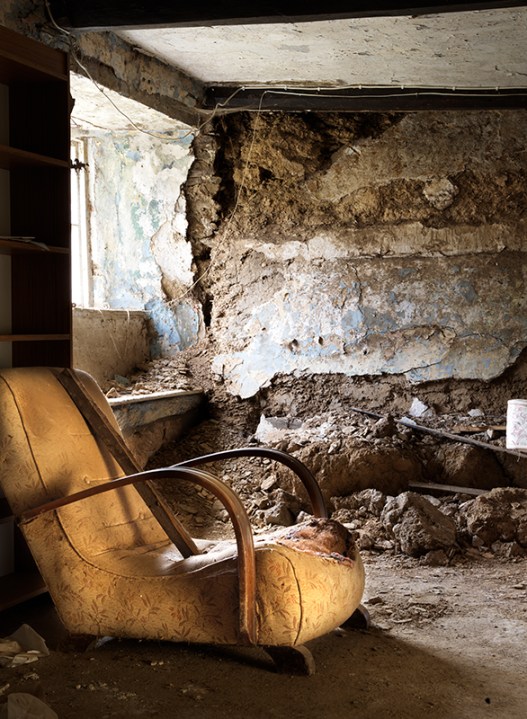
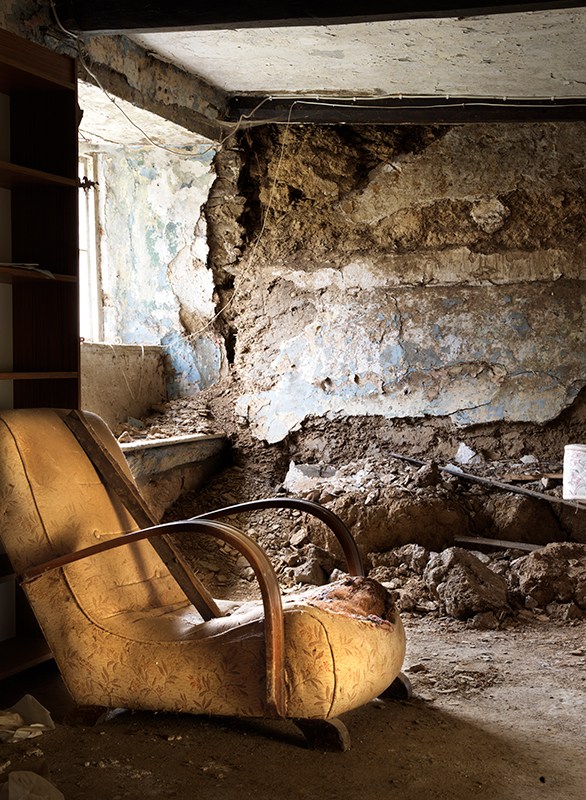
On January 12, I worked late, slept in the city and came home to the country the next evening after watching Marty Supreme. What I at first thought was damage from a bomb or a robbery actually turned out to be a faulty cartridge in the upstairs bathroom sink. After 48 hours of overflow, our bathroom had quite literally collapsed into the kitchen. I had walked into the movie, clawfoot tub and all. The next day the insurance saga began, and we’re still nowhere close to being done.

It all looks quite bad, but in reality isn’t a huge job. The scariest part – the gaping hole in the kitchen ceiling – required just a bit of drywall and was patched soon after the mitigation team pulled out. We hoped that would set the pace for the rest of the job: a whole new (albeit small) bathroom; new kitchen appliances; floor, window and cabinet restoration; a bit of plumbing and electrical work, topped off with a fresh coat of paint. Private contractors told me they could be in and out in two weeks. Yet here we are, still without a functional kitchen or bathroom.
To a certain extent, that’s expected with a major insurance claim. They fight to use their contractor and say you’re delaying if you try to bring in your own. Of course, their guy then shows up once a month and can barely speak English.
A trivial Home Equity Line of Credit (HELOC) gets treated like a mortgage and releasing funds requires a stamp from your bank (and the other two banks that briefly bought up your debt). That added a couple months to the process; the real work didn’t begin until summer.
Yet the biggest obstacle was settling on LKQ – “like kind and quality” – which I came to learn are the three most important letters in the insurance biz. Thankfully, the 100-year-old beams are still intact. But even with insurance agreeing to cover the damage in theory, how do you actually restore a century-old house back to its original condition?
The house was built in 1922. One family passed it down until my partner’s parents bought it in the 1980s. He inherited it in 2019. Ironically, the bathroom was the only new feature, fully renovated four years ago with said HELOC. Rates back then were too cheap to pass up, but lesson learned: quality ain’t what it used to be.
Through all that time, the virgin-grade longleaf pine flooring had never been touched. Its ultra-dense growth rings and high natural resin content made it the gold standard at the turn of the century, and though it was once abundant throughout the American South, the tree is now effectively extinct. No modern replacement comes close to LKQ; second-growth pine is far less dense and lacks the luxuriously tight vertical grain of the original. We settled for a cheaper sand and stain but aren’t expecting a thank you note from the insurance company. Beyond that were all the minor accoutrements that people take for granted in an old country house. The crown molding, tub and tiling – all original, all irreplaceable at your local Home Depot. It wasn’t worth the protracted fight with insurance to insist that LKQ constituted some extravagant artisanal import.
Even with insurance agreeing to cover the damage, how do you actually restore a century-old house?
All told, it’s been a lesson in homeownership. It’s hard to maintain a really old house, but repairing or renovating one is excruciating. The worst part is not haggling with insurance, as nightmarish as that’s been. It’s grappling with how much of the house’s history, character and original beauty you’re willing to part with to achieve a satisfactory rebuild in a tolerable time frame.
So, we made some concessions. Or at least decisions that may seem like concessions. We assumed the thinner, sanded floor would still hold up better than a contemporary equivalent. We figured the slightly damaged molding and tile would be more beautiful than today’s mass-produced crap.
One might say we gave up too easily, that we failed to nickel-and-dime the insurance company for everything they owed us. But I’d rather my grandkids know what it’s like to walk barefoot on real Georgia pine.





Comments