
Ah, the esoteric joys of English cookery: parakeet-coloured mushy peas; the distinctive texture of a pork scratching; those little pellets of suet. Puddings which are in fact savoury. Other puddings made of blood. And the names: toad in the hole, spotted dick, bubble and squeak. Aren’t we a weird bunch?
It’s time to stop beating around the bush: this recipe has nothing to do with British food. I’m going to give you a recipe for a true Roman classic recipe: cacio e pepe. But I confess I have committed a cooking heresy by introducing a rogue ingredient – butter.
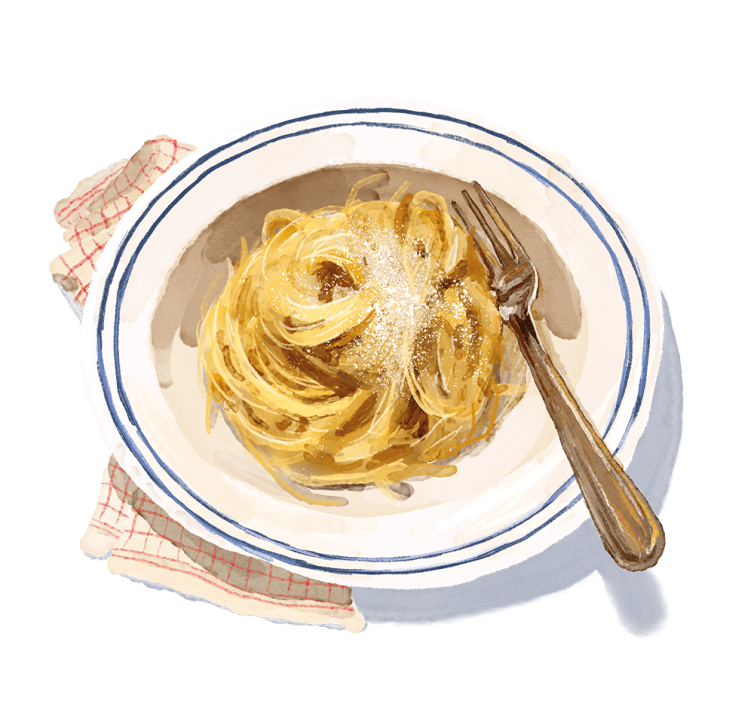
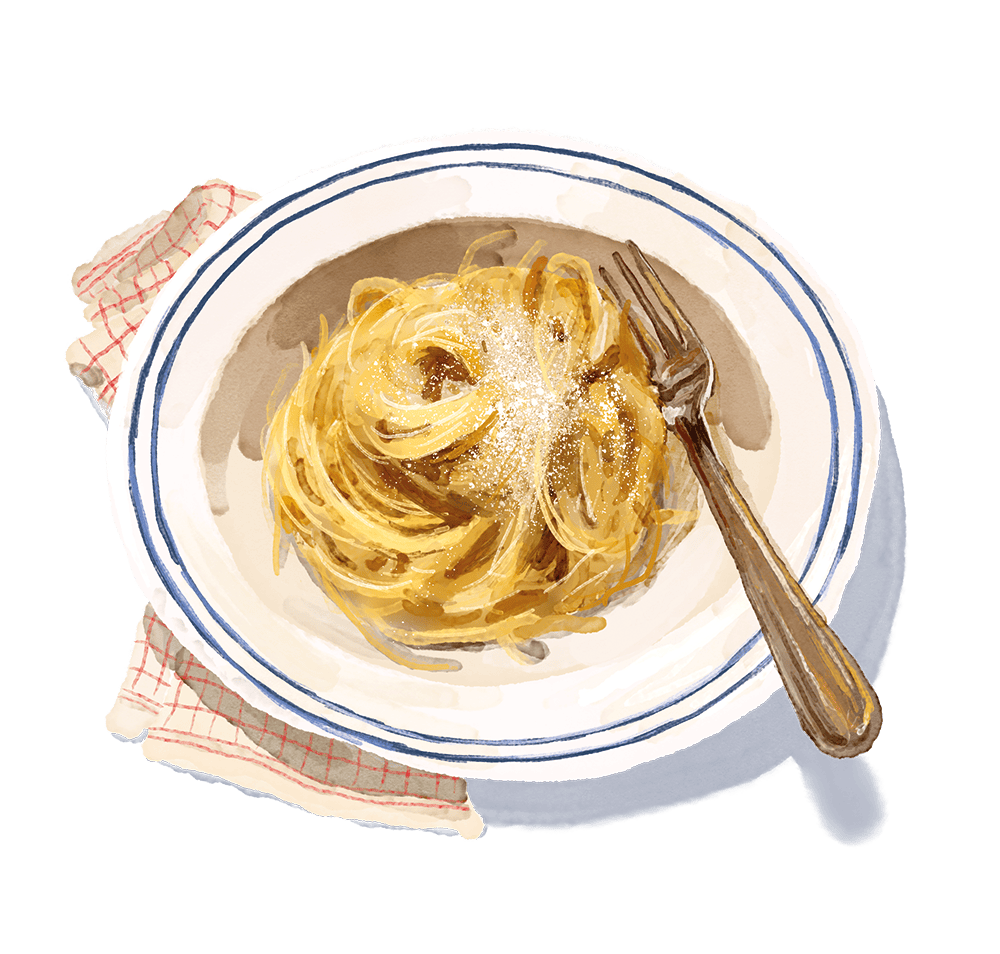
Cacio e pepe is simple in its conception: a pasta dish coated with a cheese (‘cacio’) and pepper (‘pepe’) sauce. The cheese is pecorino, a hard Italian sheep’s cheese, the most famous variety of which is pecorino Romano (95 per cent in fact being produced in Sardinia). Traditionally, it is made with long pasta, like spaghetti, linguine or bucatini. It is sharp and rich from the cheese, humming with the aromatic pepper, silken in texture, and exactly as satisfying as a pasta dish coated in a cheese sauce should be.
Aromatic, silken in texture and exactly as satisfying as a pasta dish coated in a cheese sauce should be
Butter is often used in the north of Italy, where the climate is cooler. In Rome, where cacio e pepe comes from, and the south of Italy more generally, olive oil has always been more commonly used in cooking. But at its most traditional, cacio e pepe wouldn’t even feature olive oil. It would be made simply by emulsifying the pecorino into the pasta water.
That emulsifying is always something of a risky business: forcing two liquids that don’t normally mix into a smooth, silky sauce is tricky. Oil and water do not want to combine; emulsification forces the issue. The possibility of the cheese seizing as it hits the hot water, and clumping into islands of gummy cheese surrounded by cloudy water, is ever-present. And I am nothing if not risk-averse.
To aid this process, then, many recipes and cooks do choose to incorporate butter or oil (or even cream) into the sauce to give the emulsion a head start and stop the sauce from splitting. Boiling the butter and starchy pasta water together very hot and very fast creates a strong base for the emulsion that will eventually become the sauce.
This is basically the same idea as the classical French technique of beurre monté, where butter is added to boiling water, creating a stable emulsion which doesn’t break even at high temperatures. So when you add the cheese for the cacio e pepe, it becomes part of the existing emulsion, resulting in a silky smooth sauce. While this technique is untraditional, it is not wholly inauthentic: many chefs and home cooks (even in Rome) use it as a failsafe way of ensuring the sauce’s creamy texture. No clagging, no clumping, just a perfect bowl of pasta.
A good cacio e pepe demands generosity: more pepper than you think you need, more cheese, more pasta water. The seeming excess of all three comes together in perfect harmony. Be bold with the pepper: it is the defining quality of the dish. And don’t skip toasting it first. Toasting brings out the natural oils in the peppercorn, the fruitiness as well as that distinctive kick – just enough to catch in the back of your throat.

At the crucial moment of adding the pasta water to the pan, you may well feel you have made a mistake. But keep the faith. As soon as the cheese is added, the proportions will make sense. Shake the pan vigorously, shuffling the pasta, as the agitation will help the different elements come together, until the whole thing coalesces into a beautifully silky plateful.
Serves: 2
Hands-on time: 5 minutes
Cooking time: 10 minutes
Ingredients
- 1 tsp whole peppercorns
- 200g spaghetti (or other pasta of your choice)
- 30g butter
- 50g pecorino, finely grated, plus extra to garnish
- 1 tbsp fine salt
- Over a medium heat, toast the peppercorns in a dry pan until you can smell them. Remove from the pan, then crush coarsely in a pestle and mortar.
- Bring a large pan of water to the boil; add the salt. Then add the pasta and set a timer for two minutes less than the amount of time the packet suggests.
- While the pasta is cooking, melt the butter in a wide pan, and then add the ground pepper. As the butter starts to foam, add 250ml of the hot pasta water, and rapidly boil the butter and water together, reducing until the emulsion is silky and opaque.
- When the timer for the pasta goes off, lift the pasta out of the water with tongs and drop it into the pan of buttery sauce. Shuffle the pan vigorously, adding the grated cheese bit by bit, swirling, tossing and agitating the pasta and the sauce the whole time, until the sauce has body and clings to the pasta. Serve immediately, with an extra grinding of black pepper and grating of cheese.
Join Olivia Potts for Truffles and Trattoria in Rome 2-6 December 2026. For more details about this Spectator Club trip, go to spectator.com/tastings.






Comments