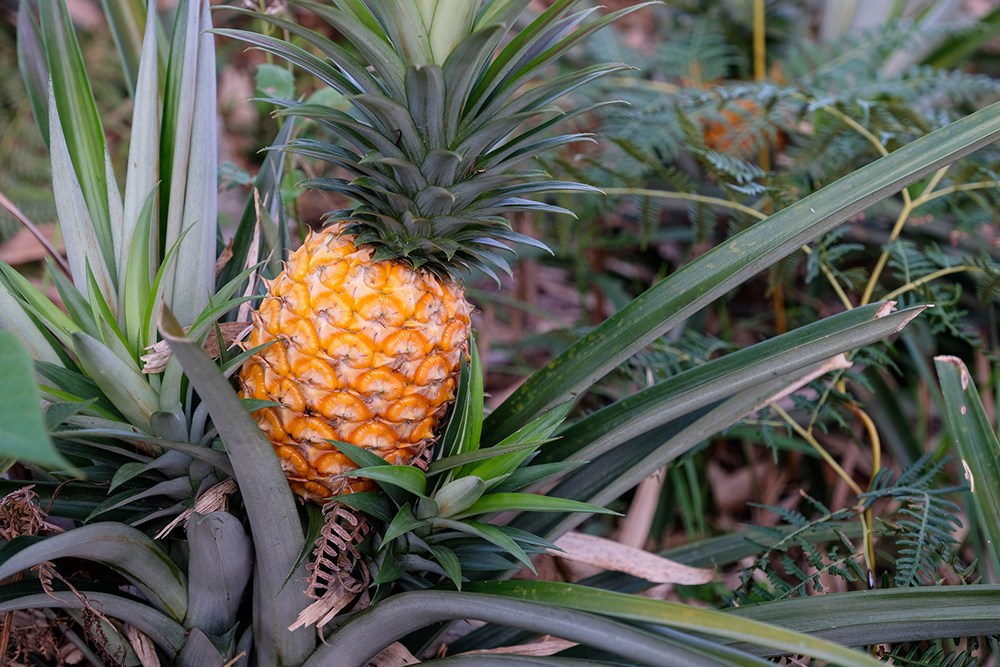

The customer is always right, right? As one Italian chef, Davide Tamburella, found out to his detriment last week, they are when it comes to pizza toppings. Tamburella, head chef at a Brisbane restaurant, took his boss to Australia’s Fair Work Commission claiming unfair dismissal after he refused to put pineapple on a pizza, calling it an ‘insult to his culture’. He lost. It’s a hell of a hill to die on.
It probably didn’t help that Queensland is rather fond of pineapples: it produces all of Australia’s, and a 52ft fibreglass model of one is a popular tourist attraction.

But pineapple has always stood for more than just one of your five a day. Pineapples are indigenous to South America and didn’t make it to Europe until Columbus tried one in Guadeloupe and was smitten. He stashed away dozens to take back for the King of Spain – but only one survived the journey.
The fruit was properly introduced to Europe in the 16th century – and pineapple mania took over. For the next 150 years, it was a status symbol. The pineapples which did survive the long sea voyages would sit as literal centrepieces at dinner parties. But look, don’t touch: they were purely decorative and would be brought out over and over until they began to rot. A healthy rental market sprang up, with rent-a-pineapples available to those who couldn’t buy them outright.
Pieter de la Court was the first horticulturist successfully to cultivate a pineapple in Europe in Leiden, while the first English-grown fruit was at Dorney Court in Buckinghamshire. The trick was to keep them warm, without cooking or gassing them (fires in hot houses, called ‘pineries’, were not uncommon). In 1723, a huge ‘pineapple stove’ was built in Chelsea Physic Garden.
Even once pineapples could be grown in England, they remained the preserve of the rich. In 1764, the Gentleman’s Magazine estimated that it would cost £150 to build and run a hothouse – the equivalent of just under £25,000 today. While this didn’t guarantee the pineapple patron any fruit, it could end up as a good return on your investment. Each pineapple could be worth £60 (£10,000 today). Pineapples were still a symbol of wealth and their horticulture became the subject of aristocratic rivalry.
Their image was used in artwork, interiors and architecture; at Dunmore Park in Scotland, which had a pineapple-growing hothouse, the fruit was immortalised in the pineapple-shaped cupola of the summerhouse. In 1985, it was described by the Royal Commission on the Ancient and Historical Monuments of Scotland as ‘the most bizarre building in Scotland’.
Steamships increased the availability of pineapples and therefore decreased their value. Today, the pineapple has taken on different cultural meanings. An upside-down pineapple is the discreet symbol of those with an enthusiasm for partner-swapping (especially, I hear, on cruise ships).
Then there’s pizza. While the Italians may wail, the beloved, if divisive, Hawaiian pizza has been around since the 1960s, when it was invented by Canadian-Greek businessman Sam Panopoulos. Perhaps Italian chefs like Tamburella should remember the pineapple’s original luxurious standing and see it as a high-status tribute to, rather than a scourge on, their national dish. And if not, they could take their cues from the modern pineapple symbol and just swap it out.





Comments