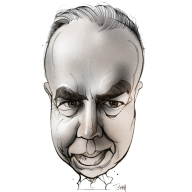
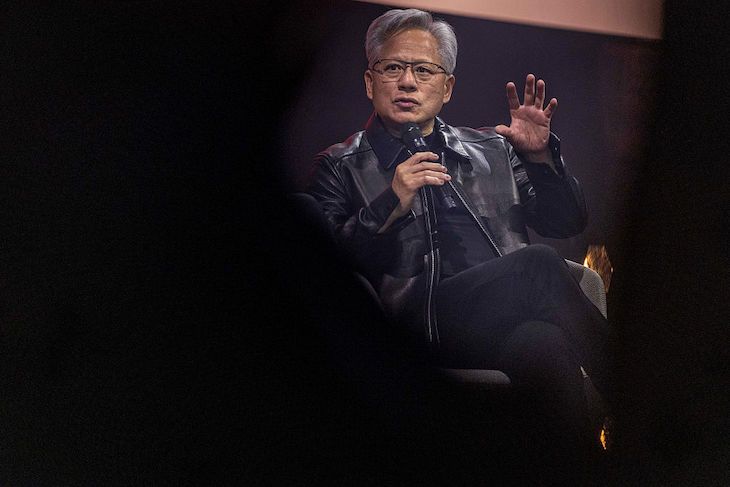
What to do about Jensen Huang, the Nvidia boss (for the moment, at least) who has admitted to an extramarital affair with a suspected Chinese spy? The woman, Alice Huang (no relation), is a former director at Megaspeed, a Singapore-based customer of Nvidia, and reportedly recruited by a Chinese spy agency. China denies this, and has called the allegations “baseless”.
Huang is critical to its daily operations and wields enormous power, so much so that he runs the company pretty much as he sees fit
What now? That’s the question for the company’s board, which has launched an independent investigation into Huang and the extent to which he could have been compromised. Some $200 billion (£150 billion) was wiped off the price of its shares in the immediate aftermath of Huang’s admission of the extramarital relationship: he owns a 3.6 per cent stake in the company and saw his net worth drop by about $6.5 billion (£5 billion).
But the implications reach well beyond Nvidia because of its critical role in the wider economy: it is the dominant supplier of microchips needed to train and run AI models, including those used by the US military and federal government.
Nvidia is also at the heart of the race for AI dominance between the US and China. The company is banned from selling its must powerful chips to China or to data centres that are used by Chinese companies. Huang’s previous and highly public advocacy for selling advanced chips to Beijing will now be under a renewed spotlight, and the US authorities will want urgent answers as to whether national security was compromised.
President Trump confirmed that the FBI is “looking into” the Nvidia boss. He said he had spoken to Huang on Monday about the reports: “I asked him that question, ‘Did you have any idea she was a spy?’ He said ‘I had no idea she was a spy’ and I really believe him,” Trump told reporters.
Huang will also face questions from Congress over the scandal, with a particular focus on the company’s security protocols. Meanwhile, according to the Reuters news agency, Huang and Nvidia are also facing a proposed class action lawsuit claiming they defrauded shareholders by concealing Huang’s ties with the suspected spy.

It is one unholy mess. There are few precedents for what’s unfolding at Nvidia. Huang is not the first (and certainly won’t be the last) high-profile chief executive caught in a previously undisclosed romantic relationship.
Laurent Freixe, the former CEO of Nestle, was fired in 2025 after an investigation revealed he was having an affair with a subordinate. Bernard Looney, the former CEO of BP, resigned in 2023 after admitting he failed to fully disclose past personal relationships.
These and other scandals were office dalliances, not a secret fling with a suspected spy. Huang’s affair is a whole different kettle of fish, touching as it does on matters of national security and tech secrets.
Nvidia’s investigation will have to establish what technology reached China, if any. It will look in detail at Singapore-based Megaspeed where Huang’s lover worked: the company is reported to have bought $2 billion (£1.5 billion) dollars worth of Nvidia chips.
Megaspeed has previously been investigated by the US government over allegations that it helped facilitate the smuggling of advanced Nvidia chips to Chinese customers. It denies these allegations.
The problem facing Nvidia’s investigators is that Huang, to all extents and purposes, is the face of the brand, helping to promote the company at events worldwide. He has become a kind of celebrity in the process, even dubbed the “Taylor Swift of tech” because of his status and worldwide fan base. He co-founded Nvidia in 1993 and almost single-handedly spearheaded its growth in AI, long before the technology became the dominant force it is today.
Huang is critical to its daily operations and wields enormous power, so much so that he runs the company pretty much as he sees fit. He has kept the corporate hierarchy as flat as possible, with about 60 people directly reporting to him.
Nvidia, on his watch, is effectively a company almost entirely dependent on one individual, and it is hard to fathom who might succeed him should he have to be replaced.
Huang said in a statement on Sunday: “I love our country and our company, and I am committed to protecting Nvidia and supporting America’s national security.” In the end, he may well survive this scandal, simply because Nvidia cannot afford to lose him. Even so, his private conduct has left him looking naive, reckless or just plain stupid. It is hard to see how he can ever regain trust, and there is no coming back from that, even for billionaires.






Comments