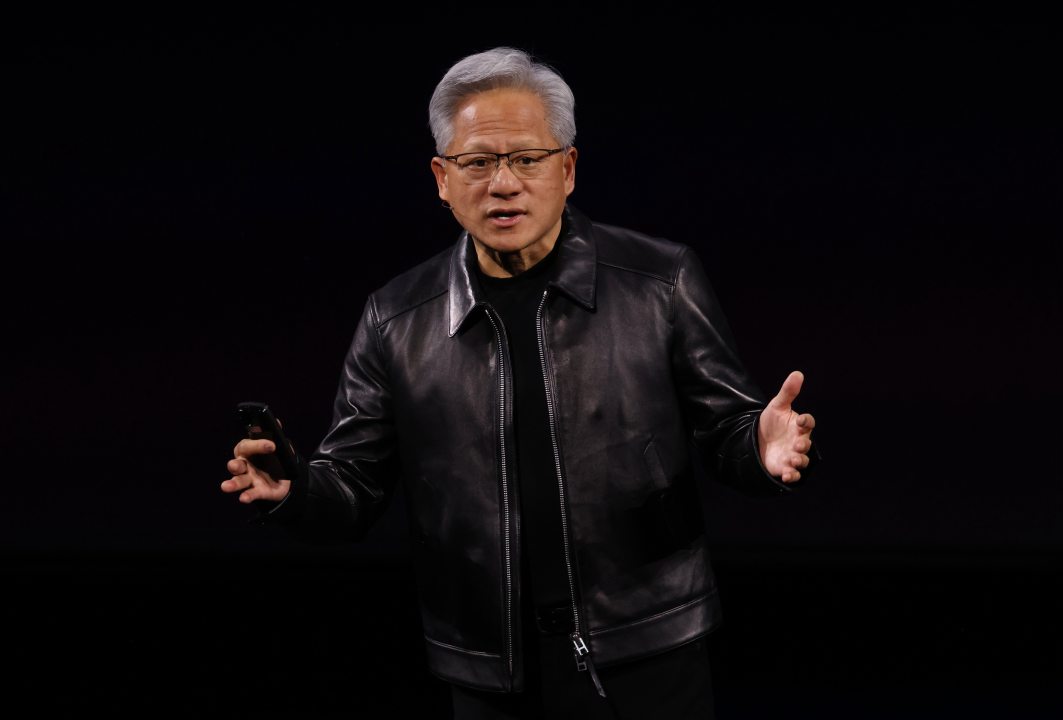
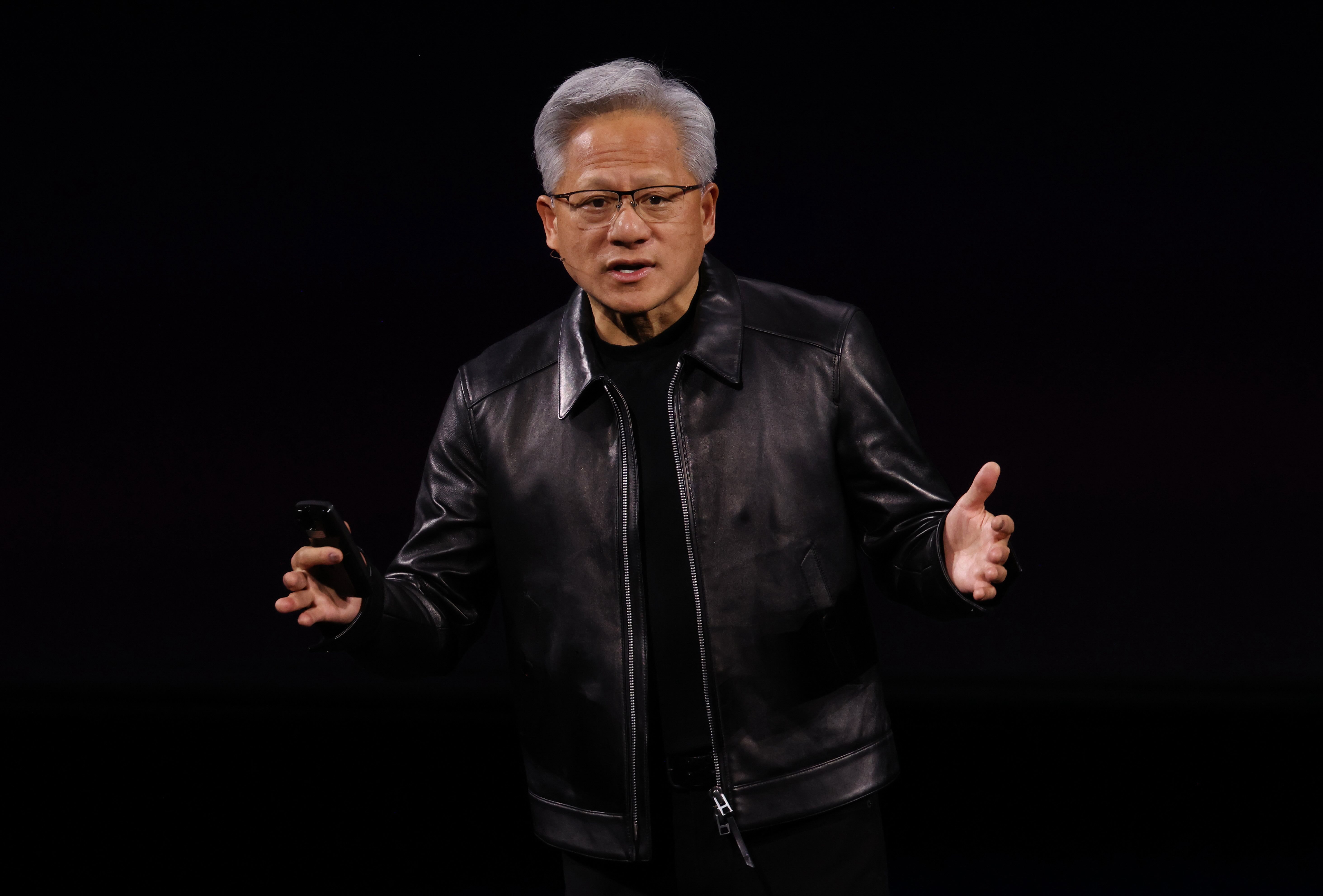
By now you’ve surely seen the photographs. In one, a silver-haired man in a black leather jacket sits beside a slim, attractive woman in a long white coat. In another the same pair are raising their glasses in a toast. The images could not be more anodyne, the story behind them could scarcely be more explosive.

The man is Jensen Huang, 63, the boss of Nvidia, whose chips power the AI revolution – and have made him worth more than $150 billion. The woman is Alice Huang (no relation), a Chinese businesswoman who looks to be in her forties. Jensen has now admitted being unfaithful to his wife of more than four decades, the third person is presumably Alice. And American intelligence, according to the New York Times, believes that Alice was a spy, recruited by Beijing’s Ministry of State Security with one target in mind: the heart of Jensen Huang.
None of this has been tested in court, Alice has vanished from view, nobody suggests Jensen knew the reality behind that pleasing smile. But if the spooks are right, this may be the most valuable honey trap in the history of espionage. And I find myself, reluctantly, wanting to applaud, because whoever mounted this production knew precisely what they were doing.
The honey trap is as old as the Bible. Literally. Delilah took Philistine silver to coax from Samson the secret of his strength. But the popular Delilah-ish image of the seductress as spy – all veils, bangles, smouldering glances – is simplistic. The experts have always known that the trap is not merely about beauty. It is more about selecting the correct bait, as if you are fly-fishing for trout in the purling River Test.
The Soviets turned honey traps into an industry. The KGB called its seductresses ‘swallows’, and they worked from ‘swallow’s nests’: two adjoining rooms, one for the tryst, one for the camera crew. Then came the harder bit, the casting.
To snare Maurice Dejean, de Gaulle’s ambassador to Moscow, the KGB deployed more than a hundred officers and agents. It first tempted him with a French-speaking divorcee, then a beautiful film actress – whose ‘husband’ duly came back from a geological expedition and duffed up the ambassador. Happily, Dejean had a sympathetic Russian friend who could hush things up. Less happily the friend was the KGB general running the whole operation.
If you misread your target a honey trap will collapse, embarrassingly. The KGB managed to get President Sukarno of Indonesia into a room with a troupe of ‘air hostesses’. When shown the film of his romps, President Sukarno was delighted, and asked for extra copies to share with his pals.
Lust is a transient thing. Love will have you photocopying documents for 20 years
The supreme craftsman of the honey trap was Markus Wolf, the East German spymaster. In the 1950s he noticed that Bonn was full of lonely secretaries, with access to state secrets. He decided to send them very carefully chosen ‘Romeos’. These men were not Hollywood hunks: they were well-mannered, attentive, kind, the sort of men who will listen to a lonely secretary in boring Bonn. Later in life Wolf took credit for ‘perfecting the use of sex in spying’, but his real commodity wasn’t sex, it was love. Lust is a transient thing. Love will have you photocopying documents for 20 years.
Which brings us back to the Huangs. Last year, when the Times reported that Chinese and Russian agents were waging ‘sex warfare’ on Silicon Valley, Elon Musk offered the tech bros a handy rule of thumb: ‘If she’s a 10, you’re an asset.’ That was funny; it was also wrong. Even the most spectrum-bound software engineer will be suspicious of a supremely beautiful young woman who suddenly takes an interest in a hugely important American businessman, at a crucial moment in geopolitics – and who just happens to hail from America’s rival superpower.
No, in this instance you don’t want an obvious ten. What you want is what Beijing found in Alice Huang. She is not a pouting 22-year-old in a microskirt. She is slender, pretty, elegantly dressed and about the right age: notably younger than Jensen, yet not so young she makes him feel like Humbert Humbert. Alice Huang is also a former television journalist, so she is presumably clever, cultured, good company. And she arrived in his life as a founder of Megaspeed, a Singapore firm which became the biggest buyer of Nvidia chips in south-east Asia.
This is where the trap neatly shuts. Most men dream of a pretty woman who laughs at their jokes. A billionaire American chip salesman, of Chinese ancestry, dreams of a pretty woman who laughs at his jokes, appreciates fine wine, understands the poetry of Li Bai, and then orders another squillion dollars’ worth of processors.
So: chapeau, Chinese intelligence. Though the applause should perhaps be a little muted, because the Americans, it seems, have been aware all along. Alice was reportedly under electronic surveillance, and Marco Rubio personally drafted a warning about her.
Finally, consider this consoling irony. Jensen Huang is a high priest of the machine age. His chips train the artificial minds which, we are told, will soon replace the lawyer, the coder, the columnist. And for years America has been building a great wall around those chips: export controls, licences, and blacklists. And yet the way through the wall, if the spooks are right, was not a hack or an algorithm, it was an agreeable dinner in Taipei. It was a waft of fine perfume, a shared glass of Macallan, a glimpse of pretty ankle, and some soft, intelligent, feminine conversation. And a billionaire tech bro was hooked.
The robots may be coming for our jobs. The swallows will live on.





Comments