As First World War poets go, John McCrae was a one-hit wonder. He was a Canadian officer and surgeon who wrote ‘In Flanders Fields’ after the death of a friend at the Second Battle of Ypres in May 1915.
Yet it’s this banger — as it would doubtless be called today — that inspired the use of the poppy as a symbol of remembrance and is read at ceremonies around the country. Of the many poppies in evidence on Remembrance Sunday, plenty were online and AI-generated and sprinkled liberally over social media posts, which seemed to be more about themselves than the Glorious Dead.

Take the clothing designer, Jade Holland Cooper. She posted a picture of herself — for her one million Instagram followers — heavily made up, astride her horse and dressed in her eponymous label (tweed with a dose of bling, if you’re unfamiliar with the brand). This ensemble stood in a field adorned with computer-generated poppies, accompanied by audio of ‘The Last Post’ and the words ‘Lest we forget’. Forget about what? Shopping the Holland Cooper Autumn-Winter ’26 collection? (‘Jade’s Knightsbridge Cape Cheltenham Look’: £749).
Lots of horsey types did the same thing, posting hunting pictures in which the poppies in the lapels of their dark hunt coats were augmented by many more of these out-of-season wildflowers, which have apparently sprouted all over the Shires. The usual platitudes — and they are platitudes when sprayed about with no thought — about never forgetting were undermined by what a jolly good time they were having; laughing, swigging from hip flasks, leaping large hedges.
And then there was a whole other category, of sepia photographs of Great-Great Uncle Reginald and similar — again, all framed by poppies — with promises of the ilk, ‘Never forgotten’. Although you can’t forget someone you never knew because they died on the first day of the Somme, well over a century ago.
I certainly felt moved, but not, presumably, in the way they had meant. I was moved by this naff display of virtue-signalling to rejig John McCrae’s opening lines, thus: ‘On Instagram the AI poppies grow/ Between the thirst-traps, row on row’.
How did this happen? When did we become so selfish, so blindingly solipsistic that Remembrance Sunday became not about those who died in corners of forgotten fields, but about marketing ourselves, growing our brands and businesses? Since when did the Armistice become about attention-seeking and the cheap dopamine hit of gaining multiple ‘likes’?
We used to have poppy fascism, whereby crusty old wannabe colonels would lose their minds over people failing to wear one (probably for no more sinister a reason than it was on their other coat). This created the ludicrous spectacle of Strictly Come Dancing contestants with a poppy pinned precariously to a shoestring strap, of Match of the Day pundits wearing theirs on untucked smart-casual shirts. But even this could backfire: ‘BBC CRITICISED OVER PREMATURE POPPY WEARING’ screamed a typical seasonal headline from 2010.
Since when did the Armistice become about attention-seeking and the cheap dopamine hit of gaining multiple ‘likes’?
Poppy fascism still exists — see ‘FURY AS BBC PRESENTERS FAIL TO WEAR POPPIES DESPITE LAUNCH OF ANNUAL APPEAL’ (copyright all newspapers) last month. In case you missed it, BBC Breakfast presenters Naga Munchetty and Charlie Stayt were in the stocks this time.
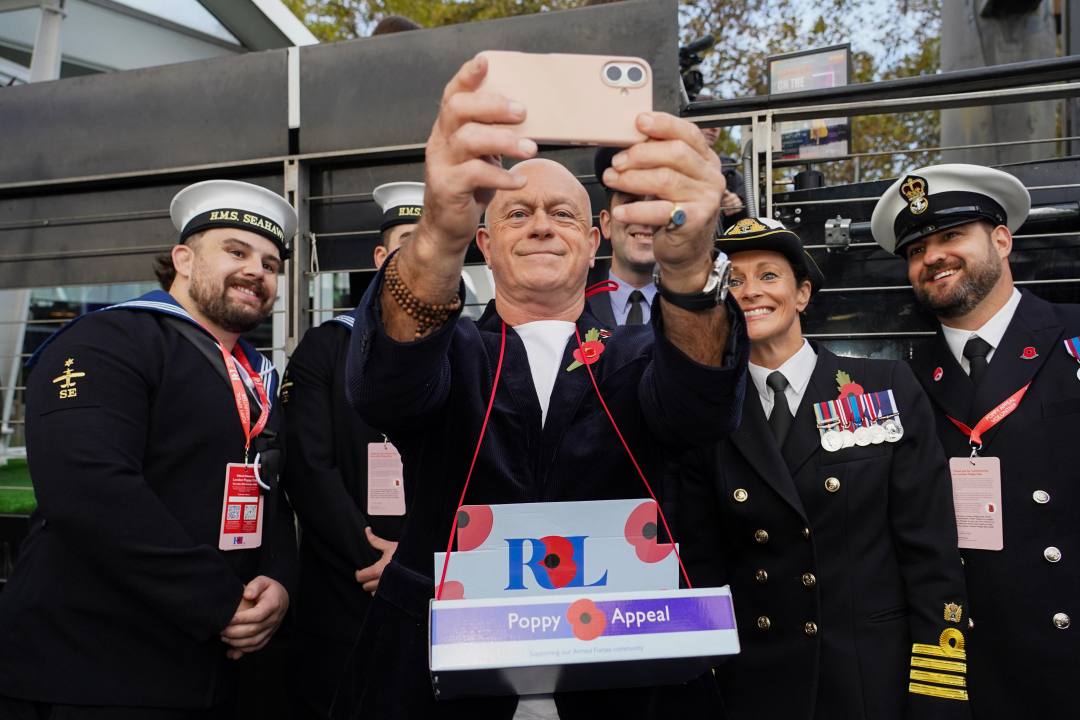
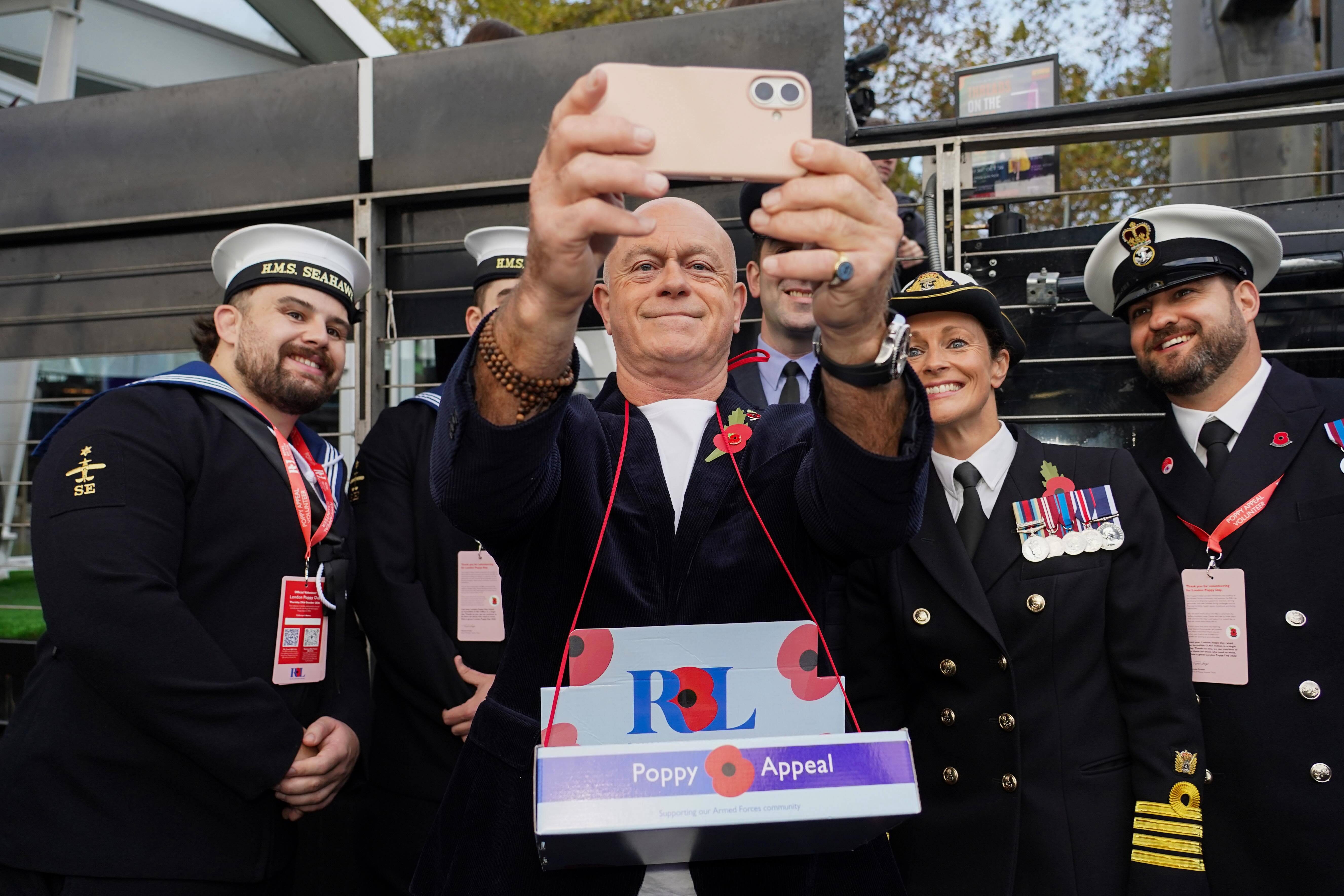
But now we have poppy narcissism — which, arguably, is rather more offensive than failing to realise, when you start your breakfast show shift at 3.30am, that it’s the first day of the British Legion’s two-week fundraising window. This shameful, performative nature of commemorating the fallen is perhaps best illustrated by the phalanx of prime ministers, past and present, at the Cenotaph last Sunday. Sam Leith has eviscerated this ‘circus of shame’, a spectacle only topped by their socials.
Andy Burnham, given his record on defence, had some chutzpah posting a video of himself laying a wreath. What was he thinking about when he bowed his head — how to make re-sealable packets of cheese slices stick back down properly? Tone-deaf Liz Truss (who, it’s been observed, if she lives to 95, will have spent more days at the Cenotaph than she did in office) was at it, too. She shared a bizarre picture of her staring sideways at Boris Johnson, whose Struwwelpeter hair made Michael Foot’s much-derided donkey jacket look like it was tailored by Gieves & Hawkes of Savile Row.
Rishi Sunak did manage one shot of the Cenotaph without him in it — but blew it by adding pictures of himself with Mrs Sunak (in a sculptured black ensemble costing approximately the annual turnover of a local British Legion branch) — and one bizarre image in which he looked skyward, grinning.
There was no grinning at the sung Requiem Mass for the war dead I attended on Sunday, no selfies, no self-aggrandisement. The priests wore black vestments, there was the two-minute silence, ‘Lead, Kindly Light, Amid the encircling gloom’, a short, moving homily, the national anthem and ‘Nimrod’ for the recessional.
But enough about me. Poppy narcissism, like Rex Mottram in Brideshead Revisited is ‘something absolutely modern and up-to-date that only this ghastly age could produce’. Though Evelyn Waugh, who wrote his masterpiece on bouts of leave from his wartime service — as the most unlikely Royal Marine until Prince Edward — could never have conceived of this aberration.
With the government finally conceding that we need to be ready for war by 2030, the egoism of the TikTok brigade may soon evaporate, in the worst possible way. Should they die, they can rest in peace, knowing there’ll be AI poppies in ‘some corner of a foreign field/ That is for ever England’.



Comments