There is a moment when a tool becomes a toy. For the Range Rover that moment probably arrived a long time ago. But this week’s announcement that all the cheaper, sub-£100k models are being discontinued was the final transition from grease to glitter. This British industrial masterpiece will now only be gift-wrapped and handed to people who don’t know where the bonnet release is.
When the first Range Rover rolled out of Solihull in 1970 it invented the category of posh-roader. As the first true SUV it carried a remarkably reasonable price tag of £1,998. That was less than half the price of an Aston Martin and about a fifth the cost of a Rolls Royce.
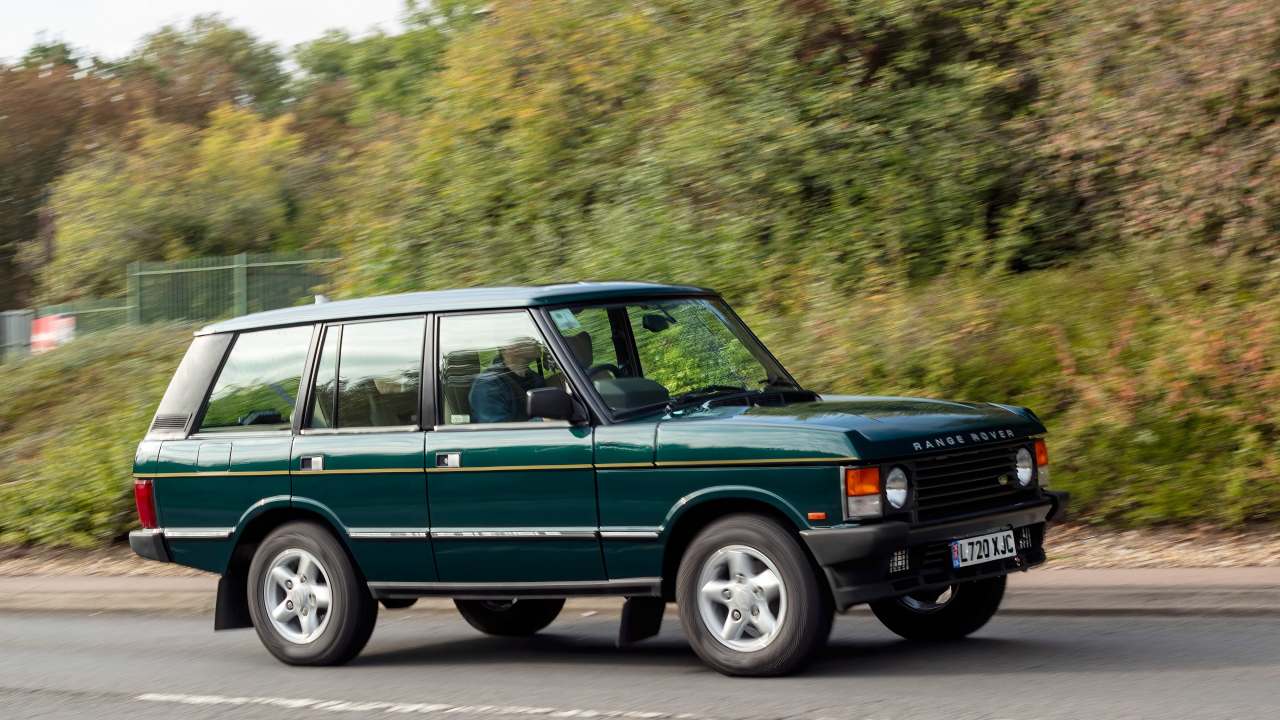
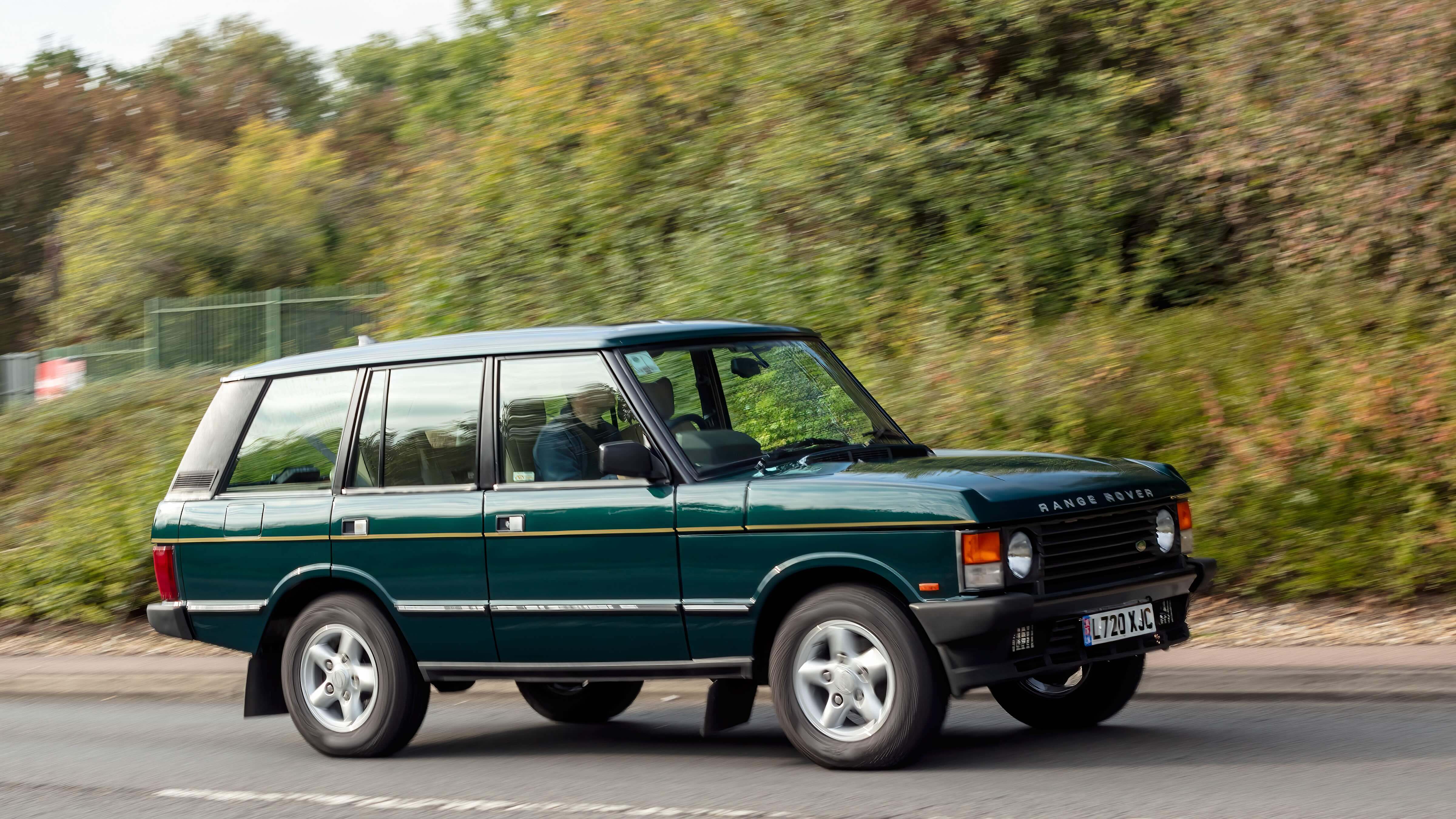
That weirdly boxy upright Range Rover was a glorious instrument of utility. Chief engineer Charles Spencer King publicly announced it was built for senior army officers, farmers and building site bosses. It featured a hose-down interior, vinyl seats and rubber mats. If you got sheep dip on the dashboard, you swished it out with a bucket. It was four vehicles in one: family saloon, cross-country workhorse, estate car and high-speed cruiser.
When an object is a tool, its design is dictated by necessity and its dimensions are lean. The original was just 4.45 metres long, shorter than a Ford Focus estate and occupying the same footprint as today’s Mini Countryman.
Yet its aristocratic poise allowed it to perform a social magic trick. As Jeremy Clarkson once put it: it was the only vehicle equally at home outside Buckingham Palace, a mud-soaked Yorkshire farm or a high-class brothel. The Queen was famously pictured behind the wheel of various green Range Rovers well into her nineties, peering grimly over the steering wheel as she navigated Balmoral’s terrain with a brace of corgis on board.
A Range Rover was long the motoring equivalent of a pair of wellies, mud splattered and smelling slightly of wet spaniel. The moment of mutation happened later, when Land Rover bosses realised that wealthy urbanites were buying Range Rovers, not to carry wayward sheep and wet hay bales, but to climb the kerb outside Harrods. Gradually vinyl was swapped for Connolly leather, rubber mats for deep-pile carpet and the hose-down dash for polished walnut.
Today, that transition from tool to toy is officially complete. Jaguar Land Rover has executed its ‘House of Brands’ strategy. Suburban Evoques and sleek Velars are being put out to pasture. From here on, if you want a badge that says Range Rover, you’ll need to find at least £100,000. The base SE model starts at £105,795. Relinquishing the mainstream means the brand has completed its evolution from four-wheel-drive shooting brake with high ground clearance into an ultra-luxury, high-margin asset designed to challenge Bentley and Aston Martin among the global plutocracy.
When an object becomes a toy like this it stops being valued for what it can do and starts being valued for what it says about the owner. The engineering required to cross the Sahara or scale a 45-degree Lake District fell is still there, but it is a conversation starter rather than a functional necessity. Instead, high-end Range Rovers now have features like 24-way hot-stone massage seats that would be ruined by a wet Wellington boot. They’d certainly unsettle most sheepdogs.
It often became known as the Rage Rover
Of course, I mustn’t over-romanticise the middle years of this journey from pioneering tool to prestige plaything. For many of those years Range Rovers were mechanically catastrophic. They could cross deserts but might suffer complete electrical heart failure in a light British drizzle. Early V8 models dispatched fuel like a grounded oil tanker, the air suspension routinely collapsed leaving panicked hedge-fund managers bouncing down the fast lane as if they were on motorised Space Hoppers. Then there was the scandal of the dissolving engines and the flawed crankshafts that snapped in half. For decades, owning a Range Rover meant maintaining a co-dependent relationship with your local flatbed recovery driver. It often became known as the Rage Rover.
But nothing else looked quite so good sitting on the hard shoulder. It was the standard equipment of the Chelsea Tractor brigade, the ultimate emblem of suburban over-specification, like a £1,500 Arc’teryx mountaineering jacket worn to walk from a centrally heated house to a heated Uber. You could survive a nuclear winter but today you’re just going to the organic deli. In those mid years, as reliability floundered, proportions engorged. The Range Rover swelled into a terrifying, rolling fortress over five metres long, two metres wide.
Now it weighs nearly three tonnes. The option lists read like a Roman emperor’s fever dream, with motorised tables that rise from a leather-clad centre consoles or refrigerated compartments calibrated to hold a bottle of Dom Pérignon at precisely six degrees Celsius. Top-tier versions are powered by twin-turbocharged V8 engines offering 0-60 mph in a physics-defying four seconds. They easily blast past £200,000.
As tool becomes toy that high cost is the point; the primary utility is demonstrating that you can afford to spend six figures on a huge, motorised box. Next year’s all-electric Range Rover GT will not be bought by British farmers or army officers. And certainly not builders. It will be bought by people who view the world from the top floor of a glass tower in Mayfair, Miami or Dubai.
The original Range Rover was a triumph of British design. It was a posh car that was proud to do dirty work. It has finally shed the last of its mud. Solihull’s finest export has left the farmyard for good.




Comments