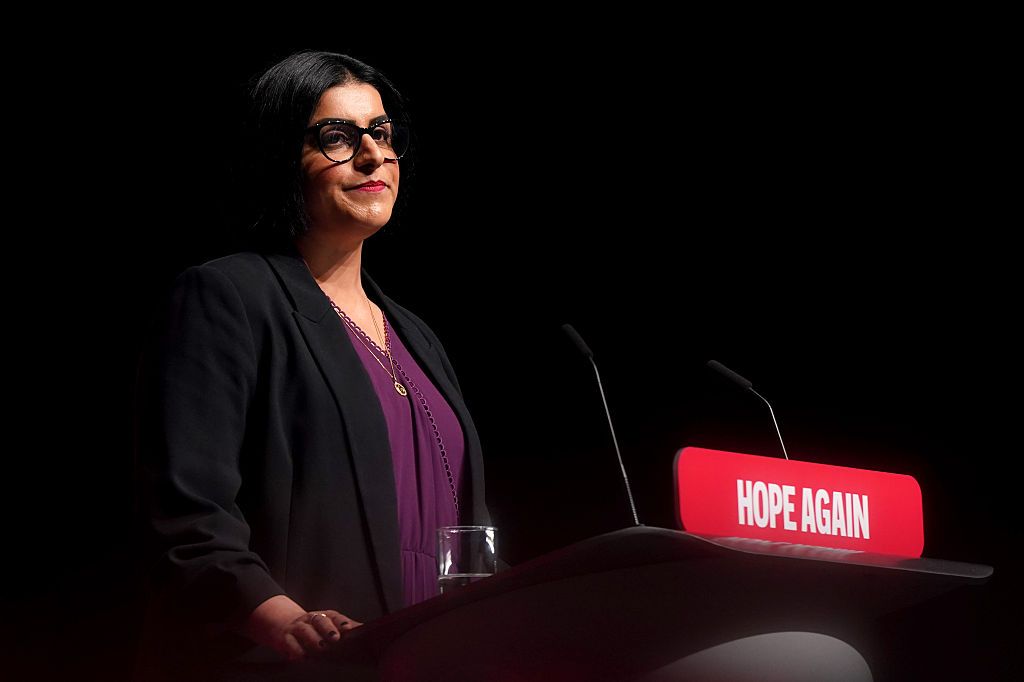
A year after Shabana Mahmood first announced her proposed changes to Indefinite Leave to Remain (ILR), nine months after a consultation (in which 73 per cent of respondents were migrants here on visas) closed, and after months of resistance from within the Labour party, and the wider left, the Home Secretary stood in Parliament to tell us what will happen to the Boriswave. The new system, Mahmood said, would be grounded in fairness – to both the British people and those who came here legally – because ‘we value above all else fair play’, and because ‘settlement confers some of the most valuable rights this country has to offer’.
When hundreds of thousands of people who should never have been here stand to gain British citizenship simply because they’ve stayed in the country long enough, the very concept of citizenship is devalued
She was also admirably strong in dismissing suggestions that there is something wrong in changing the terms of settlement for people who are already in the country. As the Home Secretary said, the ‘rules around settlement are determined when a settlement decision is made, not at the point when someone arrives. This is a position that is long established in this country, and it is one that has been tested conclusively in our courts’.
But rhetoric is cheap. What will the new rules mean? The starting point for most people will be that settlement will take ten years, with both faster and slower paths depending on how the person arrived in the country, and how they behave. Generally, those who have a British criminal record, can’t speak English to a high standard and owe money to the British state will not be allowed to settle. There will also be a requirement to have earned money, but not much – £12,571 a year for at least three years will qualify refugees for ILR, but other migrants will have to earn that amount for five years out of the last seven before they apply. The earnings requirements will not apply to children, those over 65 or to disabled migrants.

There are some other positive changes too. The government had initially proposed allowing migrants to volunteer in order to earn quicker settlement. This would obviously have been abused by open borders charities, and so we should be thankful that this idea has been scrapped. Another piece of good news is that the ten-year ‘long residence’ route to settlement has been scrapped. This allowed migrants to stitch together various temporary visas including visit visas, student and temporary worker routes until they’d been in the country legally for ten years, at which point they were entitled to ILR. Scrapping this is a good decision.
On asylum, the plan is clearly to drive migrants towards ‘safe routes’ where they claim asylum in the UK before coming here. To this end those who use these approved routes will be able to settle just five years after arriving in Britain, while those who enter via other legal routes, or illegally, can expect a starting point of 20 or 30 years. The problem, of course, is that combining this with allowing charities, NGOs and other interested parties to sponsor refugees will likely drive huge new flows, while those who arrive illegally will still be supported by British taxpayers and will almost never be removed, so waiting decades for formal settlement is unlikely to prove much of a deterrent.
But the great debate has been about those who came here on care visas, and their dependents. Here, the Home Secretary has given significant ground. Care workers who entered the system before May 2025 and who have actually worked in care roles will still be able to settle after five years, as will their dependents. As for those who haven’t kept to the terms of their visa, the government is giving them ‘a further opportunity’ to keep their side of the bargain. They’ll be allowed to apply for ‘a further five-year Health and Care visa’. This is despite the government acknowledging that the care visa route was widely abused, and the reasonable choice being to deport people who arrived on a visa and ignored its conditions.
The result of all these changes is forecast by the Home Office to reduce the number of people who will settle between 2026 and 2030 from 1.9 million to 1.4 million. Still vast numbers, of course, and no doubt the left will immediately begin campaigning to exempt other groups from delayed settlement.
Perhaps unsurprisingly, Reform’s response to this was blistering. Nigel Farage and Zia Yusuf gave a press conference while the Home Secretary was still fielding questions in the Commons.
Yusuf said that ‘Shabana Mahmood is U-turning’ on ‘the largest cohort of the Boriswave and the most expensive’, adding that the care visa ‘is a scam on the British people’ and ‘a fiscal catastrophe’. Meanwhile, Farage pointed out that ‘normal countries don’t’ offer low wage workers after just a few years, saying that ‘we are uniquely stupid in doing this’.
The policy announcement they made is very significant. Reform have committed to reviewing every single grant of citizenship ‘given to those who arrived on care visas’, and ‘who benefited specifically from Mahmood’s U-turn today’. These reviews will be ‘based on a person’s net contribution although that won’t be the sole factor’. They will also ‘extend the qualifying period for citizenship to a minimum of ten years’, and their previously announced policy of replacing ILR with a renewable five-year visa would apply to all migrants in the country.
This might shock some. But when hundreds of thousands of people who should never have been here stand to gain British citizenship simply because they’ve stayed in the country long enough, the very concept of citizenship is devalued. Reform are right to announce this policy now. Any migrants here on care visas should expect that if they are granted ILR or citizenship a Reform government will cancel it.
In November 1998, at the dawn of the Blair era of mass migration, Karl Bushby began a 28 year walk around the world. Today he returned, hours before Mahmood, Yusuf and Farage gave their speeches. It feels as though the end of his journey marks the end of that era of mass migration. Today’s changes are fairly significant, even with their obvious weaknesses, and Reform’s announcements even more so. Soon, perhaps by the middle of the next decade, this will no longer be a country which hands out settlement and citizenship like confetti. This era will feel like a fever dream. Britain after mass migration beckons.






Comments