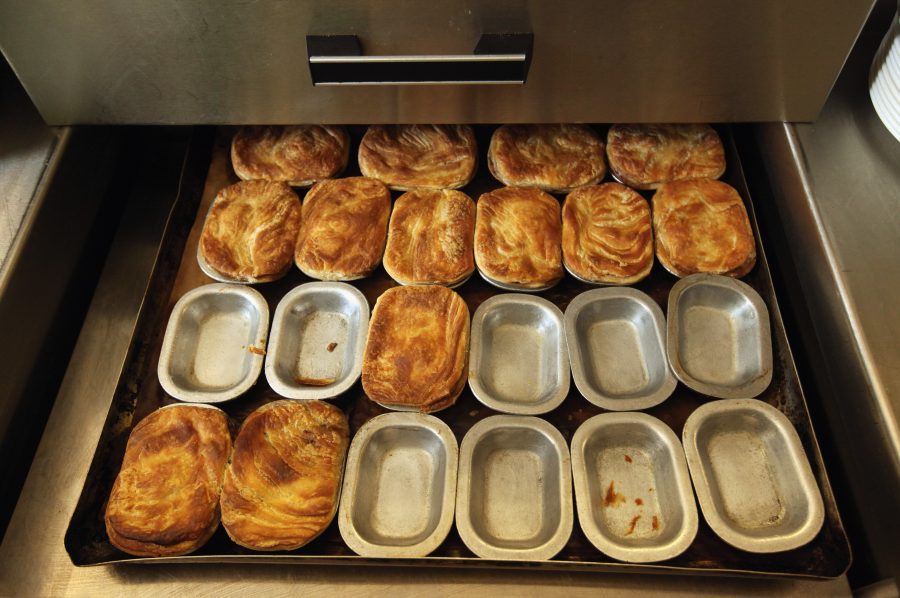
It is a sorry state of affairs when a pie seller is disappointed about selling more pies. Former Apprentice contestant and owner of Bowen Bakeries, Paul Bowen, appeared on Good Morning Britain this week to comment on John Healey’s budget as a small business owner. Bowen told the presenters that he will need to sell between 20,000 and 30,000 extra pies every week just to cover the rising costs of running his business. A staggering amount of pastry.
In the interview, Bowen was less than impressed with the Chancellor’s promise to give businesses some much needed ‘breathing space’. Hikes to the National Living Wage and employer National Insurance, rising supplier bills and energy costs are making life more expensive – and because Bowen Bakeries operates multiple shops, he says he doesn’t qualify for any of the small business rate relief on offer.
When Andy Burnham entered Downing Street, Bowen was optimistic. ‘Andy’s a Northerner, and I thought, “he gets it”’. 101 days was all it took for this optimism to dissipate. Whatever ‘breathing space’ the Government thinks it has delivered, Bowen hasn’t found much of it.
Whatever ‘breathing space’ the Government thinks it has delivered, Bowen hasn’t found much of it
The situation has become sufficiently serious that Bowen announced the closure of one of his three shops in Chorley, Lancashire, this September. The Market Street premises, which reportedly takes about £100,000 a year, is no longer worth keeping open. The increase in employer National Insurance was the ‘tipping edge’, on top of everything else that has become more expensive.
Healey’s ‘Coward’s Charter’ did admittedly do something for businesses. From April 2027, the threshold for full small business relief will rise from £12,000 to £18,000 for all qualifying retail, hospitality and leisure business. The Government estimates that this will take another 70,000 businesses out of business rates, whilst all bills for qualifying properties will be frozen in real terms for a period of two years. The hospitality industry, which includes pubs, social clubs and most live music venues, will also receive additional relief. This is certainly welcome.

Walk down most highstreets outside of the home counties and they are awash with boarded up shop fronts; ghost towns reminiscent of Lago in Clint Eastwood’s High Plains Drifter. Now, I’m a ‘save the high-street’ sceptic: no matter whether Healey makes online marketplaces responsible for collecting VAT, people simply prefer to order goods online, even pies. But that’s not to say we shouldn’t make the circumstances as favourable as possible for high-street shops and restaurants. The increased relief leaves behind many businesses that are still small by most people’s estimations – running three pie shops doesn’t make you a corporate conglomerate.
Business rates are just one item on a long invoice. Bowen says the latest increase in the National Living Wage (NLW) will add around £700 a week to his wage bill. As Ross Clark succinctly summed up for Coffee House this week, we must move past the recent trend of crippling yearly NLW rises. I co-authored a paper at the Prosperity Institute suggesting that a five-year freeze to the NLW could create up to 600,000 jobs. Everybody wants staff to be paid well for their work, but it is employers that must find this money and often they can’t, leaving young people without work and unable to gain a foothold on the career ladder. Pair this with the hike to employers’ National Insurance contributions and it’s not too difficult to see why we have close to one million NEETs and entire industries suffering under wage compression.
Then there are suppliers, who are themselves businesses that must bear these costs. When supplier costs rise, they are simply passed down to sellers and customers. Bowen says his weekly supply bills are between £20,000 and £30,000, and that he expects them to rise by around ten per cent. Using his figures, that’s an additional £2,000 to £3,000 per week. Add this to the £700 wage bill increase and he must find just shy of £4,000 extra every week.
Of course, these figures have not been pulled from audited accounts, but it offers a valuable insight into the breakdown of costs working against the average local business owner and entrepreneur.
This ‘anti-kulak mentality’ is precisely what keeps Britain in its sluggish economic state
Bowen didn’t illicit universal sympathy, however. Andy Twelves, a friend of mine, journalist, and trade unionist, was quick to point out that Bowen had previously posted a video on social media discussing his six-property portfolio as if this settled the matter. If Bowen has assets going spare, having to sacrifice £4,000 a week shouldn’t really matter: the pie man is riding the gravy train.
This ‘anti-kulak mentality’ is precisely what keeps Britain in its sluggish economic state. When a successful business owner with a young family investing in property for the future (presumably with minimal return at this stage) must shed assets to pay his taxes, something isn’t working. What’s more, being a landlord is swiftly becoming one of the most thankless ways to make (very little) money in Britain, particularly after the Renters’ Rights Act 2025.
Looking for lessons from a childhood film favourite, Chicken Run, Bowen might as well take a leaf out of Ginger’s book and start planning his escape. With Healey resembling Mrs Tweedy, intent on having British business for lunch, the dream of successful business is fast becoming pie in the sky.






Comments