
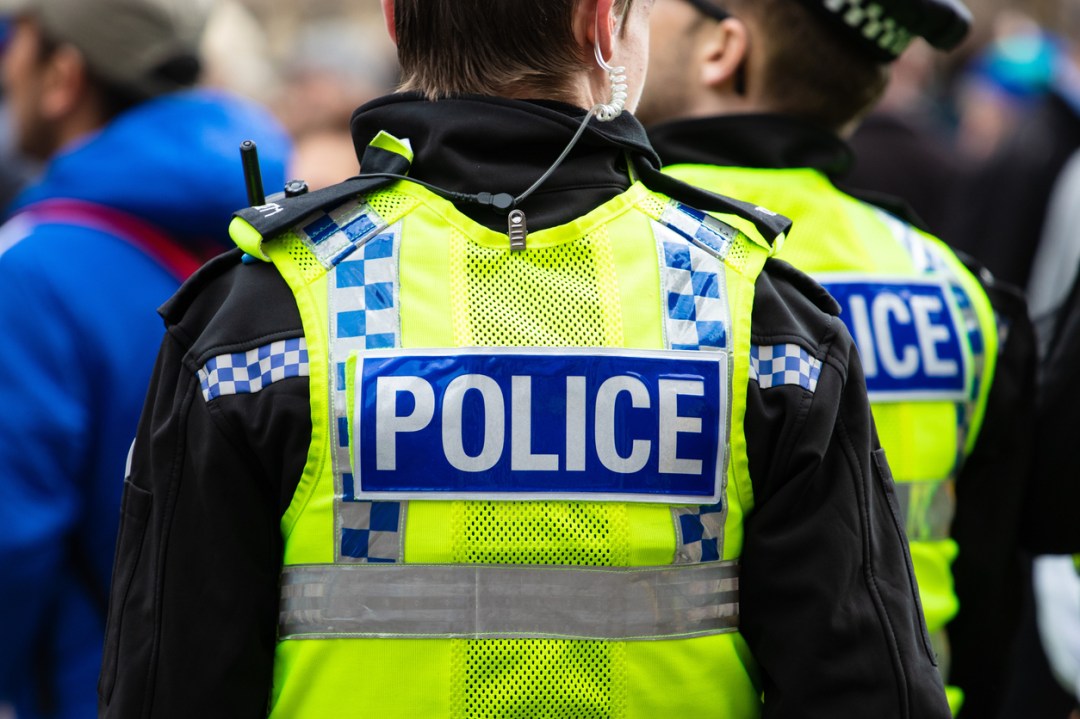
Paul Hardcastle’s son, Paul Jr, was dead when three police officers arrived on the scene of his fatal crash in Ongar earlier this year. One of their colleagues had tried to save him, but when they arrived, they started joking about his death. In bodyworn footage that was uncovered by the Independent Office of Police Conduct as it investigated the police chase of Paul Jr on his motorcycle that led to his collision with a van, the three constables laughed together as one asked colleagues if it was the wrong time to reveal that Paul Jr had complained previously that she’d failed to investigate a road rage incident. Another replied that she could ‘consider that closed’, adding ‘every cloud’.
Like many frontline jobs, policing involves an abnormal relationship to death
Hardcastle was devastated when his family was told about the footage, telling the Times that he was ‘just complete stunned. It was the constant laughing and sniggering. There was no respect. How do they treat members of the public who are alive if that’s how they treat the dead?’ According to Hardcastle, the three PCs were given reflective practice, which is basically where officers discuss how things could have gone better. Presumably this wouldn’t have required much brow-furrowing about what was done wrongly in this instance. But it also doesn’t suggest a huge amount of soul-searching about how it was that officers thought it at all appropriate to joke about a newly-dead man.
Like many frontline jobs, policing involves an abnormal relationship to death. Officers are the first to see people who’ve died suddenly, killed themselves or been murdered. They then have to get on with the next task on their shift, whether that’s dealing with some antisocial behaviour or perhaps another death. There is no way in which someone can go to work every day and maintain the kind of reaction to death that the rest of us see as normal. Just as doctors and nurses become used to hearing and even causing a level of pain that would make the rest of us recoil, so police become used to death and bodies as part of their day without much of a chance to decompress.
For some police officers, that abnormal relationship takes its toll personally. I interviewed one officer a few years ago who had dealt with so many post mortems of children and murder victims in his long career – without ever really dealing with what he’d seen – that he had a mental breakdown. For others, the ongoing toll might be very obvious to outsiders who hear you talk about death, and not in a good way.
What this abnormal relationship to death can lead to is a normalisation of cruelty dressed up as the kind of professional distancing that everyone in these roles needs. No, you cannot hang onto the thoughts of every dead body you’ve seen, because otherwise you would never return to your station. But joking about someone who has just died, or using your latest sudden death as a story in the pub is not professional desensitisation: it is a toxic response to trauma, and one that is reinforced by a toxic culture in a station. The problem is that so many in the police suffer from that toxicity that they don’t realise how abnormal it is, and so officers feel comfortable to make these kinds of jokes in front of one another without the fear that anyone will get into trouble. These officers were only assigned the reflective practice after the IOPC stepped in, not because one of their colleagues complained. That is what is particularly devastating about this case: it’s not that a few officers were appalling, but that none of their number thought there was anything out of the ordinary about what they’d said. Which suggests that reflective practice might be largely pointless, if it doesn’t involve a wider reflection about how much toxicity has become entirely normal.





Comments