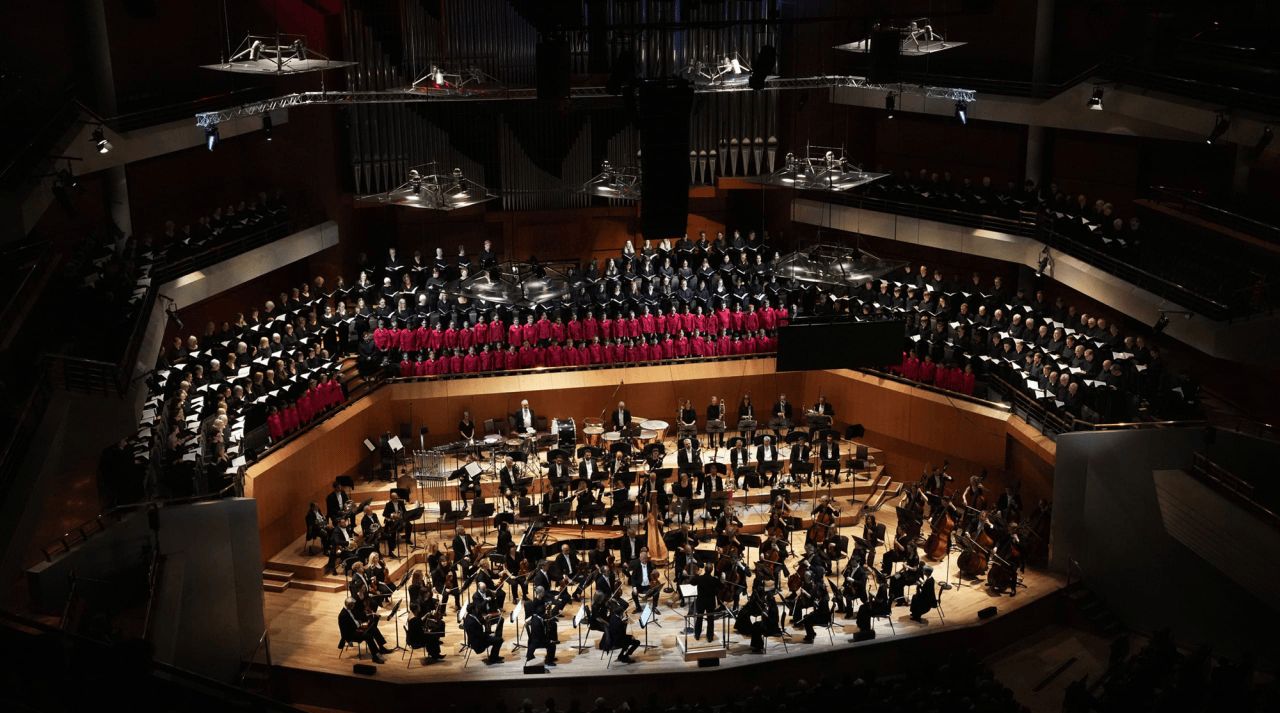
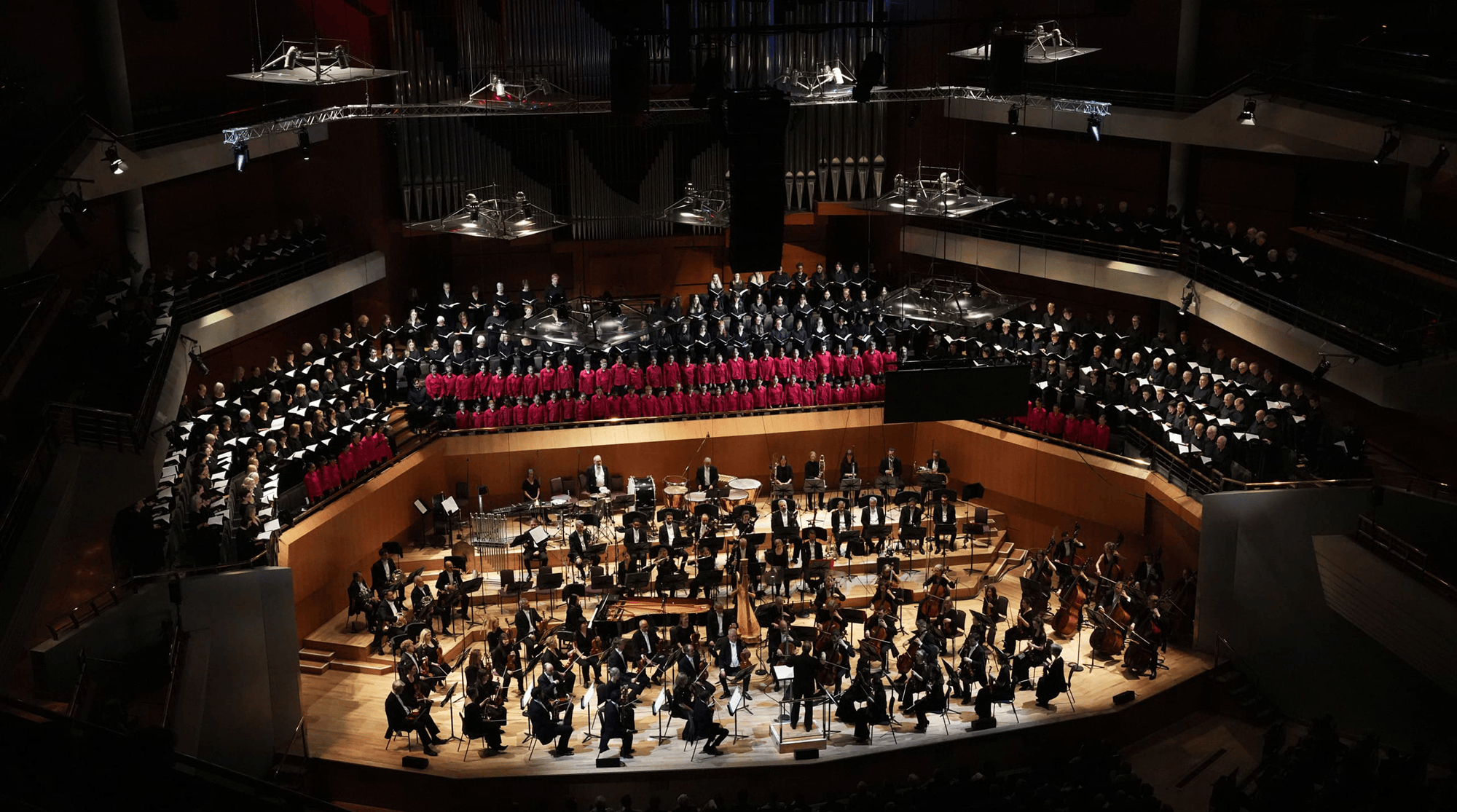
Say what you like about Manchester – and who doesn’t, right now? – but when it comes to imaginative programming, the Hallé is on a roll. It opened its new season with two substantial premières. First up was Sir James MacMillan’s Sixth Symphony, conducted by the orchestra’s principal conductor Kahchun Wong, and superficially a more abstract conception than MacMillan’s tremendous Fifth Symphony, which was premièred in Edinburgh in 2019.
That work had a subtitle, Le grand Inconnu, and it dealt with the Holy Spirit. The Sixth has no name, though MacMillan has said that it incorporates musical portraits of family members, alluding to the ‘friends pictured within’ Elgar’s Enigma Variations. It’s an interesting model. Elgar’s masterstroke was to take a small-scale artform, the Victorian salon miniature, and grow it into a symphonic structure of boundless emotional range. MacMillan’s approach is less integrated, but just as novel. Four discrete miniatures precede the symphony proper, each one laying out the material that will be developed and recollected in an extended finale.

So it’s effectively a single-movement symphony with four appendices that come before, rather than after, the main business. A throaty, folksy alto flute melody opens the first movement (scored for woodwinds); the piano strikes a domestic note amid chiming percussion in the second. The brass have the third cameo: a quiet jig, plus muted trumpets that whirr like some exquisite piece of clockwork. Then the strings get their turn. Low cellos sing slow minimalist patterns that gradually start to shine and soar. It’s rather gorgeous and you could imagine it reworked as a Classic FM meditation track, or a choral anthem. But you couldn’t imagine it from any other composer.
And then, with a mighty roar, MacMillan rolls up his sleeves. Although the 20-minute fifth movement is shaped in a single arc, it’s possible to discern separate sections (including a slow movement and a scherzo). MacMillan has never disowned his influences and it felt at times like travelling through a windswept landscape in which familiar monuments loom mistily on the horizon. There are distant glimpses of Elgar, Arnold, Pärt and above all, Sibelius, whose sense of pace and organic argument MacMillan has inherited. The final gesture – a return for the alto flute, and a dying fall in deep twilight – had the inevitability of true symphonic thought.
But judge for yourself: it’s on BBC Sounds for the rest of October. What’s indisputable is the precision and character that Wong drew from his players. The Hallé really is a crack outfit at present, and all that virtuosity paid off when Paul Daniel conducted the British première of Offenbach’s opéra bouffe Barkouf a few days later, as part of a recording project with Opera Rara. Offenbach obsessives (hands up) won’t have needed any encouragement; everyone else just needs to know that Barkouf (1860) is a cheerfully non-PC oriental farce about a dog (unseen, though there are off-stage woofs) who becomes a sort of Grand Vizier.
If the result isn’t quite premium Offenbach, it’s still wonderfully fresh. There’s a serenade that turns into a barcarolle, accompanied by a swooning cello ensemble; other delights included the sensuous, effortlessly idiomatic singing of Anne-Catherine Gillet (as the dog-loving heroine Maïma) and dancing, needlepoint woodwind details that sparkled like sequins. Alistair McGowan narrated, transforming Jeremy Sams’s playful comic verse into a one-man stand-up routine. It was a lot of fun.
In Cardiff, Welsh National Opera opened a much-depleted season with a Bohème bought in from Glyndebourne and a Bluebeard’s Castle that was originally seen at English National Opera, where it was billed as a semi-staging. In fairness, Joe Hill-Gibbins’s atmospheric low-budget production has been tightened up and polished by WNO. The action plays out around a huge dining table in a darkened space, in which colours and small symbols (like the dark red of spilled wine) take on all sorts of ominous resonances.
As ever with Bluebeard, everything pivots on the central pair and the conductor. Lidiya Yankovskaya drew impressionist hues from the WNO orchestra, while on stage Nathan Berg (Bluebeard) and Christine Rice (Judith) were fearless; alternately drawn and repelled by sexual tension, with Rice, in particular, managing to combine allure and cold steel in a concentrated beam of song.
Bluebeard shares a double bill with Stravinsky’s ‘opera-oratorio’ Oedipus Rex – cleverly directed by Hill-Gibbins around the same basic set, with Peter Hoare dialling the intensity to 11 as Oedipus and Stephen Richardson sounding sulphurous as Creon. The chorus and orchestra, too, brought primary colours and thrillingly controlled force. But Oedipus Rex has always been one of those Stravinsky experiments that doesn’t quite come off, and it didn’t help that the narrator here, L.J. Parkinson, seemed determined to camp it up. That’s best left to Stravinsky’s half-monumental, half-histrionic score. Still, it pairs well with Bartok – who can hardly be blamed for being the better composer.






Comments