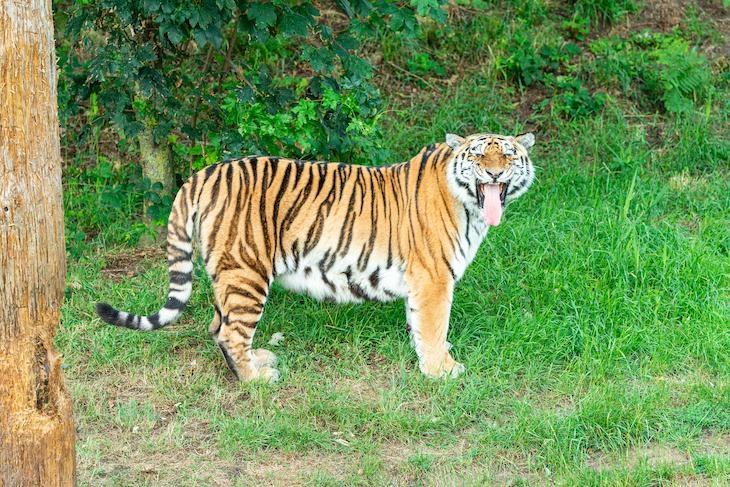
A man died on Saturday after entering the tiger enclosure at Yorkshire Wildlife Park. Emergency services were called to the animal attraction after an Amur Tiger named Altai bit the man, who was pronounced dead at the scene. It is believed that the victim climbed down into the animal’s enclosure from a walkway before he was mauled.
This incident came only months after a crocodile attacked a three-year-old boy, who entered its enclosure at Johnsons of Old Hurst zoo in Cambridgeshire. Thankfully, the boy survived, but he suffered catastrophic injuries to his arms, head, neck and face.
A tiger that mauls a human who’s entered its enclosure is not committing some moral offence. It is behaving as a wild predator would be expected to behave
Millions of people visit zoos and wildlife parks every year, and incidents of this kind are vanishingly rare. A panicked review of security arrangements seems unnecessary. But this tragic incident is an opportunity to examine our relationship with animals kept in captivity.
Let’s start with the reports describing how the animal “attacked” the man. A tiger that mauls a human who’s entered its enclosure is not committing some moral offence. It is behaving as a wild predator would be expected to behave. Stand back for a moment and the absurdity becomes apparent: we celebrate the beauty and danger of wild animals, sell tickets to see them, and then expect them to conform to standards of behaviour we consider civilised.
We want to stand a few metres from a tiger, film it, post our footage online and experience a little of the primitive thrill of encountering an exotic predator at close quarters. Yet we also expect barriers, keepers and emergency procedures to ensure that nothing genuinely wild can happen. In other words, we want wild animals to be wild, provided they do not behave too wildly.
The digital era has changed the way most visitors interact with animals in zoos and parks. Many aren’t content to dwell in the moment and enjoy seeing the animal: they want to document it for their social media. Even as the man was being mauled to death inside the tiger enclosure on Saturday, people were filming the horrific scenes, which quickly went viral on social media.
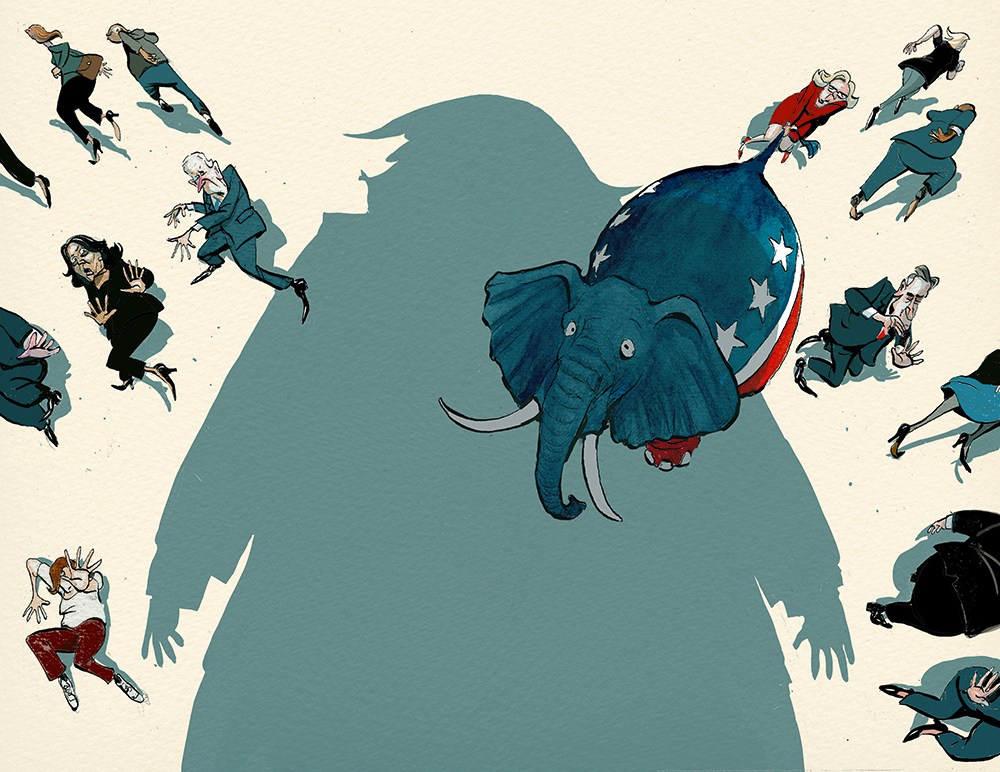
The wider morality of zoos and wildlife parks is also questionable. In 2024, some British zoos faced accusations of “gross neglect” following an 18-month, Europe-wide investigation that reported thousands of apparent breaches of animal welfare standards. Researchers from the Kent-based conservation charity the Aspinall Foundation visited zoos and aquariums and found bears confined in concrete-walled enclosures, wild dogs kept outdoors without bedding, and elephants left outside in freezing temperatures.
An earlier study by the University of Bristol found that more than three-quarters of British zoos failed to meet all the minimum animal welfare standards. Researchers have also discovered that enclosures in British zoos and safari parks were, on average, 100 times smaller than the minimum home ranges of the animals concerned in their natural habitats.
For many of us, even a well-run zoo presents a moral problem. However carefully maintained, its enclosures restrict movement and deprive animals of many of the choices they would enjoy in the wild. Captivity can prevent them from expressing natural behaviours and meeting their physical, social and psychological needs. The people who visit zoos may enjoy it, but that doesn’t mean the animals like being there.
Perhaps the most revealing feature of zoos is the way they expose the curious contradiction in our relationship with other creatures. We visit, marvel at the animals and admire their beauty, intelligence and charm. We coo over them and congratulate ourselves on being animal lovers.
Then we go to the canteen for lunch, where we may be served the charred remains of chickens, pigs and other animals that also spent their lives inside cages too small for them, before being taken to the slaughterhouse and killed. Some species, it seems, are to be admired and protected; others are to be bred, imprisoned and slaughtered. We are all conditioned into these distinctions from childhood, rarely stopping to examine them. Yet it is difficult to make a convincing moral case for treating a cow as a meal and a dog as a companion, while insisting that our treatment of both is governed by a consistent principle.
Zoos often point to their role in conservation, education and the protection of endangered species. Some do indeed perform admirable work on these fronts, but preserving a species and respecting the interests of individual members of that species are very different goals. Generally, the species tends to fare better than the individual animals.
At the heart of the problem is mankind’s tendency to treat animals as commodities rather than as living individuals with interests of their own. We assume that because we can capture, confine, breed and display them, that means we’re entitled to do so. We mistake our power over other creatures for a moral license to use it.
It’s quite right that Altai won’t be punished for what happened on Saturday. The tiger was not committing a crime. It was being a tiger. The tragedy should remind us that wild animals are not performers and not obliged to entertain us safely.
A tiger is more than an attraction. It’s a living creature with a life of its own.






Comments