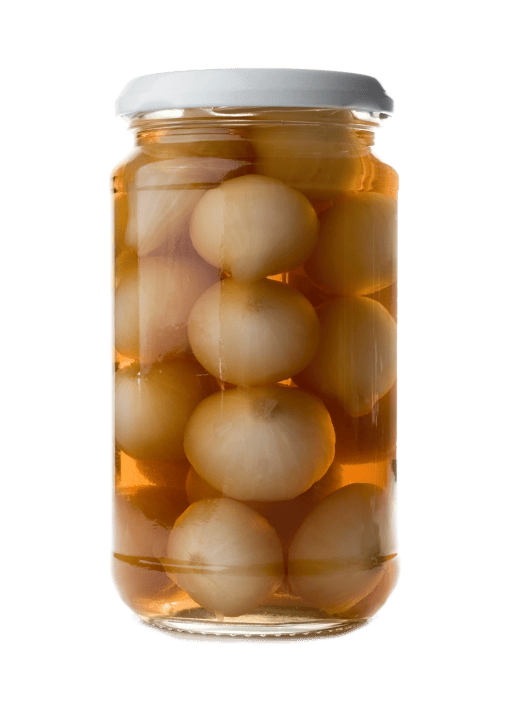
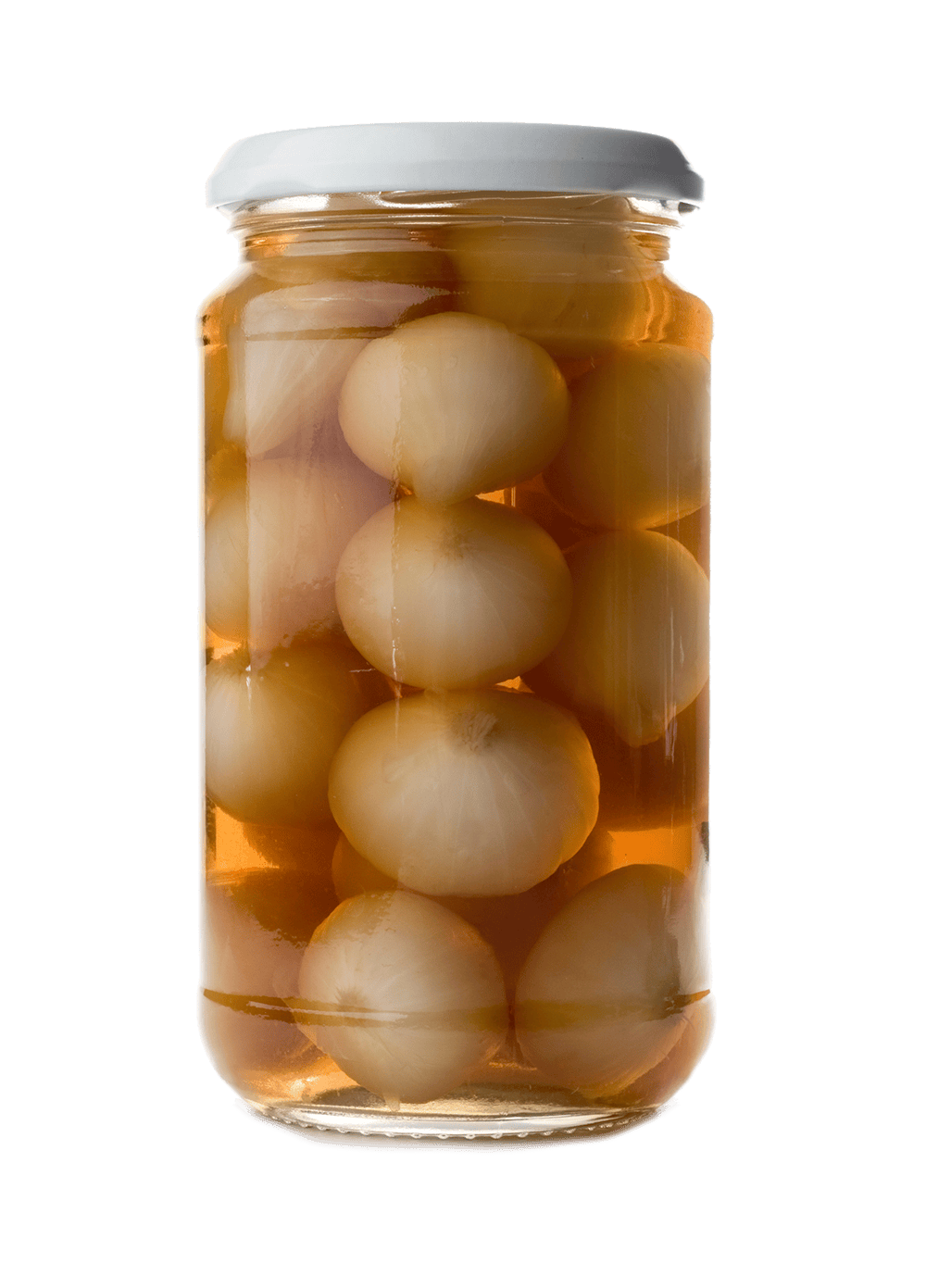
In the 1970s and 1980s, pickled onions lurked in dubious-looking jars on the counters of fish-and-chip shops, and behind the bar in pubs. There would often be a jar of them at a Christmas buffet, while posh households kept a spring-loaded pickled onion fork in the kitchen drawer.
Back then, they were one of just a few foodstuffs capable of giving British mouths a thrill. But as supermarket shelves began to groan under the weight of harissa, wasabi and chilli sauce, the humble pickled onion fell out of fashion. In 1997, Alan Partridge summed up the mood when he was offered a pickled onion by ‘Geordie Michael’. ‘Erm, no – I hate them!’ he replied with scorn.

It was a shameful damnation of something with such an illustrious history. Mesopotamians are thought to have developed the technique of pickling around 2400 bc, when they began soaking cucumbers and other foods in saltwater brine and vinegar to preserve them through harsh winters. The method caught on when people realised that it was also a convenient way of adding new tastes and textures to the plate.
The Romans introduced onions and pickling to Britain following their invasion in ad 43 and by the 1700s, pickled onions were taking off. Sarah Harrison’s 1739 cookbook, The House-Keeper’s Pocket-Book, advised aspiring picklers to ‘take your small Onions, lay them in Salt and Water a Day’ before pickling them in a mixture of ‘White Wine Vinegar, Cloves, Mace and a little Pepper’. By the 20th century, the darker flavour of malt vinegar had become strongly associated with the British pickled onion, which was often eye-wateringly strong.
Other nations, however, had the impertinence to produce versions of their own. So in 1959 British scientists in a laboratory in Leatherhead, Surrey, set out to create the perfect pickled onion. As British Pathé explained, the project was a matter of ‘national prestige’ because nearly all the best pickling onions came from abroad, chiefly Holland and Egypt. ‘Why, pray, shouldn’t the cold roast beef of old England be served with English pickled onions?’ the narrator asked.
Why indeed? The researchers, in tweed suits, used a huge revolving drum to peel the onions without bringing tears to their eyes. This was serious work: the team, said Pathé, had a ‘breathtaking responsibility to the public’.
Now, having survived both the culinary revolution and several decades of neglect, the pickled onion is back. Red onions spearheaded the revival, becoming a fermented feature of tacos, burgers, sandwiches, salads and Middle Eastern dishes, their sharp acidity cutting through rich foods. The Gibson cocktail adds a pickled onion to its blend of gin and dry vermouth. Pickled Onion is every serious person’s favourite flavour of Monster Munch crisps.
In Britain, the revival has coincided with our renewed enthusiasm for fermentation. About 8.5 million UK households bought pickled onions in the past year, and in the 12 weeks to August, sales rose 12 per cent year on year. Data from Ocado showed that the pickles, gherkins and olives category is up 30 per cent. Earlier this month, London held its first major festival dedicated to pickling and fermentation: the Big Brine. As chefs embrace pickling as a way of using more of certain ingredients and reducing food waste, it seems the pickled onion has managed to win favour with the sustainability crowd and find itself on the right side of history.






Comments