
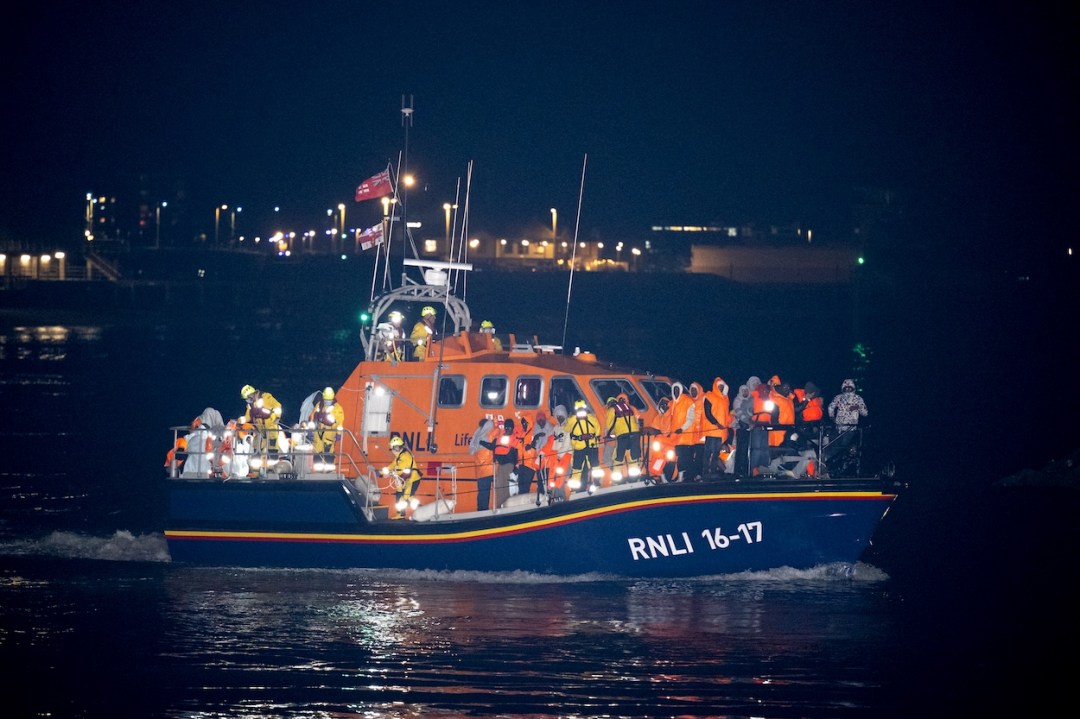
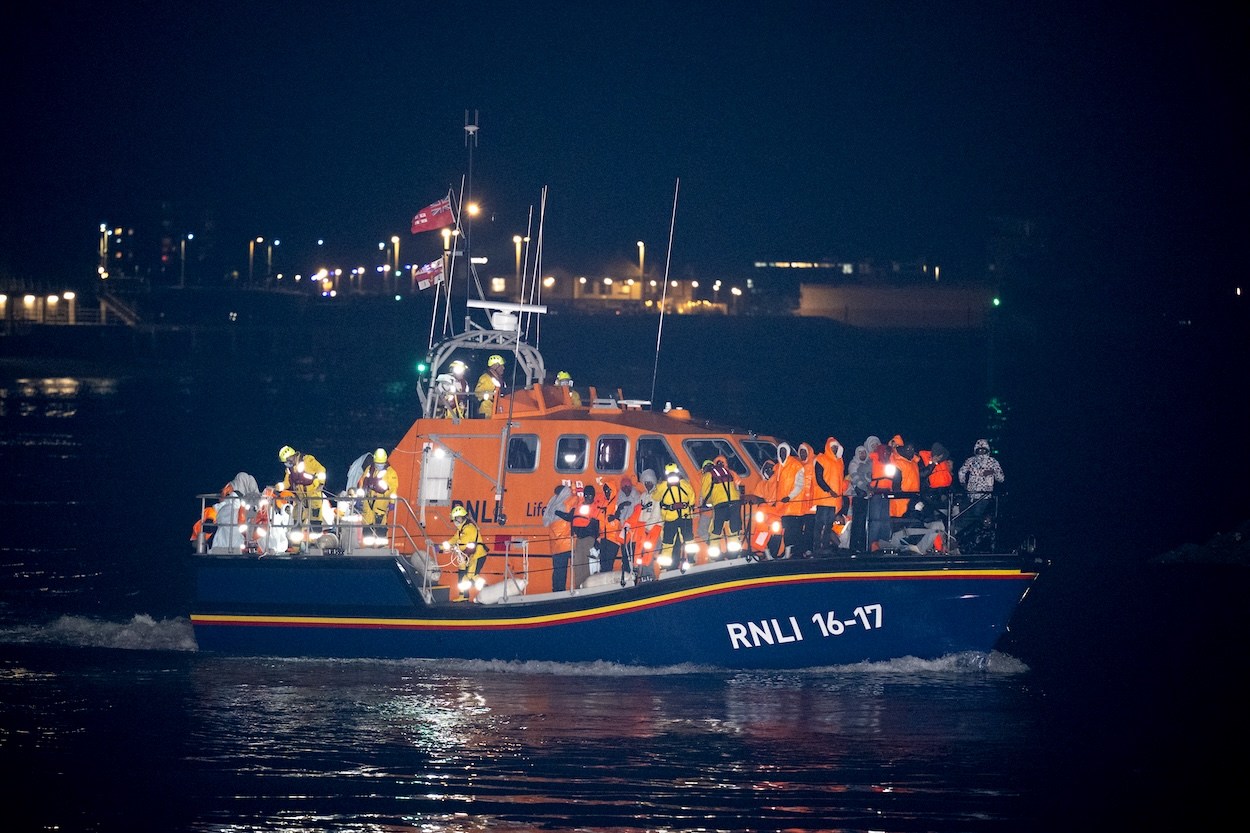
On Tuesday morning, three people were arrested by Home Office immigration enforcement because of their suspected links to a criminal network which is believed to help asylum seekers pretend to be gay, providing fake photographs and letters to Bangladeshi men to convince the courts that they are at risk of persecution back home. This followed an undercover BBC investigation from April which exposed a cottage industry of lawyers and advisers who help migrants fake homosexuality in order to remain in the country, and a Home Office whistleblower telling the Times that ‘hundreds’ of Pakistani asylum seekers have said they were in a gay relationship with the same man, who provided letters in support of their claims.
Of course the charge that some migrants are faking homosexuality in service of their asylum claims predates the recent reporting. In September 2023, then home secretary Suella Braverman gave a speech in Washington DC where she said:
‘Let me be clear, there are vast swathes of the world where it is extremely difficult to be gay, or to be a woman. Where individuals are being persecuted, it is right that we offer sanctuary. But we will not be able to sustain an asylum system if in effect, simply being gay, or a woman, and fearful of discrimination in your country of origin, is sufficient to qualify for protection.’
After she was criticised for these remarks she expanded on them in an interview with ITV:
‘They come to the UK, they purport to be homosexual in the effort to game our system, in the effort to get special treatment… I’m afraid we do see many instances where people purport to be gay when they’re not actually gay. But in order to get special treatment, it’s not the way our asylum system should work.’
The response was as vituperative as it was predictable. The current Northern Ireland Secretary Chris Bryant asked ‘How many? Where?’ (the government hasn’t published the statistics since August 2024) and said Braverman was ‘scurrying behind the apron strings of prejudice’. Health Secretary Yvette Cooper, then shadow home secretary, said it was ‘divisive’ and ‘shameful’ and that Braverman ‘demeans her office’. John Harris of the Guardian compared the remarks to Enoch Powell’s Rivers of Blood speech.
‘Around a dozen’ Tory MPs, including ministers, briefed the Times that they had complained to the chief whip about her ‘bigotry’, saying the ‘pink wall is outraged’. Stonewall wrote an open letter to the prime minister signed by over two hundred organisations – including Wolverhampton city council, LGBTQ+ Labour and several charities in receipt of government funding – condemning her comments. Barrister Dr S Chelvan, then of 33 Bedford Row Chambers, told ITV that he questioned whether migrants would pretend to be gay, as this ‘ignores the fact that even pretending to be gay – even with some of our own sub-sections of diaspora communities – can lead at best to social isolation in the UK or at worst risk to family members back home.’
A month later Braverman was sacked after she wrote a Times article alleging that the police were treating pro-Palestine mobs more leniently than right-wing extremists, ignoring No. 10’s demands that she tone down the article. But this was just the final straw, coming at the end of a series of ‘controversial remarks’ (talking about a migration ‘hurricane’, saying that grooming gangs were mostly British-Pakistani) which are now accepted across the mainstream of British politics.
For telling the truth, Braverman was publicly attacked, given little institutional support and, within weeks, sacked. Three years later, a government that includes some of her most vocal critics is cracking down on the abuse they had said it was bigoted to mention.



Comments