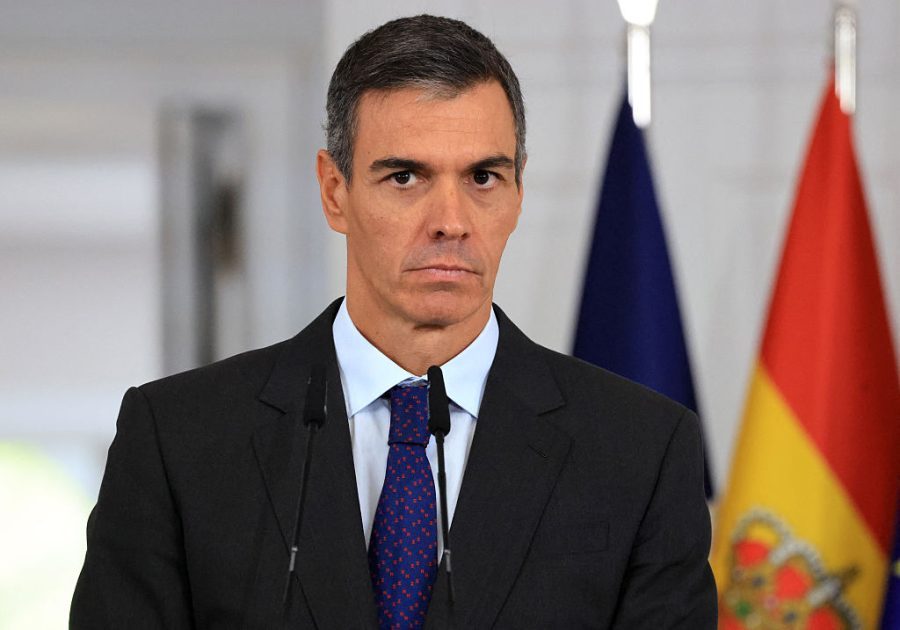
Spain’s socialist Prime Minister Pedro Sánchez could have waited until August next year before facing the voters. Instead, he has called a snap election for November 29.
In Sánchez’s announcement, he declared that Spain had become a global benchmark for peace, feminism and prosperity, claiming the best economic and social results achieved by any democratic government in Spain. Recognizing that his “progressive” coalition government has also made mistakes, Sánchez, who has been prime minister for eight years, explained that in order to do more he needs to “renew and broaden the support of the people.”
The immediate trigger was Friday’s defeat of his emergency housing legislation. Junts, a Catalan separatist party, joined the conservative Partido Popular and the further-right Vox in voting it down. It was another demonstration of the government’s inability to command a majority.
Spain now faces the imminent prospect of a markedly more right-wing government
Yet Sánchez may have seen an opportunity in that defeat. Housing protests have brought tens of thousands onto Spain’s streets. His party hopes that anger over unaffordable rents and evictions will mobilize disillusioned left-wing voters. Although access to affordable housing has become more difficult during Sánchez’s time in office, fighting an election campaign over housing would certainly suit him better than fighting one over corruption or the chaos in Ceuta.
There is an irony in Catalan separatists helping to bring this legislature to an end. After the general election of July 2023, Sánchez clung to power thanks to their votes. The price was an amnesty for offenses connected with Catalonia’s secession campaign, including the illegal independence bid of 2017.
To many Spaniards, that seemed profoundly wrong: Sánchez was granting an amnesty he had previously ruled out to secure the parliamentary support he needed to remain prime minister. The Venice Commission, a legal advisory body to the Council of Europe, said the amnesty bill had deepened a “profound and virulent division” in Spain.

That bargain with the separatists allowed him to remain in office. But it never secured a dependable government. Spain is still operating with budgets approved for 2023; Sánchez has failed to pass a new one throughout this legislature. Being in office and being in power have proved to be two different things.
Then there are the scandals. His former transport minister and Socialist party organizer, José Luis Ábalos, was sentenced in June to more than 24 years in prison for corruption offenses. Another former party organizer, Santos Cerdán, faces allegations concerning public contracts, which he denies.
The judicial troubles extend to Sánchez’s family. His brother David was sentenced to nine years’ disqualification from public office over his appointment to a publicly funded job in Badajoz; the conviction is subject to appeal. His wife, Begoña Gómez, faces trial for alleged influence-peddling and misuse of public funds. She denies the charges.
More recently, Ceuta has added an accusation of incompetence to the charge sheet. More than two months after tens of thousands crossed from Morocco into Spain’s North African exclave, many thousands remain, with makeshift camps, overstretched reception facilities, a surge in reported public-order incidents and serious health and hygiene problems.
Could the chaos in Ceuta also help explain Sánchez’s electoral calculation? Waiting would have risked further months of disorder and increasingly visible failure. Winning a workable majority would give him years, rather than months, to deal with the crisis and its aftermath. Losing would leave its management to his successor.
The polls suggest defeat is by far the likelier outcome. An election model published by El País this weekend gives the Partido Popular and Vox a comfortable combined majority. Sánchez has confounded expectations before, but he will need another remarkable escape to avoid defeat this time.
Spain therefore now faces the imminent prospect of a markedly more right-wing government, dependent on Vox’s support. Vox advocates “national priority” in access to social housing and benefits – giving Spaniards preference over foreigners. It also calls for the deportation of all immigrants living illegally in Spain, and of legal immigrants who commit crimes.
Sánchez’s hope is that voters’ fear of bringing a party he continually denounces as “far right” into government will outweigh their resentment of his own record. On present evidence, that looks a forlorn hope.






Comments