
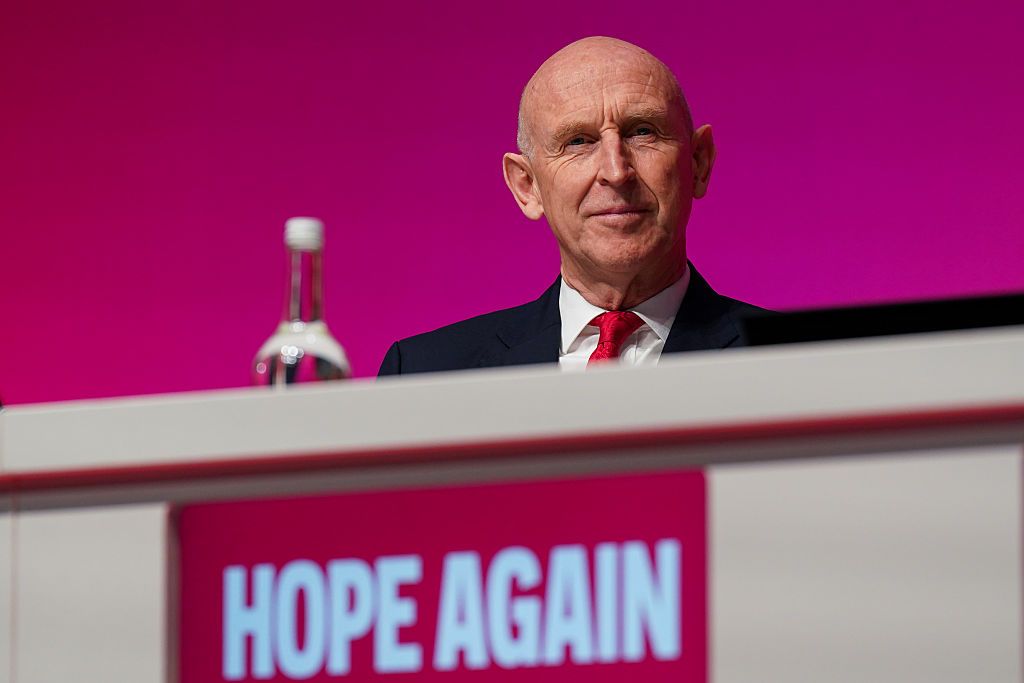
The first half of John Healey’s first Labour conference speech as Chancellor reminded me of old men in a bowls club reminiscing about the Korean war.
For more than 15 minutes Healey set out his credentials as a Labour veteran. He’d gone from his constituency Labour party to the trade union movement and then to No. 11 (note, no mention of private business experience). He’s been around the block so long that Labour is ‘literally’ his family, he said, paying tribute to his wife. Once the thanks to the Mrs were out of the way, things moved to his true love: Gordon Brown. It felt, at times, like the Liverpool Convention Centre had been given over for a Brown memorial rather than the governing party’s conference.
The trouble is, without addressing the reasons British industry currently is totally unviable, any hope of reindustrialisation is for the birds
Once sufficient tribute had been paid to the Great Gordon, the current Chancellor, in fairness, had a fiscal realist’s message for Labour delegates. ‘The money New Labour had in the 90s is simply not there now,’ he told the hall. Debt levels as high as they are (which he blamed Liz Truss for) are not sustainable. Spending has to be brought under control. ‘You can’t fund ends without the means.’ And, crucially, ‘it is simply not progressive to allow a bigger and a bigger benefits bill.’
With the Budget exactly one month away, and with Healey determined not to feed any Budget speculation (unlike his predecessor), this was the only message he could send. But it was still notable how blunt the Chancellor was about the fiscal realities Britain faces given that ‘hope again’ is the slogan for this year’s conference.
Still, the Chancellor declared himself a ‘proud optimist’ and left delegates leaving the hall more optimistic than they had been before. ‘This country has such resilience, such strengths, still such greatness.’

From then, though, I’m afraid to say, we moved from realism to fantasy with what had been trailed as the theme of Healey’s 38-minute speech: a ‘new age of industrialisation’.
That was backed up by a commitment of £6 billion of orders for British ships to be built by British shipbuilders in British shipyards. There will be a £100 million local apprenticeship service run by mayors too, who will operate ‘like football scouts’ to seek out young talent. And investment by Rolls-Royce in British factories.
The trouble is, without addressing the reasons British industry currently is totally unviable, any hope of reindustrialisation is for the birds. As Liam Sides of the consultancy firm Oxford Economics said before the speech: ‘I personally cannot think of an advanced economy less suited for an industrial resurgence.’
With the near-highest industrial energy costs in the world, and increasingly expensive labour costs too, this is just not a country geared up for energy- and labour-intensive building. That’s before you mention the regulatory and tax environments gumming up any industrial culture a Chancellor might wish to incubate.
Healey’s guiding light in all he will do as Chancellor, he repeatedly told us, is a miner’s lamp he keeps on a shelf in his Rotherham home. It will be a symbol of the industrial Britain he wants to revive. But if he really wants to keep that light then serious and brutal economic reform is needed – something no politician seems currently prepared to enact.






Comments