In this summer’s couture blockbuster The Devil Wears Prada 2, the moment of greatest humiliation for Meryl Streep’s Miranda Priestley comes about halfway through the film. With her Vogue-adjacent fashion magazine Runway imperiled by budget cuts and its philistine new owner, Miranda is not spared the hair-shirt treatment the rest of her staff endure. In a scene that is supposed to be funny but ends up being almost tragic, this ice-hearted doyenne of the fashion world is compelled to travel from New York to Milan Fashion Week in coach class, among hoi polloi. As the usually excellent Streep is forced to mug and gurn at the humiliation that she endures, I found myself mouthing “The horror! The horror!” – but for altogether different reasons.
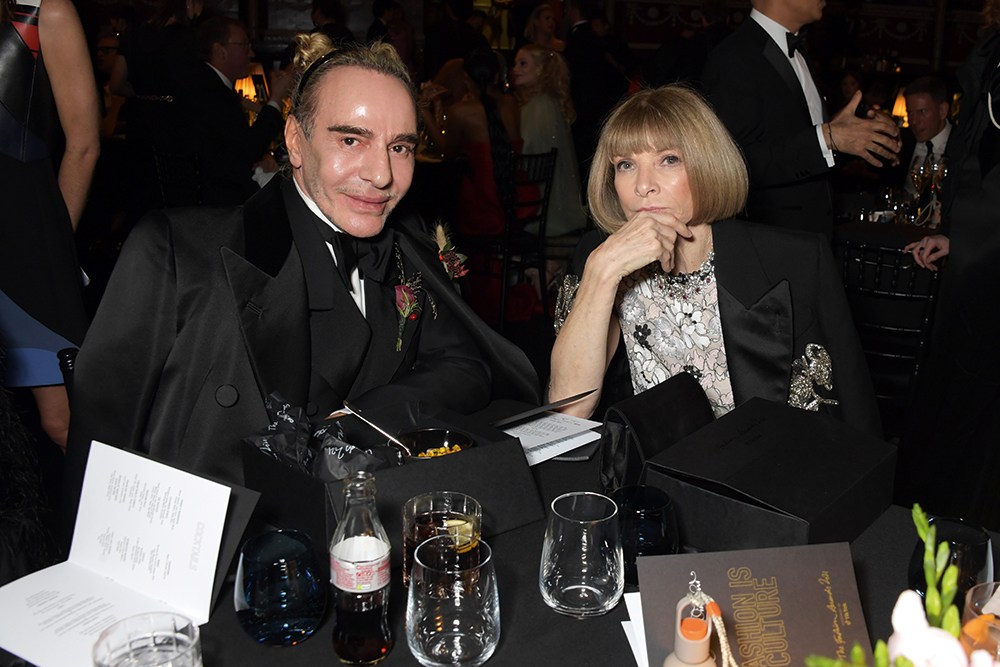
Memories of Streep’s guppy impression came back recently when I was contemplating the potential reputational downfall that the real-life model for La Priestley, in the form of Vogue’s Anna Wintour, is facing. The reason for this ignominy is that next year’s Met Gala, the most talked-about event in the Manhattan social calendar, has descended into chaos, thanks to John Galliano’s stepping down as the theme of the event, as well as the cancellation of an exhibition, John Galliano: Horizons, that was set to take place next spring.
All the adulation in the world cannot disguise what a humiliation this is for Wintour
The fashion designer was an early object of cancel culture in 2011 for a series of racist and anti-Semitic remarks that he made. Over the past decade Galliano has been largely welcomed back into the fold, so he may have been surprised as the outcry that followed the announcement of the exhibition.
Nonetheless, he bowed to pressure and issued a statement to his 1.6 million Instagram followers that said: “I remain fully accountable for the pain caused by my words in the past, particularly the hurt I caused to the Jewish and Asian communities, and I remain deeply sorry. I understand that meaningful atonement is not achieved through an exhibition, institutional recognition or a single public gesture. It is a continuing responsibility, demonstrated through listening, learning and one’s conduct over time… I also recognize and respect that an exhibition honoring my work would be painful for some.”

In other words, Galliano, and those around him, may have believed that the events of 15 years ago were old news, but the internet and the outraged have long memories. There is a serious argument for suggesting that this is a harsher penalty than the undeniably talented designer deserves, just as it is equally possible to welcome the (admittedly self-imposed) sanctions as a realization that anti-Semitism of the kind expressed by Galliano should be taken seriously. In either case, commenters on Galliano’s post seem genuinely impressed by his statement; his one-time muse Eva Herzigova commented “Love you much!! There is so much grace in your words and humility,” and there are many others calling him the greatest designer of our lifetimes, etc. etc. The vintage-fashion dealer Johnny Valencia said mournfully of the canceled show “there hasn’t been this much excitement since camp” – a reference to the theme of the 2019 Gala, but also a more general observation of Galliano’s standing in the fashion world.
Yet nothing can disguise what a humiliation this is for Wintour, 76, Vogue’s former editor-in-chief and the present Condé Nast global chief content officer, artistic director and global editorial director for the magazine. These are an awful lot of impressive-sounding titles to cover up the fact that Wintour is no longer the editor of Vogue, but she remains sans pareil the most powerful figure in fashion and publishing. She has been responsible for the Met Gala since 1995, and is little less than the present-day incarnation of Ward McAllister, the 19th-century New York socialite who decided which families (the so-called “Four Hundred”) might be received in society and which ones, metaphorically speaking, were left outside begging for scraps.
For Wintour, the redemption of Galliano was something that she was keen to facilitate. She announced that “there is no one more deserving of an exhibition of this scale than John Galliano” and threw in a token gesture toward his past actions – which, we should remember, included saying “I love Hitler” and telling a Jewish couple, “People like you would be dead. Your mothers, your forefathers, would all be fucking gassed” – by saying that Horizons wouldn’t “shy away from any of the darkness in John’s past. It’s part of what has shaped him. The show will take in the full arc of his career and grapple with all of it.”
But the Met is not exactly a place for penetrating scrutiny of those it is honoring, whether at the Gala or in its hallowed halls. Instead, Wintour would have been the first to have been photographed with Galliano on the red carpet, her expression as inscrutable as ever behind her trademark shades, and to have implicitly welcomed him back into high society once more. That she has been prevented from doing this is likely to have angered her – “Nuclear” Wintour did not acquire her nickname, nor her roman-à-clef treatment in The Devil Wears Prada, through the sunniness of her disposition and willingness to listen to others’ opinions – but will also, inevitably, lead to questions being asked at Condé Nast, and elsewhere, as to whether this misstep is the beginning of the end of the most celebrated reign in fashion.
Her words on Galliano’s exit, dictated through gritted teeth as they undoubtedly were, were oddly tone-deaf. She said, “John’s decision that the exhibition devoted to his work should not take place at this time is very courageous and a measure of the man he is.” It felt as if she was covering herself, and her decision to place Galliano front and center, as much as she was praising a friend.
This has not gone well. A source told Page Six that “Anna singlehandedly thought she could willfully get [Galliano] back in [fashion]. She’s been at it a long time, and she really misjudged it, and she made him vulnerable while doing that… she’s not reading the fucking room… she really overplayed her hand. They really need to take a beat, take a year off, because people don’t have time for this shit right now.”
Wintour’s loyalty to Galliano was first demonstrated in 2013 – a mere two years after he was fired from Dior for the aforementioned comments – when she wangled him a residency with Oscar de la Renta, and then again the following year when she was instrumental in his becoming creative director of Maison Margiela, a role that he held for a decade. Wintour specifically asked, in 2014, for Galliano to present her with the award for Outstanding Achievement at the British Fashion Awards, and wore a Margiela by John Galliano design to receive it.
‘As fashion world blessings go, it was about as unambiguous as anything I’ve ever seen’
Vanessa Friedman wrote on the New York Times’s “On The Runway” blog at the time that “as fashion world blessings go, it was about as unambiguous as anything I’ve seen.” Wintour, it seems, was uninterested in Galliano’s private life or personal wrongdoings. For her, it was about the fashion.
Now, it seems as if the savviest woman in the industry might have made a misstep – and embarrassed the Met in the process. Wintour would have been aware of the unfortunate precedent being set – no Met honoree has had to quit before and no exhibition of this stature has been canceled – and the humiliation that all this involves. She will doubtless have bristled at an admonitory statement put out by Zohran Mamdani’s office: “John Galliano’s repeated use of anti-Semitic language is vile. The Mamdani administration recognizes that the Met’s decision to honor him has caused pain and anger among many Jewish New Yorkers. The Met is an independent institution and its decisions – and how it responds to the many Jewish New Yorkers appalled by this choice – are ultimately its own. But independence does not mean insulation from criticism.”
Wintour is used to being the target of criticism and satire, and has appeared to welcome the notoriety that it brings. She even popped up in The Devil Wears Prada 2 in a deleted outtake. But as the Met scrabbles around for a replacement exhibition and Gala theme, the editrix, who has watched all her rivals come and go and has successfully managed to retain power while the industry has changed beyond recognition, is now facing both humiliation and uncertainty.
There will be as many who are keen to write her professional obituary and to move into the positions that she will inevitably vacate, just as there are those who will mourn the end of the era she represents. But the Galliano misstep was a significant one. If it brings Wintour down – and it is far from impossible that it will – then traveling coach to Milan Fashion Week will be the least of her worries.





Comments