The natural coalition of rural people which was forged 25 years ago, before the hunting ban, is forming once more. On Monday in Westminster, we gathered under the Countryside Alliance banner to hear David Blunkett, David Cameron and others set out the issues. Poor Andy Burnham had inadvertently stoked our feelings by joking feebly about how he hardly ever visits farms and considers Defra the least important government department (would it were so!). There are strong current individual issues – the proposed trail-hunting ban being the most egregious and the inheritance taxes for farms the most economically damaging – but the sheer number of government-inspired rural harms is astonishing. The Alliance counts 27 of them. The fact that encapsulates the government’s overall attitude is that the Cabinet Office list of ‘industries that matter most to our national security’ does not include food or farming; yet if we could not dig for victory, we would soon face defeat. Growth in every postcode, vows Mr Burnham. Roughly 25 per cent of British postcodes are rural and none is prospering. If he had known that, could he have made his promise?
The following enjoyable question was asked by the Earl of Kinnoul, convenor of the cross-benchers, in the House of Lords last week: ‘My Lords, No. 10 North is approximately 200 miles north of where we are. Perthshire, where I am from, is more than 200 miles further north than that. The north of Scotland is another more than 200 miles north of that. I wondered whether there were any plans to rethink the name “No. 10 North” – it does not feel right to someone who lives 200 miles north of it.’ I feel he put his finger on the nature of Mr Burnham’s political thinking, or lack of it.
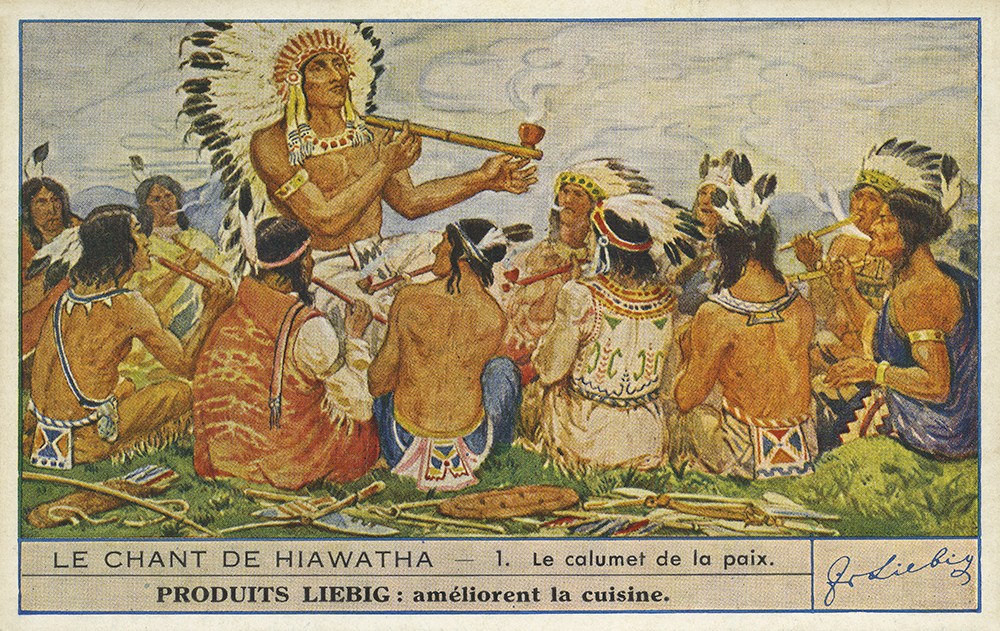
Now that reparations are all the rage, please can we white British have a go? In the 16th and 17th centuries, English settlers in North America were introduced by various Indian tribes to tobacco. The most influential of these encounters was with the Powhatan Confederacy. John Rolfe, a Norfolk man, started smoking under Powhatan influence and was soon hooked. As often happens with drugs, the addict became a dealer. He obtained the seeds to produce sweeter (‘Virginia’) tobacco for the English market. Under the influence of Powhatan, the paramount chief of the confederacy, Rolfe also married his daughter, Pocahontas, a beautiful brand ambassador whom he brought back to England. In thrall to her glamour, the English became smokers. In the succeeding centuries, millions died of lung cancer and heart disease as a result. A reckoning is long overdue. Time for a class action against the existing seven Powhatan tribes recognised by and still resident, some with reservation lands, in the Commonwealth of Virginia. They are the Pamunkey, Mattaponi, Upper Mattaponi, Chickahominy, Eastern Chickahominy, Nansemond, and the Rappahannock. Some may say this would be grossly unfair to current descendants of those narco-lords. I might agree, but remember, my proposal is trying to enter into the spirit of reparations.
We gazed upon the Bayeux Tapestry last week. It is truly wonderful. But although we were privileged as guests at the French ambassador’s party, there remained the problem of display. The tapestry is 230 feet long but narrow, and so, unlike with paintings, the visitors cannot disperse round different objects. They must all look at the same exhibit close up. So they must keep moving at quite a clip. This has a pleasingly filmic effect: you can almost see the waves ripple and the horses charge. But it also means you cannot study the delightful details. People with timed tickets have been turned away because the queue has not moved fast enough. It is a real problem. I cannot see a solution, unless the British Museum starts to sell some longer sessions, charging more accordingly.
My own interest in the Bayeux Tapestry dates from the 900th anniversary of the Battle of Hastings, when I was a primary-school nine-year-old living near Battle, where it all began. Somewhere, I still have my Highly Commended certificate from a county-wide school 1066 competition for writing on the theme of ‘invasion’. (My story was set in Napoleon’s retreat from Moscow.) I also have a very faint memory of something called the Hastings Embroidery, displayed in a pseudo-tent. How nice to learn that the embroidery was a very serious endeavour by the Royal School of Needlework, commissioned in 1965. It has been brought out of storage and is on display in Hastings Town Hall until the end of October. It consists of 81 embroidered ‘moments’ in British history since 1066, spread over 27 ‘panels’. The work is of high quality except that, unlike in the Bayeux Tapestry, the faces are drawn rather than stitched. The choice of subjects well represents the clear, synoptic, quietly patriotic but quite fair-minded Ladybird-book orthodoxy which still prevailed 60 years ago and has now been shattered. The two important omissions are slavery and its abolition, and the extension of the franchise. One or two legends – Dick Whittington and Robin Hood – slip in too. The last panel shows Winston Churchill (who had died the year before), Lord Warden of the Cinque Ports, of which Hastings is one. He is looking over the Channel, whence came the Normans 900 years earlier, making his V for victory sign.
With some bathos, the embroidery’s final ‘moment’ charts the government of Harold Wilson in 1966. It lists numerous facts, including what a pint of beer cost (10p in decimal parlance) and what the average manual labourer earned per week – men: £20 3s and 3d, for 47 hours; women: £9 11s 11d for 38 and a half hours. It also records the membership of the new House of Commons that year – 365 Labour, 253 Conservatives, 12 Liberals. This was the last time in our history that only three parties were represented in parliament. ‘Never such innocence again.’



Comments