The need for Mammon
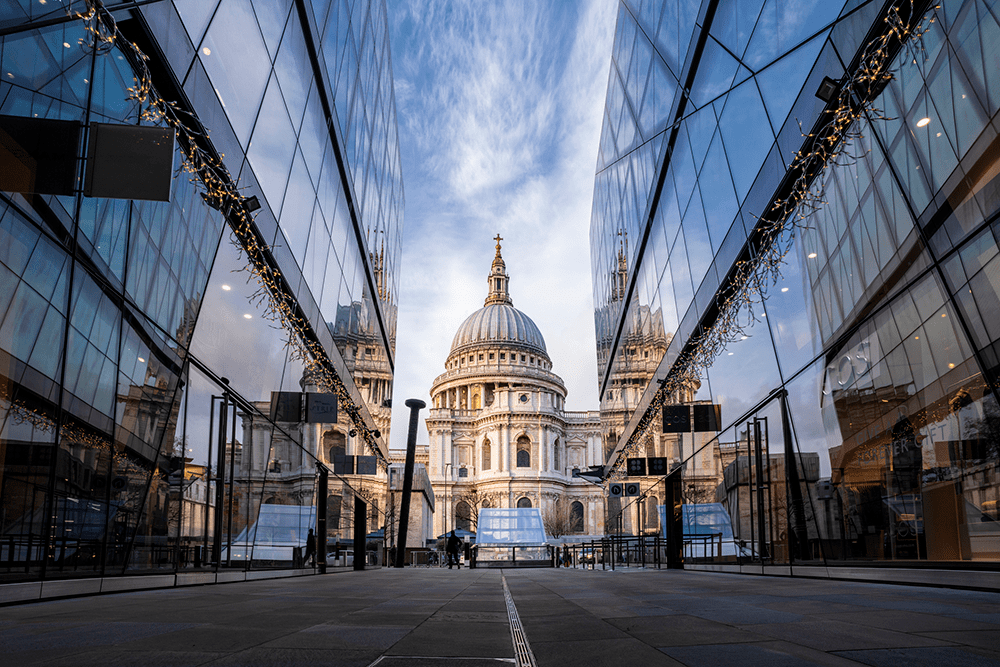
Sir: Douglas Murray is right to wince at Sadiq Khan’s gloating over the partnership at St Paul’s with the nightclub Fabric (‘Would Sadiq Khan back a rave in a mosque?’, 12 September). But the decision to host club nights is simply about cash.
Since the government scrapped the Listed Places of Worship Grant Scheme, historic churches now face an extra 20 per cent VAT bill on all maintenance. The National Churches Survey reveals that 39 per cent of them have roofs at risk or in urgent need of repair. Cathedrals cannot fund seven-figure restoration projects through the Sunday collections alone.
Cathedrals have always had multiple uses. A DJ set in the nave might offend traditional sensibilities, but if ticket sales keep the roof from caving in on the altar, it is, I think, a price worth paying.
Then again, perhaps I am just another ‘wet fool’.
Harrison McQueen
Bromley, London
A time to dance
Sir: Douglas Murray’s column paints a vivid picture of what Fabric’s partnership with St Paul’s will bring: ravers ‘off their tits on MDMA’, desecration beneath Wren’s dome, a ‘rave in the nave’. It is a colourful image. It has only one flaw – it bears no relation to anything we have staged, or plan to.
Had Mr Murray glanced at what has actually taken place, he’d have found RY X performing with an orchestra in 2023, and Patti Smith delivering an evening of music and spoken word in 2024. At both events people were seated for nearly three hours with no alcohol; both sold out; and both were about as far from a rave as it is possible to get.
Our first event under the new partnership is the Cinematic Orchestra: delicate contemporary music chosen for the cathedral’s extraordinary acoustics. No strobes. No MDMA. A great deal of reverence.
He might also pause and reflect on this: St Paul’s chose the partnership. The Dean and Chapter – whose life’s work is the care and the sanctity of the building – shaped the programme with us, precisely because they believe music has always belonged under that dome.
It is very disappointing that in 2026 such lazy prejudice is still levelled at contemporary music. The coming together of two of London’s most iconic spaces should be celebrated, not mocked.
I would be delighted to reserve Mr Murray a seat on 29 October. Let him sit in the nave, listen – and then write a piece. I suspect he will find the reality a good deal harder to be outraged by than the caricature.
Cameron Leslie
Co-founder and director, Fabric
London EC1
Ancestral vices
Sir: In 1598 Bishop Bancroft held a visitation of St Paul’s Cathedral in which, among other things, dogs were noted defecating on the kneelers of the Vicars Choral and the wives of bell-ringers prostituting themselves. The Sub Dean, a notorious drunkard ‘hath byn so extreame drunke as that he hath faine to be brought home in a Porters basket’. Tensions between the minor canons often led to violence. The choristers had developed the habit of ‘pissing upon the stones in the church by St Faith’s door to slide upon as upon glass’. Add the fact that the nave was an Elizabethan Bluewater in which chattels and even humans were bought and sold (according to Falstaff he bought Bardolph there), and the link with Fabric seems positively anodyne.
Andrew Dobbin
Former head of St Paul’s Cathedral School
Clun, Shropshire
Royal presents
Sir: The Duke of Kent may share Ysenda Maxtone Graham’s misgivings about guests bringing presents to dinner parties (‘Taste test’, 12 September). Shortly after the invasion of the Falkland Islands, he was guest of honour at a Downing Street dinner also attended by the New Zealand prime minister Robert Muldoon. Mr Muldoon’s speech included a commitment to provide a ship from the Royal New Zealand Navy to support the Royal Navy. The Duke is said to have remarked: ‘Oh dear, I only brought Mrs Thatcher a box of chocs.’
Richard Ellis
London EC4
Matter far from settled
Sir: Natasha Hausdorff exposes the fallacy that Jewish settlements in the West Bank are forbidden by international law, but she could have gone further (‘The settlements question’, 12 September). The idea that the West Bank is part of sovereign Palestinian territory is entirely theoretical. The Palestinians themselves repeatedly rejected various proposed divisions of Mandate Palestine. Hamas, along with various PLO factions, continues to demand the whole territory, eliminating Israel.
From 1948 till 1967, the West Bank, under Jordanian control, was effectively Judenfrei, apart from handfuls of religious groups such as those in Hebron. East Jerusalem was cleared of Jews. Is the British government now saying that no Jews may live in the West Bank? Or that the Israeli authorities should deny water, transport and health support to those Israeli citizens who choose to live there? By sanctioning Jewish date-farmers, but not Christian or Muslim ones, Ed Miliband is effectively saying that the West Bank must revert to its Judenfrei status, even though it was the repeated Palestinian rejection of a two-state outcome that has left the place in limbo for nearly 80 years.
David Elstein
Sevenoaks, Kent
Dead funny
Sir: Madeline Grant’s article (‘Long live death’s dark humour’, 12 September) reminded me of a vicar friend telling me that he was preparing to take a funeral when the verger knocked on the door of the vestry and said: ‘Excuse me, vicar. The corpse’s brother would like to have a word with you.’ I have never understood why I find it so funny.
Robin Butler
London SW1
Duking it
Sir: Further to Charles Moore’s musings on embracing our Norman identity (Notes, 12 September), while being conveyed around the Channel Island of Sark on a horse and cart recently, I was told by our driver that locals owed their allegiance to King Charles as Duke of Normandy rather than monarch of the United Kingdom. The people of Sark, then, have always been Norman.
David Kenny
Tredunnock, Monmouthshire
Norman’s land
Sir: Charles Moore wonders in his Notes where all the Normans are. I have been keeping my own record. My father-in-law is called Norman, and his grandfather and uncle were also Normans. Each week I keep an eye out for the cartoons submitted to The Spectator which feature a character called Norman. They are plentiful. More optimistically for future generations, my daughter has named her doll Baby Norman, so Charles might be relieved to know the name lives on, at least in our family.
Lara Prendergast
London SW1





Comments