

One of the things people don’t tell you about grief is the humorous side of it. Many will warn that grief can erupt at strange times and that memories of those who have died spring upon you in unusual places. But few mention the fact that loss can put you in situations where the only real solution is to laugh.
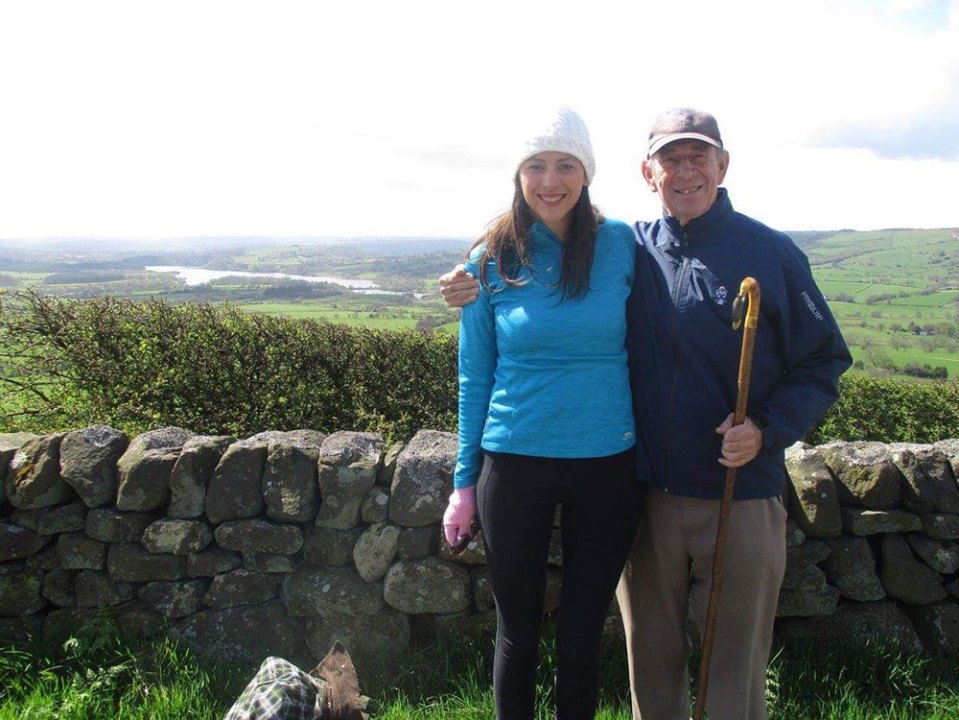
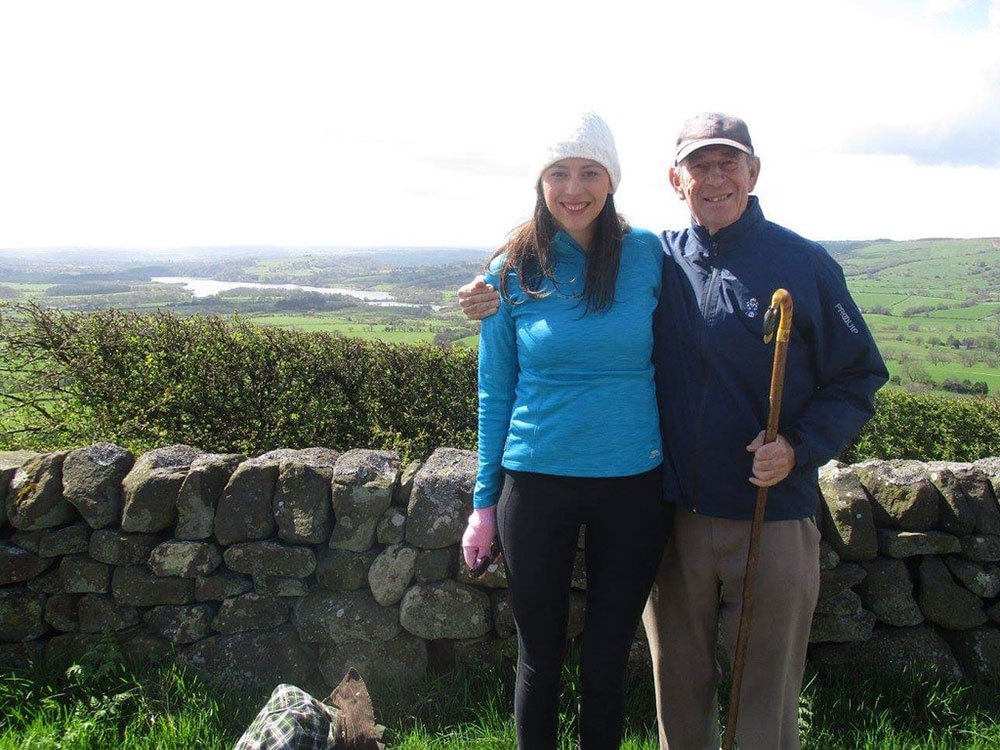
My father died at the end of last month. He was much loved and is much missed. He was also a great raconteur and, as we have been sorting through photographs to display at the wake, I realise too that he was a great laugher. I’ve lost count of how many images we’ve seen of him with his head thrown back at a party, laughing. Consequently, it seems almost appropriate that there have been moments of laughter since his death.
No sooner had we entered the hospital car park, my husband had made his first off-colour joke of the afternoon, which triggered hysterical laughter. My mother, who just a few minutes earlier had closed the eyelids of the man she’d loved for almost 40 years, laughed hardest of all. During a meeting, the undertaker kept referring to Dad as ‘the loved one’, which again prompted church giggles – both Mum and I immediately thought of Evelyn Waugh and Dad in some kind of ‘happy hunting ground’ in the sky, with various embalmed pets.
Alzheimer’s is a horrible disease, and one that forces the grieving process onto relatives while the person they love is still alive but, in discernible ways, slipping away. Our experience was better than many families; Dad never fundamentally forgot who we were, though he couldn’t always remember everyone’s name. He was able to live at home until the very end, and he never completely lost his manners, charm or fundamental ‘essence’ – he would still be hospitable, make jokes and pay compliments, even when unable to tell you what year or month it was. His carers often described him as a ‘gentleman’.
Yet, while Alzheimer’s itself is a condition which is largely horrific, again, few will admit it can also be bleakly funny. Just as the grieving process starts earlier, so too does the process of coping using black humour. You have two options – either try to chivvy your relative into reality (no point) or accept that they now inhabit a different world and try to play along. I found much greater joy in doing the latter. More importantly, enabling their alternative reality can give them a sense of meaning, too.
Prior to his diagnosis, Dad had been an accomplished engineer. He would frequently imagine that he’d been called to attend some major engineering project in the Midlands – he was often required for urgent repairs on the Spaghetti Junction, on which he’d actually worked during the 1970s. He’d assemble long lists of household items he was convinced he’d need for his busy day; some reasonable (measuring equipment, mathematical notepad, a hard hat) others more nebulous (firelighters, staplers and, for some reason, a sieve). I’d always do my best to find these items just to see what Dad would try to do with them, drawing nonsensical diagrams with an expression of deep concentration. A Potemkin world, perhaps, but it was very real to him.
Perhaps the worst bit of enabling came when Dad got it into his head that we must have a leg of lamb for dinner, even though the kitchen was being redone so we were temporarily without an oven and had only a microwave and two gas hobs. Dad insisted the microwave was an oven, despite our best efforts to dissuade him. ‘I’m an engineer, I know what I’m doing,’ he barked.
He was particularly stubborn when dealing with his children rather than his wife, so we dutifully set about making the trimmings for Dad’s obviously doomed roast dinner. When it eventually emerged from the ‘oven’, it had taken on the consistency of tree-bark and was impossible to cut into. ‘This hasn’t been an unalloyed success’ was his laconic conclusion, which even now makes my brother and me howl with laughter. Sometimes I almost envied Dad his delusions; asked who the current occupant of Downing Street was, he replied: ‘Why, Mrs Thatcher, of course.’
Dark humour in hours of grief is something which pervades British culture, both formally and informally. Hamlet’s wry observation on how quickly his mother has moved on from his father’s death – ‘Thrift, thrift Horatio! The funeral baked meats/ Did coldly furnish forth the marriage tables’ – is perhaps the gold, high cultural standard for this.
Few mention the fact that loss can put you in situations where the only real solution is to laugh
However British TV comedy has kept Shakespeare’s dark humour of death – ironically – alive, from the almost unwatchably perfect farce that is John Cleese and Connie Booth’s ‘The Kipper and the Corpse’ in Fawlty Towers to Jeremy’s appallingly catchy song about his deceased aunt – ‘Dead old Gwen is dead, dead, dead’ – in a classic episode of Peep Show. Death still has some of the best laughs.
This is not to say that humorous moments diminish the grief; most of us are capable of laughing and crying within the same hour, let alone within the same day, week, or mourning period. The funeral, when it comes, will not be one of those jaunty celebrations of life where people are encouraged to dress like clowns and chortle fake laughs during pictorial slideshows.
However, I have taken comfort and will continue to do so, probably long after the funeral, from the fact that I have people with whom I can laugh about Dad’s eccentricities and the latent absurdity of the situation as well as cry about its sadness. Laughter, even cheap laughs of a gallows variety, proves that life is still possible. It allows you to confront death far more directly than via po-faced euphemisms like ‘slipped away’ or – my particular bugbear – ‘passed’ (what, a gallstone?).
Dark humour has been a great source of strength in the past couple of weeks. Though some would say it’s unhealthy that so many of us find it easier to crack a joke than emote in public, it is something which other grieving Brits seem to experience too. Perhaps because our mourning rituals have historically been more muted than those of, say, the Italians, we have sought to express in laughter what others say through tears. However, with mawkish, twee Britain now triumphant in popular culture, it would be a shame if we lost our dark, humorous edge when dealing with death.



Comments