
Simon Sebag Montefiore has narrated this article for you to listen to.
I’m not a member of the Establishment, even though I’m writing this in what might be described as its literary organ. I know my voice will be correctly interpreted as that of a maverick outsider riding shotgun into the lair of privilege. The early weeks of Andy Burnham’s First Lordship of the Treasury have been defined by clips using edible class indicators – baps, crisps, beer – to signal that, despite Cambridge and decades in Westminster, he is a contra-establishmentarian. But there’s nothing new in this (except TikTok).
Walpole scoffed Norfolk apples in the House to garnish his backwoods-squire credentials; Lloyd George declared, ‘The day of the cottage-bred man dawns’, promoting his taste for bara brith. Even in Russia, Prince Potemkin signalled his contra-establishmentarianism by swaggering through Catherine the Great’s receptions, shirtless, wearing red bandanas and scrunching radishes.

Our epoch is solemnly puritanical. I am not suggesting a new premier should celebrate like Viscount Bolingbroke, ‘running naked’ through Hyde Park where his 1710 appointment (salary: £1,500) was celebrated by cavorting prostitutes singing: ‘1,500 a year for us!’ – but I wish that Burnham could enjoy reaching ‘the top of the greasy pole’ like Disraeli did.
I was once guilty of contra-establishmentarianism myself when I told an interviewer my Jewish family who escaped from Russia in 1903 were peasants with straw in their hair. When it was out, my mother phoned. ‘My father,’ she said passionately, ‘was descended from ten generations of scholars.’ ‘But they were poor!’ I insisted. ‘They escaped in a haycart!’ ‘There… was…. no… straw!’ she said. ‘Please correct this!’ I told my next interviewer that even in the shtetls of Lithuania, we were the Establishment.
My mother was always concerned by my over-ambitious projects: ‘Writing Jerusalem is far too stressful for you! You need nourishing food and luxuriant sleep.’ ‘What do you suggest?’ I said. ‘GIVE THE MONEY BACK!’ she said. In her view, my frailties qualified me only for the life of a hothouse valetudinarian. She wouldn’t have approved of my new book, The Cauldron. ‘Montefiore is walking on hot coals,’ confirmed the Times reviewer, ‘in this panoramic history of the Middle East.’ Sadly my mother is dead, but she was right about everything: from now on I am taking her advice.
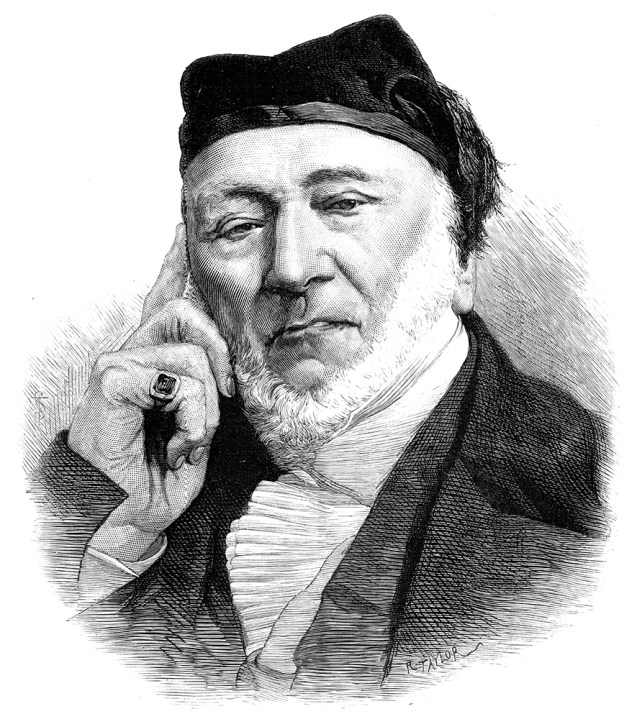
My ancestor Moses Montefiore, a British magnate, knew everyone from sultans to tsars in the Victorian era. In the 1820s, he befriended Muhammad Ali, Turco-Albanian ruler of Egypt. When Mohammed Ali’s son Said visited London, he stayed with Moses, thanking him with a monumental silver decoration (now in the V&A). Said later built the Suez Canal. Those were interesting times when Islamic rulers could send their sons to stay with Jewish friends. Nowadays, I admire how Moses coped with anti-Semitism. Attending a royal dinner, a bigot denounced him: ‘I just visited Japan which I loved because Japan has no Jews and no pigs!’ ‘Then you and I should go to Japan together,’ answered Montefiore. ‘So they have one of each.’
It’s wonderful that the Queen has made literacy her cause, creating her successful Queen’s Reading Room. Her Clarence House parties are attended by writers who wouldn’t turn up for anyone else. Last time, I met the elusive Donna Tartt and almost fainted: The Goldfinch is the masterpiece of the 21st century. Last October, the Queen kindly opened the Cliveden Literary Festival which I help organise. How do you follow that? Our best line-up so far – do come.
All history books should have soundtracks. I created a Spotify playlist of history songs for my recent books. The songs must either be about history (Billy Joel’s ‘We Didn’t Start the Fire’) or feature in history: Umm Kulthum’s ‘Wallah Zaman, Ya Silahi’ (‘It’s Been a Long Time, O Weapon of Mine’). The greatest history song is the Rolling Stones’ ‘Sympathy for the Devil’ though Boney M’s ‘Rasputin’ is such a scholarly terpsichorean analysis of Romanov court favouritism, it should be on the GCSE history syllabus. I’ve added Village People’s ‘YMCA’ because it’s Donald Trump’s anthem. When the US President visited Riyadh even the Saudis had to play ‘YMCA’ – not a song I imagine is often played there.
Simon Sebag Montefiore’s The Cauldron: the Making of the Modern Middle East is out now.





Comments