You do not have to travel far in Italy to encounter the remains of Mussolini’s dreams of architectural splendour. From the sparkling marble and travertine palaces of the Esposizione Universale Roma (EUR) district, to the immense statues of athletes in Rome’s sports forum and the new town of Laterina in the south, the Duce’s creations are clearly visible. When the Allies had finished liberating Italy in the spring of 1945, they thought to erase all traces of fascism, but there were simply too many. So they settled on removing only the most ‘unaesthetic’. As with the civil servants, the judiciary and the leading industrialists who had collaborated with 20 years of fascism, all slated to be epurato – purged – but quickly amnestied, they were too deeply entrenched in the fabric of Italy itself. They were left, as Stephen Gundle writes, to become part of Mussolini’sghostly legacy.
In the 80 years since the end of the second world war, Mussolini’s reputation has never quite settled, fluctuating with generations of historians and politicians. Examining every facet of the dictator’s image, from posters to sculpture to film, and borrowing from the work of psychoanalysts on mourning and memory, Gundle describes how Mussolini’s ‘extraordinary posthumous vitality’ has resonated down the decades. It is a fascinating story. The source notes alone make the book invaluable to students of the period.
Mussolini’s family home is now a shrine, complete with his uniforms, violin and bicycle
The celebration of Mussolini is often said to be the first modern personality cult. As fascism settled over Italy in the early 1920s, his image and his sayings went up on the walls of public buildings, offices, classrooms and waiting rooms. Newsreels showed him fencing, riding, driving with a lion cub by his side, declaiming, in uniform or bare-chested, his jaw jutting out, his eyes glaring. As a popular slogan put it, Il Duce ha sempre ragione (the Duce is always right). When his lover, Margherita Sarfatti, wrote Dux, she portrayed him as a modern Roman, an ‘aristocratic plebeian’ deeply attuned to the needs of his people. Nor, of course, was it only in Italy that Mussolini was admired. He appeared on the cover of Time magazine eight times in the 1930s, credited with saving his country from Bolshevism and revolution. (Hitler appeared once.)
However, as Gundle rightly notes, the speed with which he fell in 1943 was remarkable. Neither his ‘M’ battalions nor the fascist militia did anything to save him. When King Victor Emmanuel III removed him from office overnight, the jubilation that followed saw symbols and busts destroyed, party cards torn up and eulogising graffiti defaced. In Bologna, a vast bronze equestrian statue was smashed and the dictator’s head dragged through the streets. The crowd behaved, wrote one journalist, ‘like an animal freed from a cage’. And 18 months later, when Mussolini was shot by partisans and his body, together with that of his lover, Clara Petacci, was displayed in a macabre hanging in Milan, fury against him and the fascists exploded once more.
But the rage did not last. There never was, as had been planned, an Italian Nuremberg Tribunal. No political party wanted to see 20 years of fascism in the dock, with its slavish devotion to Mussolini. In any case, Cold War politics shifted perspectives and alliances. It was not long before Italians cast themselves as victims rather than as perpetrators of the long years of violence, led astray by a small number of criminals. Gundle points out the contrast with Germany, and the way that guilt was never given the same importance in Italy. Fascism disappeared by collective will.
Gradually, with another swing of the pendulum, Mussolini was rehabilitated and his afterlife as a ghost began. Some of this stemmed from the writings of his wife Rachele, who, conveniently overlooking his many affairs, described him as a loving, albeit flawed, husband and father. Some of it was also provided by the historian Renzo de Felice, who in the 1970s and 1980s produced an eight-volume biography showing Mussolini as a social reformer and statesman as well as an autocrat, and the Italians as ‘good’, as opposed to the ‘bad’ Germans. It was not until the 1990s, when academics started documenting the atrocities committed in Italy’s colonies, as well as the violence carried out by the Blackshirts, that Mussolini’s reputation took a new dip. Antonio Scurati’s series of novels set in an Italy consumed by fascist violence have proved extremely popular.
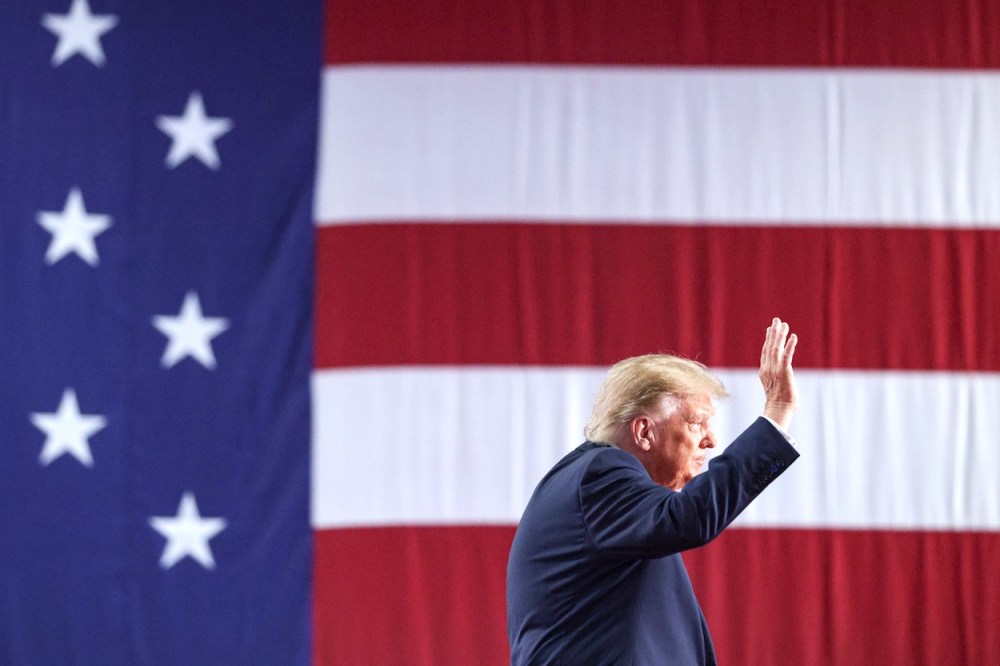
Gundle writes well about some of the more peculiar current representations of the Mussolini years, such as the wax figure of the dictator standing between Hitler and Trump in a museum in Rome. What is lacking perhaps is a more detailed analysis of Mussolini’s political legacy, from the rise of the neo-fascist Movimento Sociale Italiano (MSI) immediately after the war through to Silvio Berlusconi’s inclusion of the far right in his coalition. Though Giorgia Meloni was quick to distance herself from any taint of fascism, she cut her political teeth as a 15-year-old in the MSI’s youth wing. Several of Mussolini’s grandchildren, not seeing the need to change their names, have been able to forge political careers.
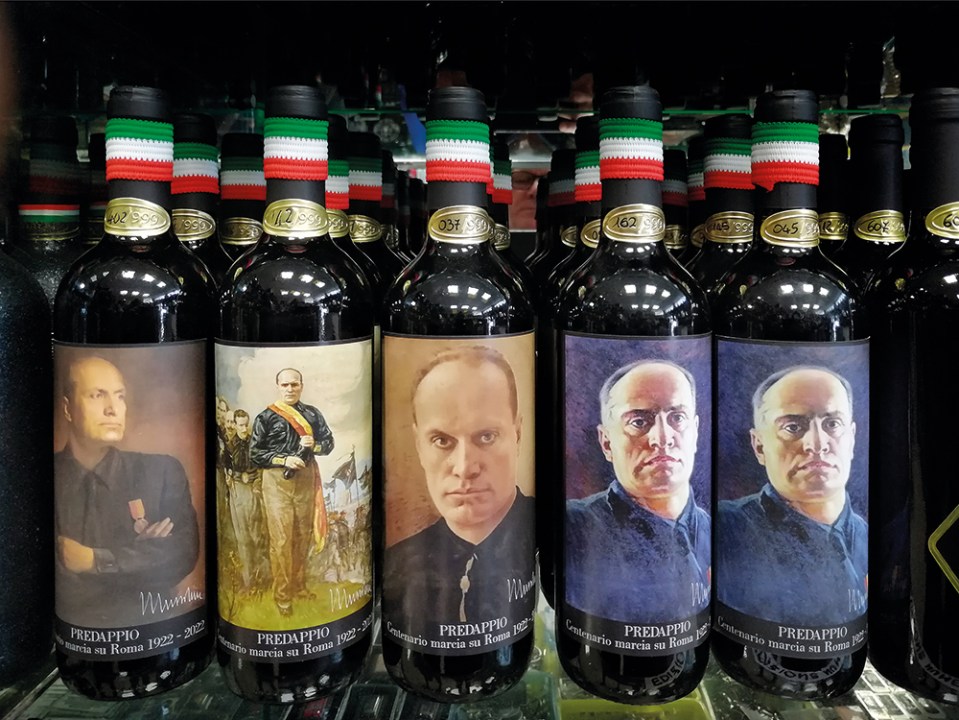
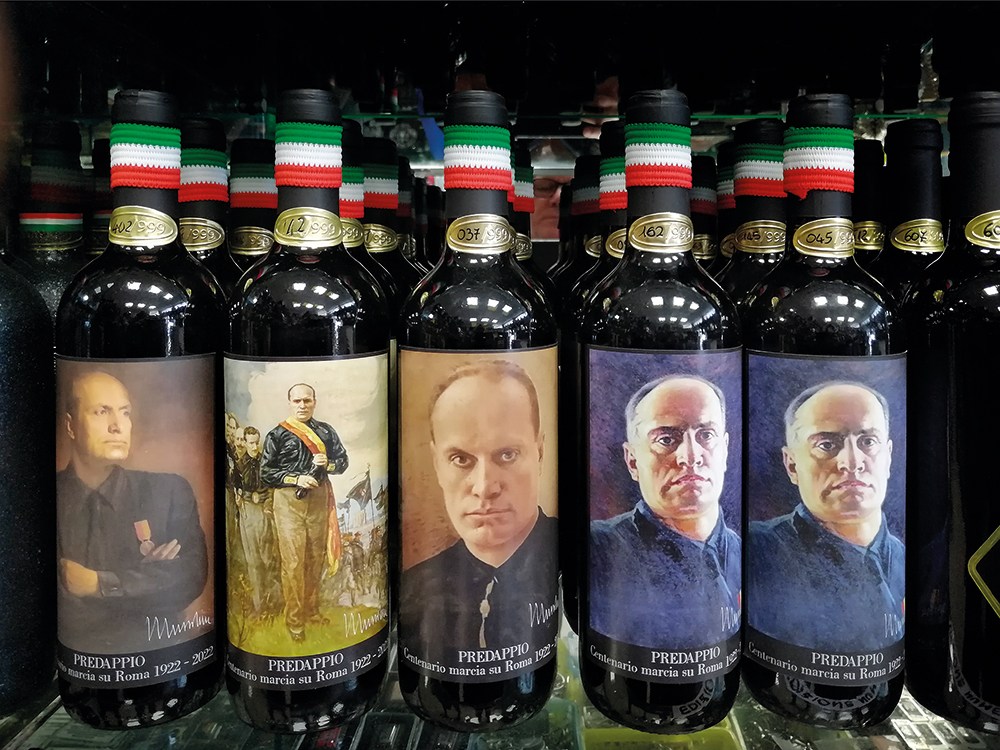
The anniversary of Mussolini’s march on Rome in 1922 is celebrated every year with much fanfare on 28 October, nowhere more so than in Predappio, the dictator’s birthplace in Emilia-Romagna, where his mother’s schoolroom is open to the public and his nearby family home has become a shrine and a museum, complete with his uniforms, his violin and his bicycle. In the town’s gift shops, fascist memorabilia is widely available. One cannot imagine the same thing happening in Germany. Many of Mussolini’s modernist buildings are now regarded as an integral part of Italy’s cultural heritage. Fendi, the fashion house, has opened its main office in one of EUR’s more spectacular buildings.
As Gundle clearly demonstrates, Mussolini continues to fascinate Italians, not least because there never has been a proper reckoning with fascism. They regard him much as Hindus see the afterlife of their gurus, wrapped in ‘a strange and irrational aura’. With so powerful an ability to appeal, casting off his ghost is hard. But, Gundle warns, it is as well to be vigilant: such legacies have the unnerving potential to act on the present.




Comments