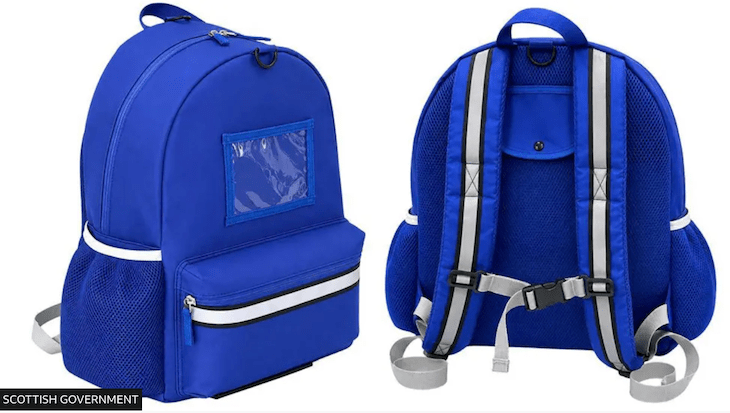
It seems that good intentions do not just pave the road to hell, but the path to foolishness. The SNP has announced that, from August 2027, every child starting P1 in Scotland (the equivalent of Reception in England Wales) will be given a free school backpack, which will contain essentials such as a pencil case, water bottle and a notebook.
This may seem like a generous gesture, but the SNP have been rather reluctant to disclose how much this ‘small’ gift will actually cost (the bags are still apparently in the ‘pre-contract stage’ and a ‘budget will be confirmed once procurement is complete’, although we do know that the materials used to make the rucksacks will be sourced from overseas).
Parents don’t want handouts: they want orderly schools
The problem with these free goodie bags is that, well, who actually wants them? Teachers don’t need the organisational chaos of multiple school children owning the same bag. Children like choosing their own school bags, lunch boxes and stationery (it’s all part of the excitement of ‘starting school’), while parents may not want their child to be targeted or bullied for appearing less wealthy by having one. The scheme could be opt-in rather than opt-out, so that it could still help families who are desperately struggling, but giving them out by default seems a mind-boggling waste of money and resources given the other more pressing issues currently facing Scottish schools.
And there are many of them to choose from: poor attendance, poor behaviour, poor rankings in international league tables. Rather than virtue-signalling about giving children the ‘best start in life’, perhaps the SNP should instead be asking themselves what they plan to do about the fact that the number of Scottish pupils missing more than half of the school year has doubled in the past five years (around 400 classrooms could now be filled by the 12,402 pupils who were severely absent in 2025/2026).
Or, perhaps they could focus instead on the fact that a survey of almost 900 schools found that two-thirds reported violent and aggressive incidents taking place on a daily basis.
Another report found that, within the last week, 67 per cent of teachers had encountered verbal abuse between pupils, 59 per cent had witnessed physical aggression and 43 per cent had experienced physical violence; yet despite this ‘aggression epidemic’, exclusions and suspensions fall year on year.
Scottish parents don’t want handouts: they want orderly schools. Half of Scottish parents now say they do not feel their child is safe at school, which is unsurprising given Education Scotland’s disastrous ‘restorative justice’ policy, which states that punishing pupils who misbehave ‘can be ineffective, dangerous, breed resentment and make situations worse.’ Instead, they advise teachers to use constructive conversations and encourage pupils to ‘hear about and face up to the harm and distress they may have caused’. This relationships-based, non-punitive approach to behaviour management may sound compassionate, but in reality, it disempowers teachers and students quickly learn that there are no real consequences to their disruptive behaviour.
This short-sighted pursuit of headline-grabbing gimmicks happens time and time again in education policy. Earlier this year, the government mandated that, from September, schools will only be allowed to require three branded uniform items per primary school pupil, or four per secondary school pupil (if this includes a tie); the idea being that this will help families with the cost-of-living crisis, as they can buy the rest of their items from any shop or supermarket, rather than one ‘pricey supplier’.
Yet, again, who actually asked for this? The policy ignores the fact that specialist schoolwear retailers already offer support to lower-income families, including swap shops, discounts and payment plans, and have kept the cost of essential items below inflation for three years in a row. It ignores the fact that institutional branding can create a sense of community and belonging, and makes it easier for teachers, parents and members of the community to identity pupils and manage misbehaviour outside of school grounds (78 per cent of school leaders believe that school-specific uniforms improve performance and behaviour, while 88 per cent say it reduces visible inequalities between pupils). It also ignores the fact that greater choice means greater ‘pester power’: students are much more likely to harass their parents into buying designer labels and trendy high street brands, which are likely to be much more expensive than the uniform items they replace.
Ultimately though, buying school bags and polo tops is not what is pushing families to breaking point. What difference does a free water bottle make when the average family spends £2,300 annually on council tax, £1,800 on energy bills, £1,200 on car fuel or over £5,000 on a train season ticket? If the government genuinely wants to help families, then it needs to address the fact that the average family weekly food shop (assuming you have two children) now costs £160, or that nearly half of families have less than two months of savings to fall back on if their income suddenly stopped. A free backpack is not the support parents want, need, or ask for.



Comments