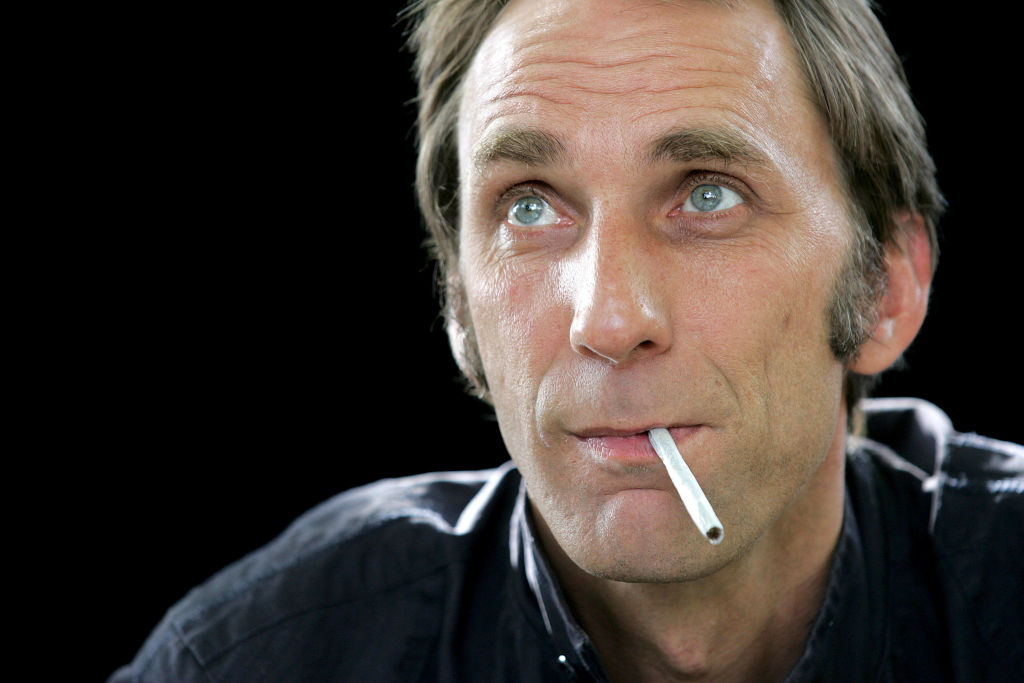
It is usually taken as a given, for better or worse, that the Grand Old Men of English letters tend to move, if not necessarily to the right, to an accommodation with conservatism and the status quo as they grow older. It is, after all, harder to rail against the establishment when you have been weighed down with CBEs, honorary doctorates and the adulation that comes from being a much-loved writer. However, nobody seems to have told this to the novelist, polemicist and one-time enfant terrible Will Self, and the results have been, depending on your perspective, either disappointing or bleakly amusing.
Self has published an extraordinary 7,000-odd word open letter to Andy Burnham on his X account, as part of what he calls his ‘Sitreps’. (We are promised that they will culminate in a book called The Will Tower which will be published next month, and which seems to be half-Tower of Babel and half-The Watchtower.)
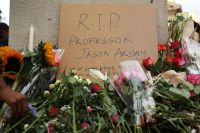
During the course of his diatribe, inspired by the Arday situation, Self demands a full public inquiry into the Cambridge professor’s death and blames various media figures, all of whom he names and (attempts to) shame.
Some are of this parish, including Madeline Grant and Melissa Kite; others, including Sarah Ditum, Kathleen Stock and Dominic Green, are notably thoughtful writers who hold perspectives (gender-critical, pro-Israel) that are anathema to the Corbyn-supporting Self.
A couple are the usual punching bags of anyone on the so-called progressive left, including Camilla Long and Allison Pearson – there is a notable, even disproportionate number of women on Self’s ‘J’accuse’ list. He even ends with Kath Viner, the editor of the Guardian. His excoriation of Viner, whose newspaper published perhaps the most damning investigation into Arday, throws up one of the few laughs, when he writes, ‘Why don’t you retire, I believe your hubby isn’t short of a bob or two. You can spend your retirement watching him spend a penny: sitting down.’
It is a welcome reminder that Self used to be one of Britain’s most crapulous (a word I am sure he admires) humourists, a man whose jokes – if they could be called that – came from a position of Hogarthian moral disgust with the world. He became notorious in the Nineties for being fired from the Observer after snorting heroin on John Major’s private plane during the 1997 election campaign, and has since gone on to occupy a rare position in public awareness thanks to his status as team captain on the cult comedy quiz show Shooting Stars. This gave him a household name status that other literary novelists of similar standing would have killed for.
Yet what made Self an interesting, if never exactly likable, character was that he maintained a healthy sense of the absurd, both in his writing and in his life. He knows what it is to be the target of press opprobrium – his second marriage, to the journalist Deborah Orr, ended extremely badly and publicly, and he was widely regarded as the guilty party. And so maybe his contempt towards journalists now has its roots in his lingering and perhaps understandable resentment towards the Fourth Estate. Yet when Self openly calls for an investigation, if not a full prosecution, into the writers who he blames for Arday’s death – leaving the door open for more names to be added, as and when it seems convenient – there is something both ridiculous and faintly chilling about his witch hunt.
He writes that while, ‘no historical equivalence is intended between the activities of the British legacy media and Himmler’s SS, nonetheless there is a revealing congruence.’
Many might consider this simply tasteless, especially given his virulent criticism of those he blames for Arday’s death.
Self is, by his own admission, not a well man. He has blood cancer and has described himself as ‘fantastically ill’. Clearly, the idea behind The Will Tower and his Sitrep polemics is to leave a legacy behind that will be mulled over long after he has gone. Judging by his latest screed, this will be a legacy of angry contempt towards his fellow writers – who he denigrates simply as venal, bigoted opportunists – rather than the literary achievements of his career.
He concludes by writing ‘to my quondam colleagues I say: come on if you think you’re hard enough – and by that, I mean hard enough to write at length, and to provide an ideological spine to your writing, rather than the bone in your hackery that sticks in the craw of every feeling rather than bottom-feeding person in the realm.’ This mixture of verbosity and anger might, in another context, have been bracing, even stirring. But now, Self’s raging against the dying of the light is more likely to inspire mystification than empathy.




Comments