On his very first day as Colombia’s new President, Abelardo de la Espriella received a dramatic house-warming gift: a billion dollars, courtesy of Donald Trump. Three days later, a magnitude 7.4 earthquake struck the country – but correlation is not causation.
The President’s ten-figure donative arrived as aid for the militarized crackdown de la Espriella has promised against Colombia’s fearsome drug cartels and jungle guerrillas. And de la Espriella quickly showed himself eager to align with President Trump by adding Colombia to the Shield of the Americas, Trump’s signature new venture in Latin America.
With this old-fashioned exchange of gifts, de la Espriella became the newest member of the eclectic global club of Trump allies. This is not a stable alliance. It is an ever-changing club of men, some of them well-known (Javier Milei, Mohammed bin Salman); some more obscure (Ecuador’s Daniel Noboa) and some freshly departed (farewell, Viktor Orban).
No American leader has ever brought such a personal dimension to his international forays
Every American president conducts foreign policy, and plenty of presidents have had famous friendships with foreign counterparts. But no American chief executive has ever brought such a personal dimension to all his international forays: Trump allies himself with individual leaders.
He gets along well with so many Latin American leaders in no small part because his brash, aggressive, “big man” personality perfectly aligns with Latin America’s caudillo tradition. In the Middle East, the gaudy splendor of the Gulf monarchies matches the President’s own tastes, as does their enthusiasm for making (or at least promising) big investments into the American economy. And it is worth wondering if Trump’s genial relationship with Japan derives as much from its leaders’ unfailing politeness towards him as it does from their readiness to expand their military to contain China.
What stands out most, though, is the frankness of Trumpian diplomacy. For decades America favored the bland language of global leadership, superficial fairness, democracy promotion, rhetoric for a Cold War victor whose global power looked absolute if not permanent. The New York tycoon is more straightforward: America is a powerful country, but not an invincible one, with interests it feels no shame in pursuing, and an agile readiness to befriend leaders who are amenable – or turn on those who are not.
The result has been a diplomatic cascade. Leaders who play ball with Trump’s priorities and pay him an adequate amount of respect can expect both his support and eventual rewards (or averted punishments) for their countries. One member of the club, Honduran President Nasry Asfura, won a narrow election victory after Trump not only endorsed him, but denounced his opponent as a communist and explicitly warned of an aid cut-off if he won.
In Argentina, Milei received $20 billion in currency swaps to support the Argentine peso just before a critical midterm election, with Trump bluntly saying his support was for Milei more than anything else: “If he loses, we are not going to be generous with Argentina.” (Milei won and the swaps were promptly repaid.)
In Asia, Trump has had the Treasury sell off billions of euros to buy the Japanese yen, bolstering its value in the face of a long-term slide. If America had made such a move in the past, it would have relied on rhetoric about altruistically acting to contain a broader contagion and provide stability for global markets. This rhetoric would have been believed by exactly no one outside of the Beltway, but dutifully supplied anyway.
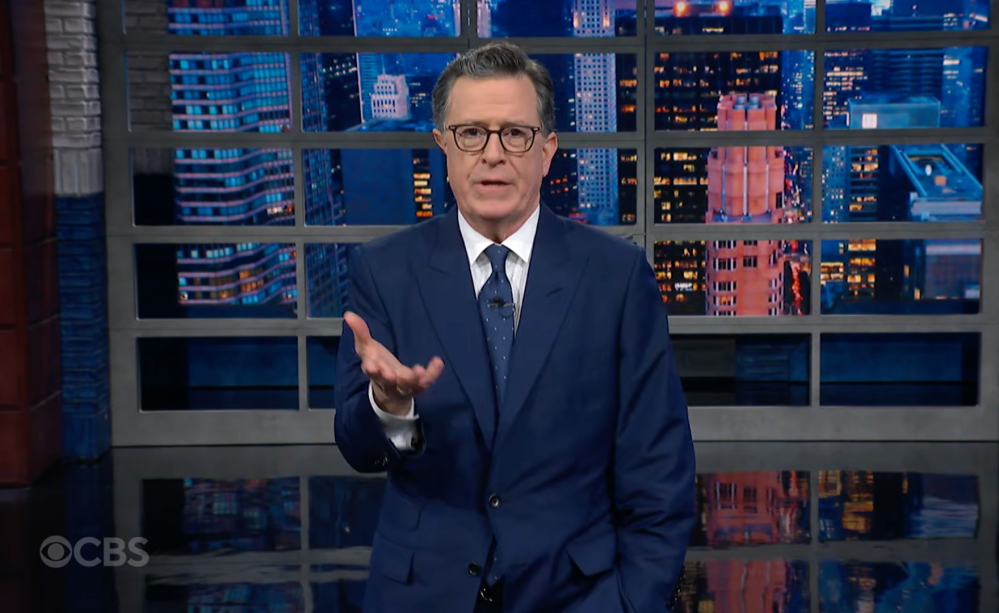
But Trump has no patience for such palaver. America was backing up Japan, he said, because it had been a reliable ally and being friendly with America brings rewards. Or, in the President’s more memorable phrasing: “Japan’s been very good to us, with the exception of Pearl Harbor.”
America has long picked sides in foreign elections and favored some parties over others. What Trump brings is greater transparency and honesty about doing so – fewer think-tanks promoting “freedom and democracy” with a wink and a nudge, and more transactional salesmanship. Telling a smaller country it will lose US aid if it votes the wrong way might get blasted as “election interference” but is it worse than staying silent, then following the same policy?
The reverse of a president who races to help his friends, of course, is one who can quickly sour on everyone else, especially older allies he feels have let him down. Twice Trump has floated the idea of a total trade and travel embargo on Spain over its lack of enthusiasm for the Iran campaign. Quips about potentially quitting NATO have become an almost monthly tic.
His sour treatment of Europe has been a boon to others. America’s past collaboration with the Arab gulf monarchies was colored by discomfort over their old-fashioned authoritarian governments. Trump, on the other hand, has made it clear that what matters to him is assisting America’s military, stabilizing its energy markets, and making big investments. Do that, and you’re an excellent ally – and can be spared annoying lectures about representative government.
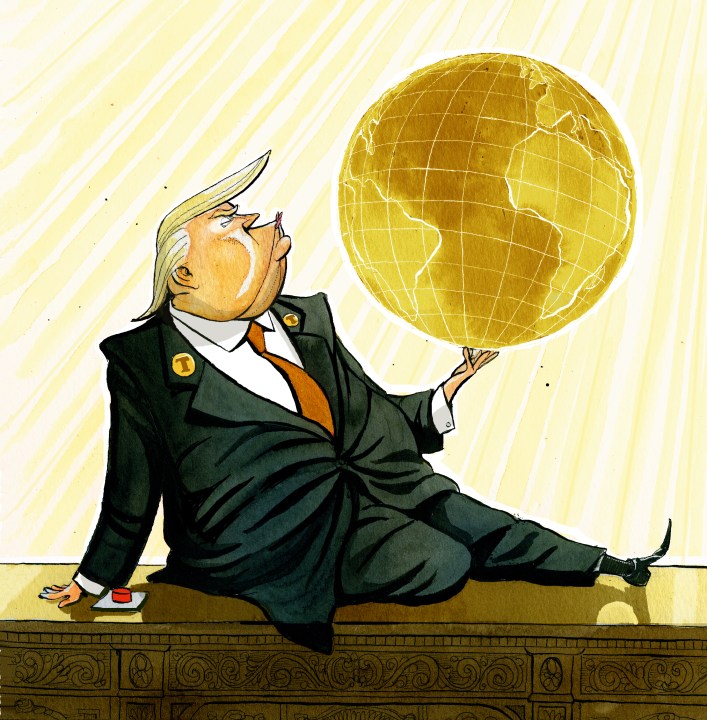
The President, then, is happy to shake up America’s friendships like no leader since the second world war but to do what? Trump’s enemies will say his actions are nearly random or motivated solely by personal vanity. Look at his quips about annexing Canada or his long-shot bids to seize Greenland. But these headline items obscure what is actually a sharply realist agenda. Despite his grandiose rhetoric, Trump has the most limited goals of any American president in recent history.
Because even if he dreams of absorbing Canada, what sets him apart from his predecessors is his sharp pivot away from preserving America’s shaky pretension of being a global hegemon. Gone are bold aspirations of bringing down Vladimir Putin or China democratizing through western influence. Instead, Trump wants to get specific, line-item achievements closer to home. He wants hostile regimes in Venezuela and Cuba gone. He wants a Middle East whose long-term problems are finally resolved so that America can escape its endless samsara-like cycle of interventions, and he wants economic rebalancing sufficient that America is not vulnerable to trade-based attacks from China or anyone else. All of them are major challenges. And yet, they are also genuinely limited goals.
The President’s national security strategy (NSS) de-emphasized dramatic great power rivalry as a core feature of American diplomacy. It disavowed aspirations of “global domination” in favor of balance of power, dialed back prior anti-Russian rhetoric and placed a strong emphasis on America’s western hemisphere backyard. When it speaks of Europe, the NSS frets about a continent losing its “civilizational self-confidence and western identity” rather than one endangered by Russian aggression.
Such an approach is not so much a novelty as a 21st century reversion to America as it existed before World War One – when the US was immensely powerful, but neither possessed nor aspired to the status of global hegemon. Both the NSS, and Trump’s own actions, reflect an awareness that American power is not what it once was. The old America was eager to present itself as almost everyone’s ally, and happy to involve itself in almost anyone’s business, because US dominance was so overwhelming that it could afford illusions of omnipotence.
Despite his boastfulness, Trump does not share such illusions. His conduct reveals an awareness that while America remains a great power, it is also vulnerable. It can no longer ignore nations free-riding under its military umbrella, or pretend that every region is equally worthy of its attention. Trump’s aggressive deal-making and rough treatment of Europe all flows from this logic.
With American hyperpower no longer a sure thing, it makes the most sense to focus on achieving and preserving total mastery of its natural western hemisphere backyard. If America is going to be drawn into commitments further afield, then it only makes sense to be far more demanding of its allies: they should pay more and contribute more for the privilege of getting US support.
For all the grandiose rhetoric, Trump has the most limited goals of any US president in recent history
From there, the President’s own personality does the rest. Trump wants a legacy and he wants things done fast. Latin American strongmen ready to bomb cartels are ready friends. Europeans who get offended by Truth Social posts will not be treated lightly simply because NATO is about to turn 80.
This new approach to foreign policy carries dangers. The old Euro-American bloc, whatever its shortcomings, was durable enough to survive partisan political swings – a sudden win by Britain’s Labour party or a European socialist party didn’t mean a rapid collapse in relations. There could also be surprising alignments – Tony Blair and George W. Bush (tragically) had no trouble collaborating on foreign interventions.
Will Trump’s new alliance network prove similarly durable? It’s unlikely. His goals are rational but his personal style always inspires irrational responses. European leaders might recognize that their best long-term interest is to ignore Truth Social outbursts, cater to Trump’s style, and pony up a bit to keep NATO going. But when their voters fume not just about the Iran war but Trump’s incendiary style, it can be difficult to negotiate.
Meanwhile, in the Latin American countries Trump is cultivating, political instability isn’t just a possibility but a near certainty. From Chile and Argentina, to Peru and Brazil, elections are becoming razor-thin contests between ever-more radical leftists and increasingly bold rightists. The President can put his weight on the scale in those races, but that can go only so far, as was revealed when Trump ally Orban went down to defeat in Hungary despite Vice President J.D. Vance campaigning for him. Any bad election result for Trump means losing an ally – which helps explain his affinity with monarchies where that isn’t a problem.
But long-term stability is a little beside the point. The President is not trying to build Francis Fukuyama’s mythical end of history. He is quite aggressively living in history, as it is made. There are communists to be toppled, cartels to be bombed, factories to be reshored. He is determined to leave his mark on the world, and that isn’t done by simply preserving what was handed to him.
If Trump’s goal of becoming a fifth face on Mount Rushmore remains a long-shot, then he is happy to dare greatly trying to pull it off.



Comments