Provence
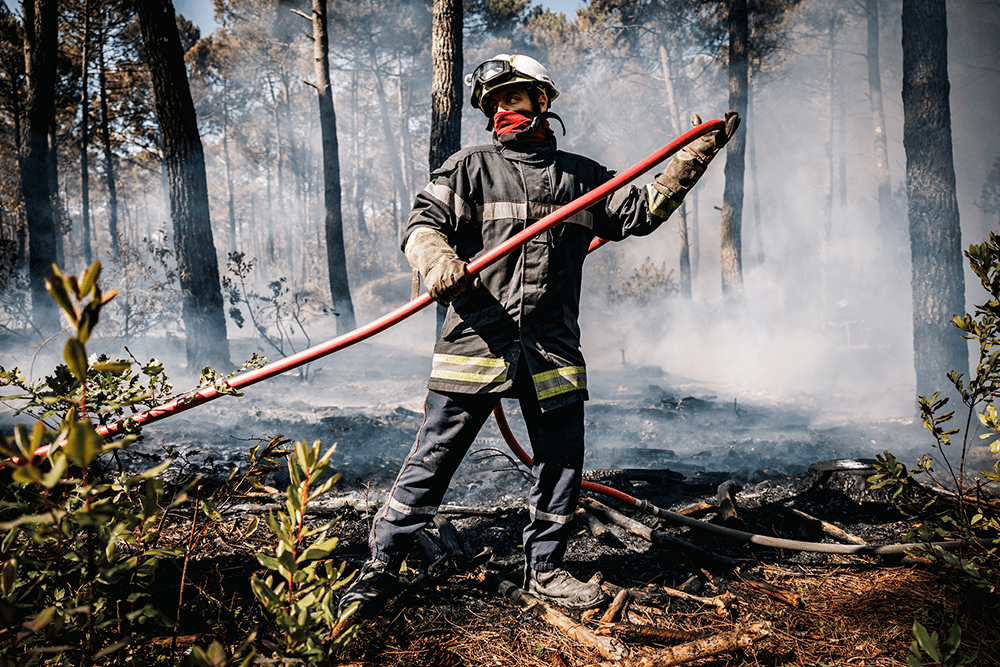
‘Imbeciles! I told them! When the fire comes on the hill there, it always goes that way… did they listen? They did not! They fought it from the wrong side. Look at the mess.’ The old man, the last in the village still wearing a beret, was angry with the pompiers. This was two days after the fire which almost engulfed American Cathy’s house. Now the centre of the village was filling with brown smoke from a fire on the eastern side of our closest hill and the Sanctuary of Notre-Dame de Grâce was threatened a second time.
In fairness to the pompiers, the last time fire struck there was in 1962. Following the first world war, many parts of rural Provence were depopulated. With fewer farmers, the olive terraces surrounding the villages became overgrown with invasive fire-spreading pine trees. If you look at old postcards of the village, there are virtually no trees on the hills; now they’re densely wooded – not with native green oak but pine. Longer and more frequent canicules (heatwaves) exacerbate the problem but the major factor here is malice. A 23-year-old man is in custody accused of starting ten wildfires in the Var.
Walking up past the graveyard on my way home, I took a detour to check on a house I look after. When I got there a huge fire, driven by high and hot winds, was roaring down the hill towards it and four others. Seven Canadairs and three helicopters flew low overhead. Each plane can lift 6.1 metric tons of water in ten seconds. I narrowly missed a soaking.
At the gate a few grim-faced spectators, including the tall, wild-haired builder David, gathered. A woman appeared from the lane across holding an empty halter with a leading rein attached. In her other hand a cat basket and, behind her, a horse walked free. It kept wandering off to chew on some tasty bit of the garigue. It’s 40 years since I rode a horse but I know they can be skittish. As a nine-year-old, I was thrown and knocked out by a grey pony called Misty who got spooked by a paper bag. What the untethered horse would make of the planes and helicopters when they returned was anyone’s guess, but the woman seemed unconcerned and the three of them – woman, cat and horse – disappeared round the corner.
Suddenly there was panic. On the fifth screechy phone alert of the day came a message to evacuate parts of the village centre. People carrying bags hurried past me down the hill, as I headed up. From my tiny cave house, a safe and natural vantage point high in the cliff, I can see for miles. The flames were confined to the hill but dense smoke clung around the village below. At 6 p.m., I poured a gin, sat on the balcony terrace and lit a cigarette. To my right the hillside burned. A helicopter with speakers hovered above the village making indecipherable announcements. It came towards me, level with the terrace, so I rushed inside and hid until it went away.
By 10 p.m. almost everyone in the quartier below me had evacuated and a thunderstorm, generated by the fire itself, sent sheet lightning flooding across the clouds of smoke and flames, rendering the scene even more apocalyptic. Apart from the sirens, it was eerily quiet. By midnight the wind had subsided and the fire had lost some of its ferocity. It seemed likely the houses had been saved.
The following day I got a message from a friend who lives in Oxfordshire, saying she’d flown back to check on her place up near the monastery of St Joseph and asking if she could come and see me when she’d finished. Charlotte’s house is old and stone-built. It was part of the monastery at one time and, indicated on the pompiers’ map as a point of special interest, had survived the first fire but only just. A beam on a gable wall was scorched, external parts of the air conditioning units on that side had melted and all the garden furniture, including a big oak table, had been reduced to ash. Her French mother, who is temporarily wheelchair-bound because of a broken ankle, lives in the house next door and had to be helped to safety.
As a nine-year-old, I was thrown and knocked out by a grey pony called Misty who got spooked by a paper bag
I had one decent bottle of wine a friend had brought some weeks before, a good Viré-Clessé, which I’d been saving, and stuck it in the fridge. Charlotte was later than expected, having spent hours trying to put out small garden fires which had reignited. Eventually she found a fire crew to help and by 9 p.m. was with me. She had a quick shower while I made her some food.
As we clinked glasses she showed me photos of the fire crew who’d helped. ‘Look at him, isn’t he gorgeous?’ There was no denying it. ‘Do you know, he thanked me, saying there were three crews fighting the fire all night. I asked him why he was thanking me – I was the one who was grateful to them for their heroic efforts. He said that at 5 a.m. after they’d got the fire under control, they ate then went for a sleep on the cushions in my pool house. When they woke, they all had a swim. Isn’t that a lovely thought?’ We exchanged a look. ‘Yes, isn’t it…’






Comments