


Geoffrey Madan (1895-1947) was an English aesthete of the first water. Although he fought and was wounded in the Great War, his main passions were quiet: wine, old silver, and books, especially books. Madan was an accomplished classicist – he procured a schoolwide holiday while at Eton for his account of the establishment written in Herodotean Greek. He published no books. He did compile a large collection of aphorisms, mostly in English but many in other languages. A selection of these were published in 1981 by Oxford under the title Geoffrey Madan’s Notebooks.
In one of the handful of entries Madan himself contributed to this chrestomathy, he described the collection as “an anthology of the forgotten sayings of great men, and the great sayings of forgotten men.” Item, from Benjamin Jowett: “Precautions are always blamed. When successful they are said to be unnecessary.” From Arthur Schopenhauer: “Treat a work of art like a prince: let it speak to you first.” (Good advice.)
Many of the entries have a certain bite.
Man at the Tuesday club: Anyway I’d rather be right than clever.
O.T. Falk: I’d rather be both than neither.
And how about this morçeau by E.F. Benson about Ronald Knox:
“There’s only one aspirated ‘s’ in English: the word sugar.”
Knox: “Are you sure?”
Then there are Madan’s scattered reflections on alcohol. “If you’re given Champagne at lunch,” he quotes Lord Lyons as saying, “there’s a catch somewhere.” Keep it in mind. Madan himself admitted: “I love drink, so long as it isn’t in moderation.” I don’t recall whether Michel de Montaigne appears in the Notebooks. I would be surprised if he didn’t. Madan would have savored, though he would not have entirely agreed with, everything in Montaigne’s reflections in “On Drunkenness.”

“If you make your pleasure depend on drinking good wine,” Montaigne writes, “you condemn yourself to the pain of sometimes drinking bad wine. We must have a less exacting and freer taste. To be a good drinker, one must not have so delicate a palate. The Germans drink almost all wines with equal pleasure. Their aim is to swallow rather than to taste. They have much the better of the bargain. Their pleasure is much more plentiful and ready at hand.”
In general, Montaigne looked askance at excess. He quotes the Delphic oracle – “nothing in excess,” “know thyself” – early and often. At the same time, he points out that “to drink French style, at two meals and moderately, for fear of your health, is to restrain the gods’ favor too much… The ancients spent whole nights at this exercise, and often added the days. And so we should make our daily drinking habits more expansive and vigorous.”
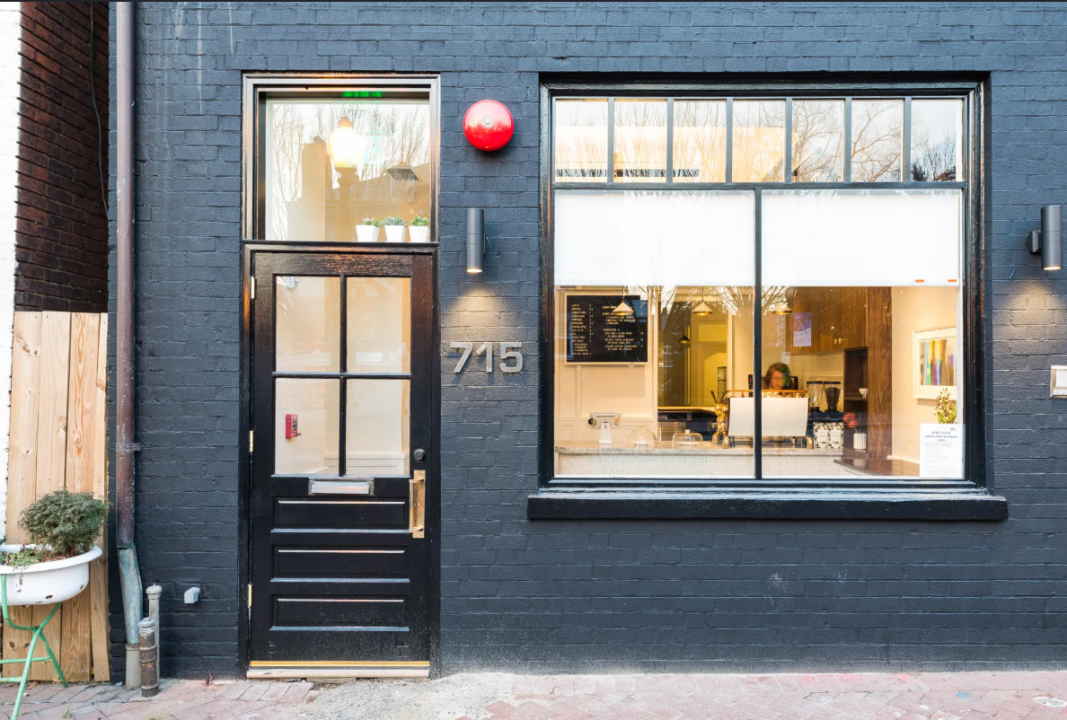
Which brings me to the splendid Capitol Hill refectory called Pineapple and Pearls, where a friend recently took me to dinner. I won’t dilate on the sumptuous food at this celebrated restaurant (there is a reason that a wall in the kitchen is plastered with certificates of the Michelin stars they have earned). Instead, I’ll mention a few of the several wines that Justin Moore, the savvy sommelier, chose to accompany our meal.
When you think of white Burgundy, you probably think “chardonnay.” You are right to do so. That magnificent grape is the mistress of the Montrachets and Meursaults, the Saint-Aubins and Chablis of the world. But the second-most-popular white wine grape in Burgundy is aligoté. The best chardonnays are rich, buttery, with hints of oak and vanilla. Aligoté is crisper, hedged by bright mineral notes and aromas of green apples. Justin offered us a glass of the 2023 Bourgogne Aligoté from the famed Domaine Roulot, which has extensive holdings in Meursault and Monthelie. Aligoté has been increasing in popularity these past few years, and this elegant, food-friendly wine shows why. It is both generous and unassuming, complex without any fussiness. You can find it for about $70 and you will be glad you did.
When you think of nebbiolo you think of the Piedmont and its principal jewels: barbaresco and barolo. If you head north to Lombardy and the Italian Alps, you would ask for “chiavennasca,” the local name for that exalted grape. It’s a bit lighter, in color, body and flavor profile than the Piedmontese incarnations. More floral, less brooding. Justin poured us a glass of the 2023 Sandro Fay Valgella, a robust and instantly pleasing wine. Look for it at about $40 a bottle.
Those Lombardian nebbiolos are somewhat recherché. Considerably more esoteric is Pêra-Manca Branco, a rare white from the Cartuxa winery in the Alentejo-Évora region of Portugal. The wine gets its name from pedras mancas, the “limping stones” that recall the rocky landscape that surrounds the vineyards. Justin poured us a glass of the 2022, a blend of arinto (55 percent) and antão vaz (45 percent). The wine manages to be both buttery and clarifying at the same time, full in the mouth but well-articulated and refreshing. It was a revelation to me and can be to you for about $85 a bottle.






Comments