In 1895, Winston Churchill, as a young officer cadet at Sandhurst aged 21, was falsely accused of having committed an act of “gross immorality of the Oscar Wilde type” with another cadet. He promptly sued for defamation and received several hundred pounds in damages, the equivalent of £80,000 today.
People from around the world even travel to London for litigation shopping, as if they were purchasing a luxury handbag
And talking of Oscar Wilde, nearly thirty years later in 1923, Churchill sued Oscar Wilde’s erratic fixation Lord Alfred Douglas for criminal libel – in part because Lord Alfred had accused Winston of being part of a “Jewish conspiracy to manipulate stock exchanges”. (Oh yes, when it comes to anti-Semites nothing ever changes!) Lord Alfred was sentenced to six months imprisonment.
Fast forward to today and our defamation laws are woefully out of date with the morals of our time. True, people can no longer be imprisoned for libel, but these laws today are sometimes used by the very wealthy to silence and destroy their enemies. Harry Mount was absolutely right when he wrote in these pages that one should “Never sue!” But what about when the weapon is being used by the powerful against the weak?
People from around the world even travel to London for litigation shopping, as if they were purchasing a luxury handbag, because our laws are so extreme that litigants can annihilate their opponents with ruinous costs and overtly punitive orders.
It’s wrong to defame someone of course – but we no longer live in Victorian times when people whose reputations had been damaged were drummed out of their clubs and regiments and ostracised from society.
Despite this, the financial penalty today for defaming someone is in practice higher than the financial penalties for murdering someone.

This can’t go on.
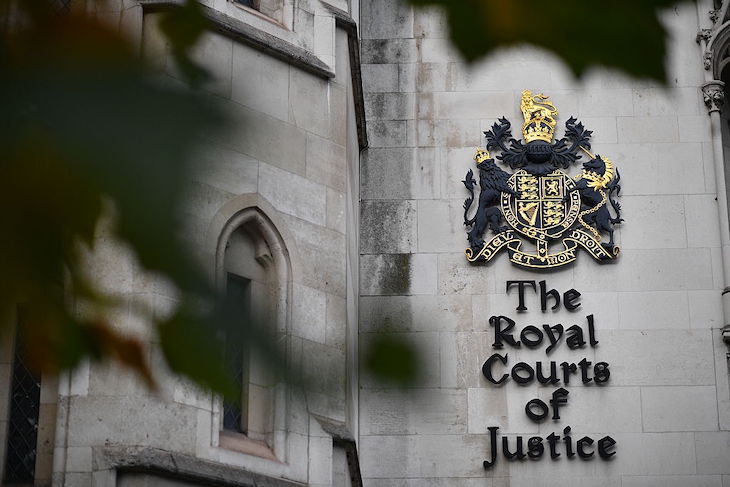
One reason for these exorbitant costs is that libel actions today can only commence in the High Court, an anachronism based in part on how gravely imputations of dishonour used to be considered. But those imputations were before the internet age when people nowadays publish posts of a wild nature every minute of every day. Such insults and libels are so frequent that the gravity of them has also been affected.
The truth is that these cases do not need a High Court judge and the killer costs of the hearings in the High Court. Furthermore, at a time when our judges are overwhelmed with important work it is unjustifiable to take up the time of one of our most senior judges with a personal dispute between two sides who have argued in public.
Wholesale reform of defamation law in England is necessary. We must allow the press to report freely about those hostile to this country and its values who are very well funded and who immediately send writs flying from expensive law firms if there is any imputation on their conduct.
The solutions are quite simple.
Instead of a rule that defamation actions can only commence in the High Court, let’s totally reverse the position and rule instead that they should be reserved only to the County Court, or even a Small Claims Court dealing with claims below £10,000.
Secondly, award vastly smaller penalties to wrongdoers. That will mean much quicker justice and be hugely less expensive – there is nothing so complicated about defamation that requires a very senior judge to deal with it.
An even tougher option that would very heavily restrict the use of defamation in the first place would be to introduce, as the United States has done, a rule that “actual malice” is required before a public figure can sue. This means the defendant must be proved to have publicised the statement knowing it was false or had a reckless disregard for the truth when they did so.
But if we don’t want to restrict the use of defamation laws quite so much, then at least reduce the penalties – allow a Judge to deal with any proven libel by punishing the wrongdoer with a percentage of their annual income; if an artisan on £40,000 a year, let him be required to pay a maximum of £2,000. If it was a banker on £1million let him pay £50,000 maximum for the same libel. Five per cent of annual income is a hefty penalty and more than enough for “hurty words”.
And set say £50,000 as an absolute maximum for the most egregious and malicious defamation so that a wrongdoer is punished when they have genuinely done wrong, but our free press is not intimidated in a ruinous way. It helps also that the legal costs in a County Court will be much lower, perhaps a few thousand pounds on top of the damages, so that too will make a big difference to who benefits – less the lawyers on both sides, more the person wronged.
Making libel actions a small claim would actually mean more people could afford the risk of litigation. But justice would be far quicker, the higher courts could focus on more important things, and the sums involved would be more likely to be a few thousand pounds in the average case – far more in kilter with the actual harm done by words spoken.
It’s only words after all. And although there has to be some recourse to punish a gross libel, the utter destruction of the wrongdoer is a disproportionate penalty.



Comments