Labour’s decisive victory in the Greater Manchester mayoral election is a bad result for Reform UK and the Green Party. No amount of political spin can disguise the truth that both parties came into this contest with high hopes – only to fail spectacularly.
The numbers tell their own story. Labour’s Bev Craig won 47 per cent of first-preference votes, with Reform UK way behind on 21 per cent and the Greens in third on 12 per cent. The contest took place under the supplementary vote system, meaning that, as no candidate achieved more than 50 per cent, voters’ second preferences were counted. When this was done and other parties eliminated, Labour’s share rose to 66.3 per cent and Reform UK’s to 33.7 per cent.
‘Ultimately they failed to convince voters in sufficient numbers that they are the answer to their problems.’
The scale of Labour’s triumph leaves the main opposition parties in this contest facing big questions. Reform’s 21 per cent showing on first-preference votes was a massive nine points down on its tally across the region in the May local elections, while the Greens’ 12 per cent was well below what the polls had predicted and fell well short of their bombastic claims that they were in a straight fight with Reform for victory in this contest.
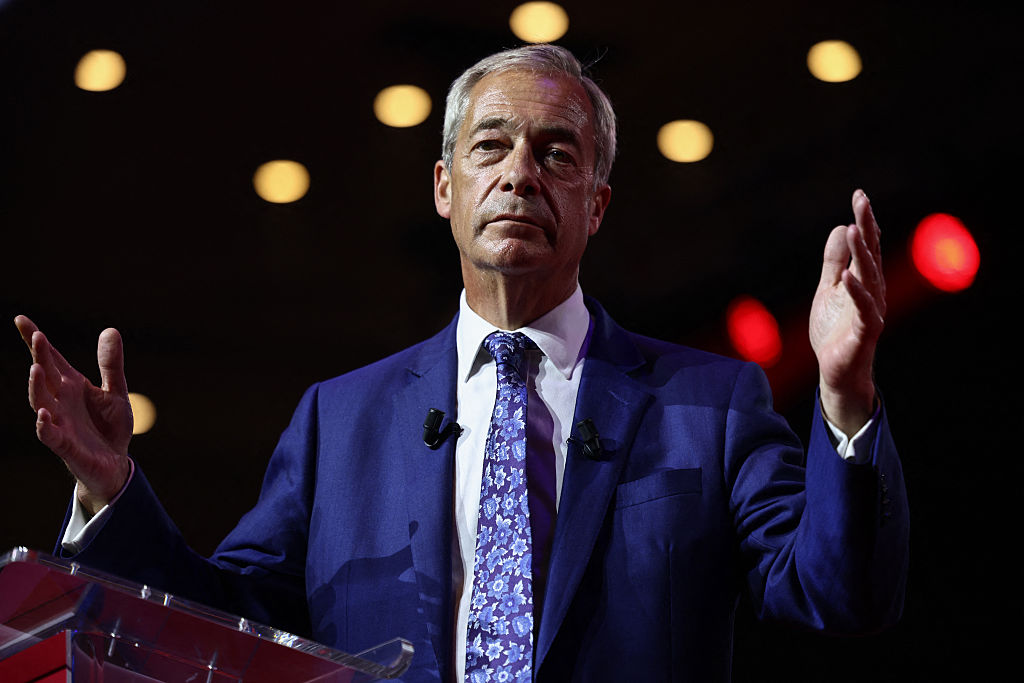
It is yet another high profile electoral setback for Reform and its leader, Nigel Farage. Reform very much looks like a party that is going backwards fast in this region. Just last month, one poll had Labour and Reform virtually running neck and neck in the battle for the mayoralty. In the May local elections, Reform won 106 seats across Greater Manchester’s ten local authorities. There can be no disguising the scale of the reversal: it is the party’s third big disappointment in Greater Manchester this year, after failing to win in the Gorton and Denton and Makerfield by-elections. The party’s mayoral campaign was hit when Farage announced that he was standing down as an MP in order to fight a self-imposed parliamentary by-election in Clacton in the midst of the growing crisis over his sources of funding.
That move appears to have backfired badly, with vital campaigning resources apparently switched from Manchester to the by-election contest in Clacton. Other trends point to troubles. Reform recently surrendered its year-long lead in the national polls. Farage’s personal poll ratings are now the worst they have been since he returned as Reform’s leader during the 2024 election campaign. Party strategists also face a dilemma over what to do about the relatively strong performance of Restore Britain, a breakaway party founded just six months ago by Rupert Lowe. Restore achieved 8.7 per cent of the vote in the mayoralty contest, after fighting a campaign focused on the issue of child grooming gangs. It is clearly eating into Reform’s vote share.
What of the Greens? Barely five months ago, the party scored a spectacular triumph when it won the Gorton and Denton by-election. The Greens took 27 seats, mainly in the city centre, in the May local elections. At the end of June, when the Greens announced their candidate for mayor, their leader Zach Polanski was confident enough to declare that the contest would boil down to a fight for outright victory between his party and Reform. Polanski’s confidence turned out to be spectacularly misplaced: the Greens were aspiring to be top dogs across the Greater Manchester region, but ended up very far behind in third place. He too, like Farage, faces growing scrutiny. Only this week, Polanski was widely criticised for sharing an Instagram post picturing a man on whose T-shirt was a guillotine and the slogan ‘we’re only making plans for Nigel’ – a reference to the Reform leader. The leader of the Greens has seen his popularity nosedive amid continuing allegations of antisemitism in the wider party. Recent polling by YouGov showed that the proportion of Britons who have an unfavourable view of Polanski has increased from 27 per cent to 47 per cent since January. Questions about his performance and suitability for power will not be going away any time soon.
Strategists from both parties will be eager to point to one silver lining in all this. Even though Reform and the Greens finished way behind Labour in the race for Greater Manchester mayor, it is still the best ever set of results both parties have achieved in the four mayoral contests to date. This is to clutch at straws. Ultimately they failed to convince voters in sufficient numbers that they are the answer to their problems.




Comments