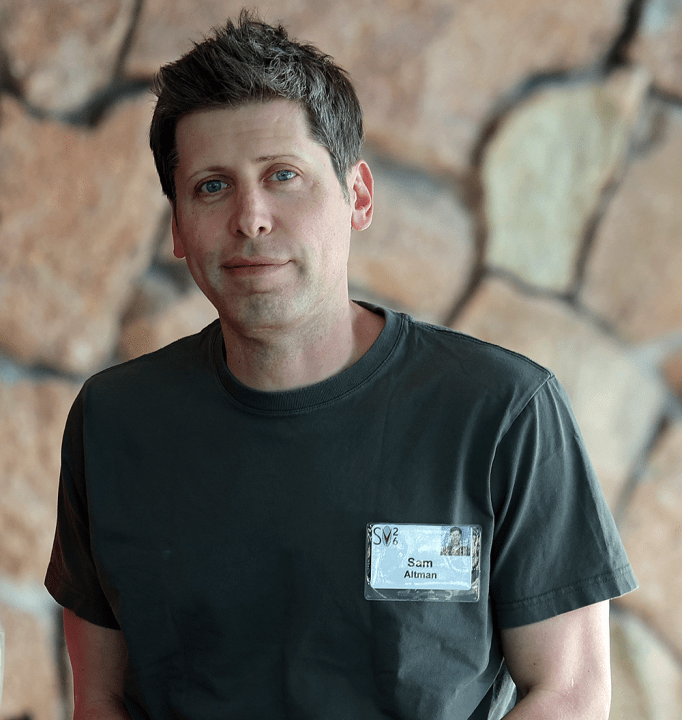


In my belated quest to develop a faint sense of what AI is doing, I have just read Sebastian Mallaby’s book The Infinity Machine, about the greatest British AI wizard, Demis Hassabis, boss of DeepMind. The numerous passages I did not understand are my fault, not Mallaby’s. The book is admirably lucid. All I can record, which may slightly help others dipping their toes in the shallow end, is two contradictory impressions. The first is of foreboding. When thinking about AI, we are talking as much about its human creators as about the machines themselves. These creators are almost all men (there are only four women in the book’s entire index), and a certain type of man at that. They resemble clever boys – especially American clever boys, even when they are not actually American. (Mallaby, though British, writes his British-published book in American throughout.) They tend to have come into the world of AI via games – chess, Go, video games, and ones I have never heard of called things like Pong. They love go-karting. Mallaby’s description of the male type (specifically, Mustafa ‘Moose’ Suleyman) is ‘a brash and brilliant autodidact’. Such men are mostly ahistorical and inclined to seek perfect solutions. Hassabis, though clearly one of the humane ones, says he wants to ‘assemble a council of the hundred wisest people from all corners of the Earth’, not seeing the utter unwisdom of such utopian thought. Sam Altman of Open AI recently spoke of bringing up his surrogate son by his same-sex marriage, saying: ‘I cannot imagine figuring out how to raise a newborn without ChatGPT.’ You have to be a particularly stupid type of clever man to think that way: how has the rest of the human race managed for its entire existence? Also like clever boys, the AI titans are fantastically competitive. Their lives are consumed by an arms race for the latest ‘agent’. Some seem crazy and their billions can only make them crazier. One, Larry Page, attacks Elon Musk (!) for being a ‘speciesist’ who wishes the human race to continue rather than be replaced by brainier machines. It is terrifying. Bad actors spot advantage. ‘The one who becomes leader in AI will be the ruler of the world,’ said Vladimir Putin in 2017. China has its DeepSeek: we could be in DeepDo-do.
My second reaction, however, is that these wizards are indeed seeking after truth (as well as dollars and glory) and we need to consider the possibility that they are finding it. The biggest of Hassabis’s big ideas is Artificial General Intelligence (AGI) which is achieving ‘singularity’, the point when machine intelligence surpasses human intelligence. What all these game players are good at is pattern recognition, and they have constructed machines which ‘weaponise’ that ability. One’s instinct revolts, but what if it is true that, as Hassabis put it in his speech accepting his Nobel Prize, ‘Any pattern that can be generated or found in nature can be efficiently discovered and modelled by a classical learning algorithm’ (‘classical’ here used to distinguish it from ‘quantum’)? A religiously motivated financial backer of Hassabis says AGI ‘is really God’s algorithm’. Another DeepMinder speaks of ‘the foresight of the algorithm’ and adds, convincingly: ‘It’s only to a lesser intelligence [i.e. people] that it seems magical.’ I am attracted by the school of thought in AI which says, ‘Language is enough’, and sees AI as learning from us the way we learn, only much better. But Mallaby also quotes Oppenheimer: ‘Technology happens because it’s possible.’ No form of intelligence guarantees that what is possible is good.

Robert Bush, the funeral director from Hull, is being sentenced after pleading guilty to 67 criminal charges. One concerned a baby stillborn at 20 weeks. He told the mother he had cremated her son’s remains. In fact, he had kept them in a paper bag in his funeral parlour for nearly two years. His inaction and lies caused great anguish and public disgust. Let me add a wider context, which does nothing to diminish Bush’s evil, but may provoke thought. Approximately 280,000 abortions are performed in Britain every year. Of these, about 2 per cent are of foetuses at or over 20 weeks (the normal legal limit being 23 weeks and six days). Thus more than 5,000 foetuses like the one Bush dishonoured are disposed of annually without ceremony, or formal means of mourning, let alone a criminal charge, and most people seem not to worry about it at all.
In Hong Kong, a free press no longer exists. Jimmy Lai, its most famous defender, languishes in prison. All the more need, one would have thought, for brave BBC coverage there to continue. Last month, however, the BBC made five long-serving editorial staff in its Hong Kong bureau redundant, without stated reasons. Several had complained of bullying and their bosses’ growing reluctance to report stories displeasing to the Beijing-controlled government. One who oversaw the sackings is called Vikram Gopinath. Before this role, his LinkedIn profile shows, he worked for 12 years for CGTN, the Chinese state broadcaster. CGTN, needless to say, frequently attacked BBC coverage of Hong Kong issues. It is banned in Britain. Do the bosses at New Broadcasting House know what is happening?
Driving to a party last weekend, we switched on Radio 3 in the car and were immediately bored by a non-classical concert. In desperation, we tried Radio 3 Unwind, the special sedative channel which treats music as therapy not art and whose announcers have voices like the villains in old-fashioned films who say: ‘You’re feeling sleepy.’ Suddenly, after a bit of Mahler, such a voice said: ‘Are your teeth touching?’ Did we clench our jaws, she asked. Then she told us how to reduce tension by retracting our tongues and pushing them up against our palates. We tried this until our laughter nearly rocked us off the road.





Comments