
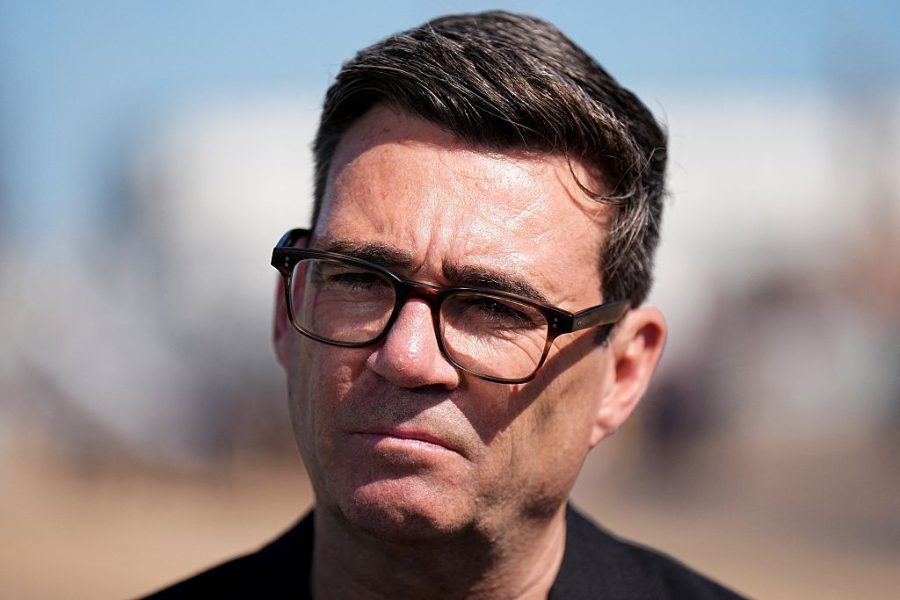
Andy Burnham knows that ‘fixing’ social care will drain political capital away from him faster than a teenager emptying their parents’ bank account. At the moment, he is clearly more focused on funding mechanisms to put the sector on a sustainable footing and the way in which it will or won’t be enmeshed with the NHS. But there’s another longer-term drain on his – or any future prime minister’s – capital too, which is the quality of care that’s available.
The debate has understandably been focused on the financial aspect, but, for a long time, we have not had an open discussion of what adult social care should actually be like for the people in the system. Burnham has, like many people, had to find care for his own father, who has Alzheimer’s, so he will be acutely aware that the quality of care homes varies dramatically. Councils have a statutory obligation to find and fund care for adults in need of it, but they do not act as a quality control on those homes, and indeed the supply of places is sufficiently tight that neither local authorities nor relatives have much choice over the kind of home they can afford.
We have a basic expectation of a standard care in the NHS that we simply don’t for care homes
Most people don’t want to think about what life in a care home is like unless they’re looking for a place for someone they love, and then it becomes painfully clear that many homes are, while largely safe, not the kind of place you’d want that loved one to wait out their days in. They are not stimulating environments. You tend to have to pay a quite substantial top-up above the local authority funding for a home that doesn’t feel depressing.
When I say ‘largely safe’, there are still incidents that the Care Quality Commission highlights in its reports of care homes that nonetheless remain on the lists of local authorities where residents have died through choking or lack of supervision. The CQC is also notoriously not a regulator whose assessments of quality hold a great deal of weight at the moment, so we simply do not know what the true ‘quality’ of care in this country looks like.
But we know that it is variable and very dependent on whether you have private means to top up the funding offered by cash-strapped councils. In as much as the general public thinks about it, satisfaction with the care sector is pretty low, which suggests that whatever the CQC defines as being ‘good’ does not tally with the kind of care that people would like to see for their family members.
This is very much against the spirit of the NHS that Burnham has always paid tribute to. Yes, we have always had a system in this country where patients can go private and move to a more stylishly-furnished part of the same hospital, move quickly up a waiting list and get the consultant’s mobile number. But we have a basic expectation of a standard and quality of care in the NHS in a way that we simply don’t for care homes.
Once the state becomes more involved in funding and provision, that will have to change. Prime ministers and health secretaries will – as Nye Bevan predicted for the NHS when he set it up – have to answer questions about bedpans in care homes as well as hospital wards. And that will use up a lot of political capital, too, though the chances are that it won’t be Burnham or even whoever comes directly after him having to spend it.



Comments