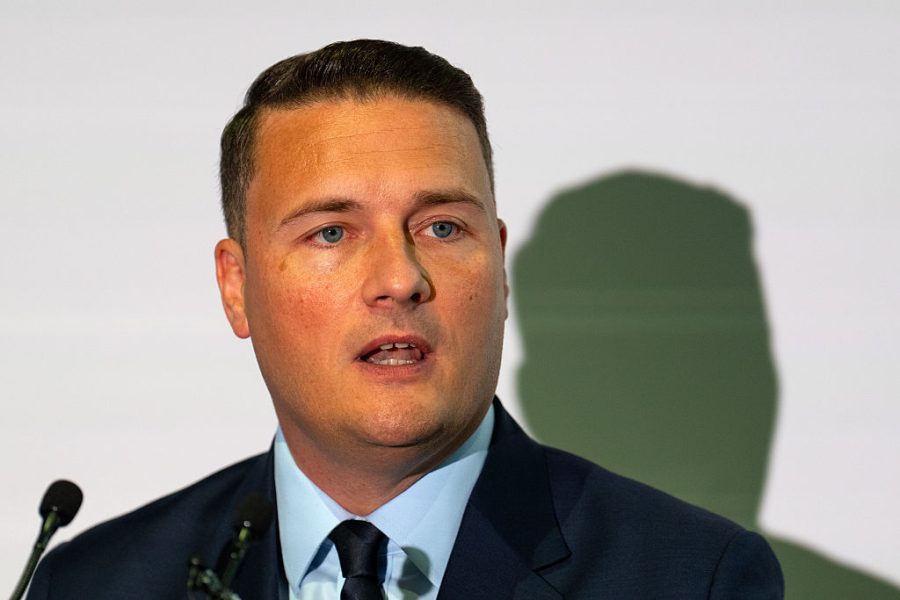
Since Wes Streeting became the UK’s latest Secretary of State for Defence earlier this week, critics have claimed that he is unqualified for the role. Streeting replaces Dan Jarvis, a former British Army officer, who was defence secretary the six weeks before this.
The last Conservative defence secretary, Ben Wallace (also a former army officer) believes that replacing Jarvis with Streeting ‘shows a contempt for defence at a time [that] they need continuity, and someone who understands the new way of warfare and the men and women of the armed forces’. Lord Richard Dannatt, who was head of the British Army, told LBC that:
Defence is a complex portfolio… Streeting knows the square root of nothing about [it]. Jarvis could do a good job… because he understands the military extremely well… and was a successful army officer.
Both Wallace and Lord Dannatt believe that Jarvis would be a better defence secretary than Streeting because Jarvis spent 15 years in the army until 2011. (This, however, would hardly give him much experience of the new way of warfare.)
Whether Streeting succeeds or fails will ultimately be down to his leadership ability
But military service is neither necessary for a defence secretary nor does it guarantee that they will be any good. Mykhailo Fedorov, the former Ukrainian defence minister, for example, did not have a military background. But he did vital strategic work to fight corruption, punish poor commanders, improve troop rotation, strengthen Army Corps, oversee digital transformation, and reform mobilisation and training. This has all helped Ukraine to deliver its ongoing period of sustained pressure on the Russian military whilst preserving Ukrainian lives.
It did, however, lead to conflict with the professional head of Ukraine’s military, General Syrskyi, who tried to roll back some of these changes. Zelensky sided with Syrskyi and sacked Fedorov. But, after a week of protests by Ukrainians – who saw this as a Soviet-style smothering of democratic empowerment – Syrskyi lost his job.
So, a military background is not necessary for competence as a defence minister. Fedorov did vital transformation and change at the strategic level, which a military person (Syrskyi) misunderstood.

On the other hand, we have Pete Hegseth, the US Secretary of War, who was an army reserve officer with operational experience. During his tenure, Hegseth has prevented the disciplining of pilots, discriminated against black and female officers, added a journalist to a secret Signal chat about strikes on Yemen, and been unable to push back on President Trump’s excesses.
Hegseth demonstrates that a military background is not sufficient for competence as a defence secretary. One could even argue that it’s detrimental, as Hegseth sees everything through the lens of an infantry company commander. He’s concerned with tactical matters over strategic ones, such as lecturing generals on fitness and inclusion.
The counterargument would be Ben Wallace himself, whose tactical understanding of the importance of anti-tank weapons led to him pushing through the delivery of the next-generation anti-tank weapon to Ukraine over the objection of civil servants. These weapons had a strategic effect in preventing the country’s defeat at the hands of Russia.
Winston Churchill created the role of Minister of Defence for himself during the second world war so that he had direct oversight of British military strategy. Whilst he had tactical and operational experience as a cavalry officer before he enterred politics, he also had strategic experience as First Lord of the Admiralty (which ended disastrously with his Dardanelles gambit, prompting him leaving politics to spend time as an infantry officer on the Western Front in the first world war). Nonetheless, Churchill’s operational ideas often exasperated his military chiefs.
The notion that a minister needs experience in delivering front-line services misunderstands the role of a minister. We don’t demand that we have doctors in charge of health or teachers in charge of education, because ministers should be making strategic choices, not tactical or operational ones.
Britain’s military is in trouble because of underfunding, terrible procurement, poor decision-making and cultural inertia. Money alone won’t reverse that decline (the French have a bigger, more capable military than the UK for 40 per cent less money); it requires transformation of the Ministry of Defence (MoD) and connection across government.
Streeting pushed transformation and efficiency at the Department for Health, which the MoD desperately needs, and he has experience in pulling the political levers of power. He is fortunate to have John Healey as Chancellor, who quit as defence secretary because Keir Starmer wouldn’t give him enough money. If Streeting gets more cash, he will want defence to spend it effectively.
The gaps in his military knowledge should be filled by his civil servants, the Chief of the Defence Staff and service chiefs, guided by the Strategic Defence Review. He also has junior ministers with a military background to focus on the issues that Wallace and Lord Dannatt highlighted: Calvin Bailey, the minister for veterans and people, is a former RAF officer and Louise Sandher-Jones, minister for the armed forces, is a former army officer.
Whether Streeting succeeds or fails will ultimately be down to his leadership ability. He requires good advice, challenge, and information from those around him, which means that he must establish psychological safety and trust in his team. And he must persuade Healey to make good on his demands for more defence money.
There are plenty of reasons why Wes Streeting might not make a good Secretary of State for Defence. His lack of military service is not one of them.


Comments