
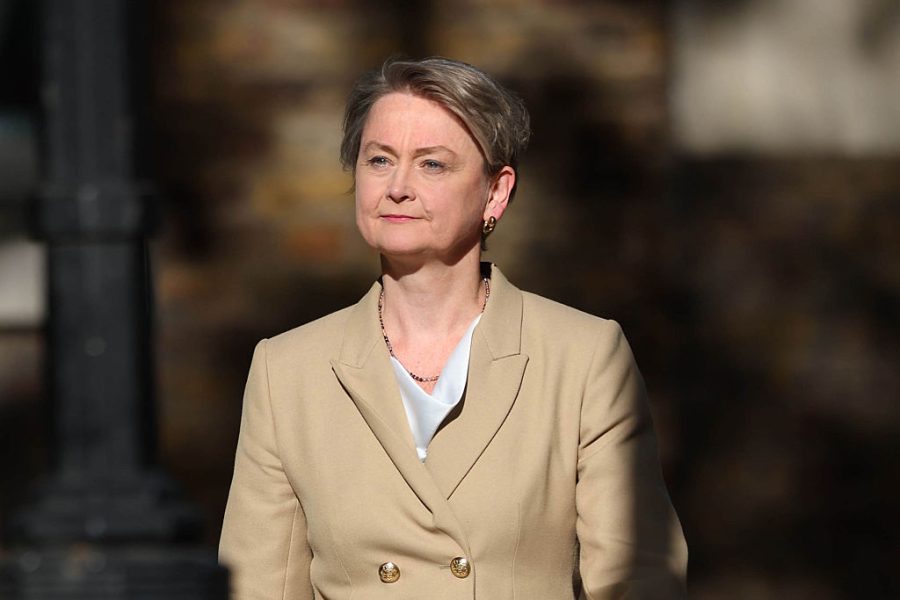
Yvette Cooper, who has been an MP since 1997, is by far the most experienced health secretary we’ve had in the past decade. She has had a range of heavyweight ministerial and shadow ministerial roles, including a stint as parliamentary under-secretary of state for health. Health secretary is also a brief in which Andy Burnham served at the end of the Brown government.
With this embarrassment of experience comes baggage. When Burnham was health secretary, he released a green paper proposing a ‘National Care Service’ (NCS) which could have made social care ‘free’ for all elderly and disabled people. An Act of Parliament was passed to facilitate this in April 2010 but the plans were abandoned by the Coalition. Labour has continued to argue for an NCS ever since, and last year Louise Casey was given the chair of a cross-party independent commission on social care reform, due to publish its second stage outlining ‘long term reforms’ in 2028.
Much like the creation of the National Health Service, the creation of a National Care Service will be extremely expensive. The SNP government in Holyrood had to shelve its own plans to introduce an NCS partly because of concerns about costs. Nobody can accurately forecast how much it would cost in England and Wales at this stage, but it seems implausible that Burnham will be able to achieve this while maintaining market confidence and delivering increases in defence spending.
Cooper may prove one of the strongest voices against further immigration restrictions
Another aspect of social care which should worry the fiscally conservative among us is the living wage for care workers. When Yvette Cooper was running for the Labour leadership in 2015 she said that pay for care workers should match the ‘living wage’, above government-mandated minimum wage rates. The government was initially planning to release a 10-year NHS workforce plan in spring of this year but there have been delays in part because of union bickering and concerns that the utility of AI has been overstated – it is plausible that Cooper will try to revive this pledge as part of the plan, raising the floor for pay for social care workers in line with what is now called the ‘real living wage’. The Living Wage Foundation estimated in 2024 that it would cost £415 million to achieve this in England alone.

How could all of this be paid for? One solution could be bringing back a hypothecated tax for the NHS. The IPPR think tank, which is linked to James Purnell (Burnham’s chief of staff) and Miatta Fahnbulleh (instrumental in Burnham’s campaign and now Secretary of State at the Department for Energy Security and Net Zero) has made the argument for such a tax in the past. A specific Health and Social Care levy was then proposed by Boris Johnson, implemented as a 1.25 per cent increase in National Insurance contributions in the 2021 October budget. The hypothecated aspect of the rise was abolished by Kwasi Kwarteng, who cancelled the levy and announced that funding increases for health and social care would come from general taxation.
Outside of arguments about tax and spend, one of Cooper’s first responsibilities as Secretary of State will be to guide Wes Streeting’s Health Bill through parliament. The key change in the Health Bill is structural. Streeting wanted to abolish NHS England (the quango set up by the Coalition) while reducing the role of integrated care boards, moving funding and power back to hospital chief executives and to the Department of Health and Social Care. Cooper has previously argued for greater devolution in the NHS with a greater role for local government. It seems likely that her instincts will be to significantly dilute the radical edge of Streeting’s centralising reforms, particularly as Burnham has made devolution such a strong part of his political pitch, probably through amendments.
During the pandemic, Cooper also lobbied the government to loosen visa restrictions for both NHS staff and care workers. The Secretary of State for Health is usually the voice around the cabinet table who argues for higher levels of legal immigration most aggressively, as the NHS is forever in a labour famine. Given her background as Home Secretary, a job which she was replaced in by Shabana Mahmood, and her vaguely soft-left instincts, she may prove one of the strongest voices against further immigration restrictions as Burnham’s government kicks into gear.
Health will touch upon three core political themes of the next two years – tax, immigration and devolution. It is clear from her previous statements where Yvette Cooper’s natural sympathies lie on these topics. Whether or not she will have the political strength to force taxes and immigration up whilst tearing apart the reforms introduced by her predecessor remains to be seen.






Comments