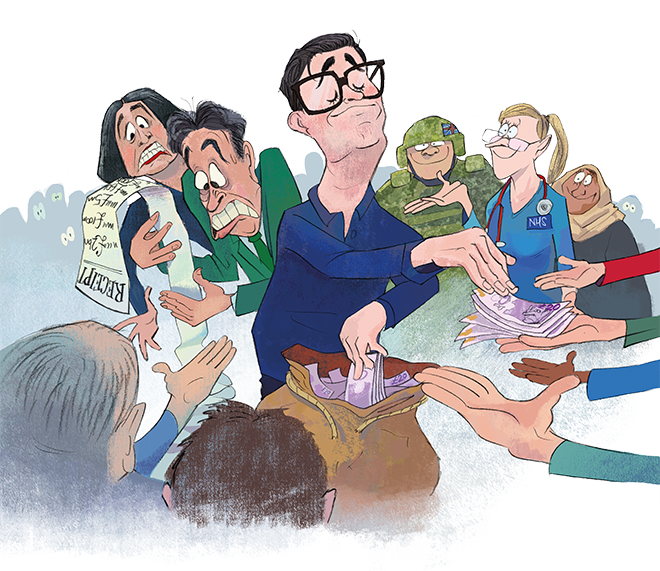


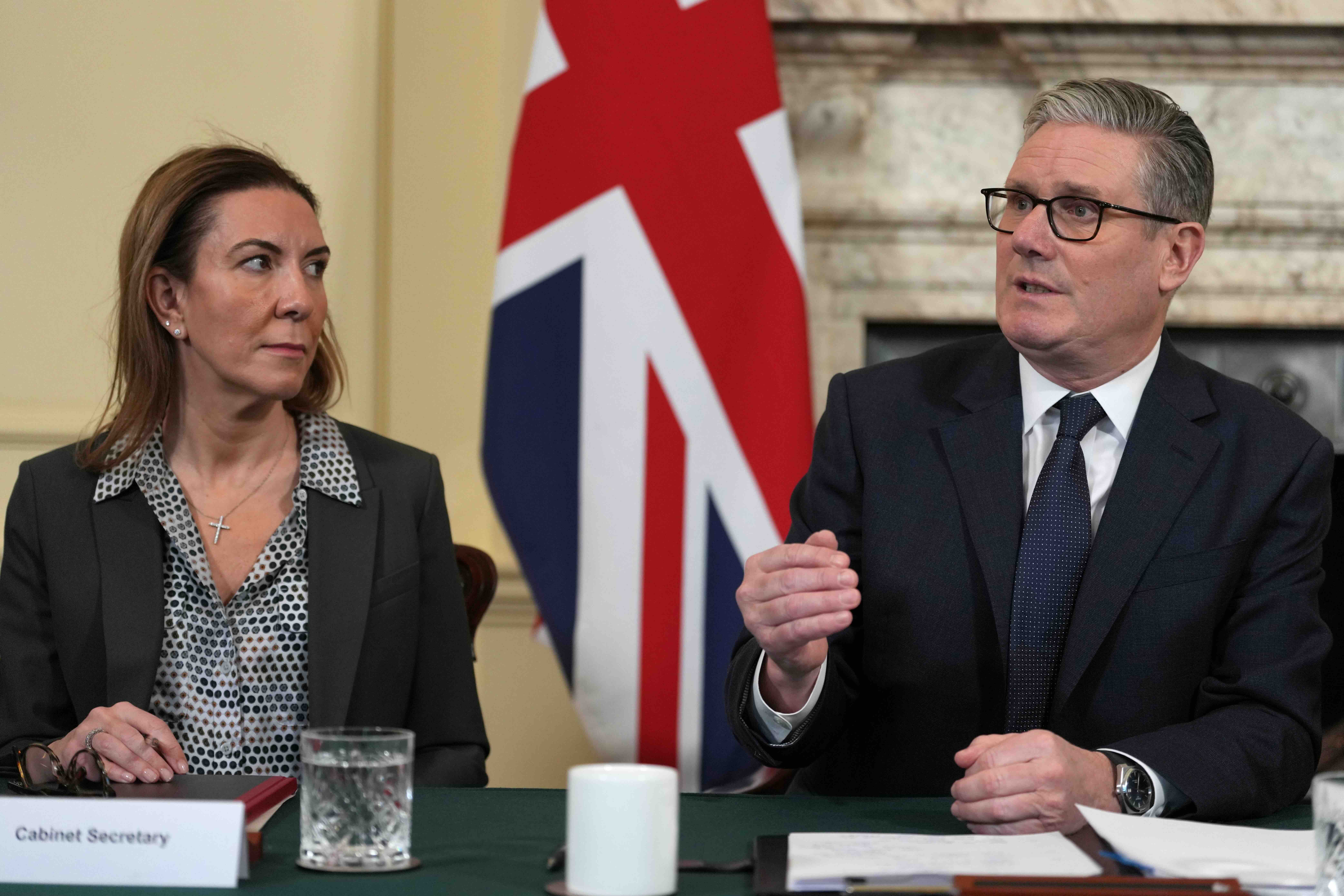
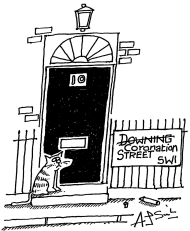
Andy Burnham thinks his critics need a new joke about him. The old one about a Blairite, a Brownite and a Corbynite walking into a bar (‘Hello, Mr Burnham,’ says the barman) is about to be eclipsed. On Monday, it won’t be a barman offering good wishes – it will be the Cabinet Secretary, Antonia Romeo, when Burnham walks into No. 10 as Britain’s 59th prime minister.
Before that, on Friday, Burnham will accept the leadership of the Labour party, unopposed, at the headquarters of the Trades Union Congress. The speech he will give is still being worked on, but Burnham is ‘holding the pen himself’, aides say. And one idea he wants to land with his party is the same point he has been making in private over the past week in the corner office in Portcullis House, where the preparations for his premiership are being drawn up. ‘I’ve heard him talk about that joke in the last week,’ says one key team member. ‘He says, “That joke says more about the people that tell it than it does about me.” Because he’s not a factional person. He wants a broad church.’
In his acceptance speech, Burnham will acknowledge that Labour has been abandoned by many of its traditional supporters. He will draw on the history of the Labour party, its birth in Wales and the labour movement and formative episodes of its development, in an effort to reconnect his party with the voters it has lost around the country. ‘He will talk about the origins of the party and all of these places along the way that made it the movement that it is and then how that links into his views,’ says a source familiar with the developing text.
There has been no opportunity to quiz incoming ministers. ‘It has been vibes heavy and detail light’
Burnham will repeat what he has told his team in private: ‘People didn’t move away from the party. The party left them.’ One of his team says: ‘It’s his job as Labour leader, as well as prime minister, to try to transform us back into a party that people feel that they can gravitate towards again.’
That means addressing no-go areas for Labour and a determination to be ‘uncompromising’ in fighting for votes in areas where Labour has been haemorrhaging support to Reform. He will embark on a tour from ‘the back end of August’, an aide says. ‘He wants to get out into these places in the country where Labour has lost favour with people or that are difficult places for us to go at the moment, and confront those issues head on.’
Unlike Keir Starmer, he intends to win back voters with a positive message, rather than demonising Nigel Farage as a fascist. ‘You don’t need to sling mud at your opposition,’ says a leading figure in the by-election campaign. ‘He didn’t at any point attack Farage in Makerfield. He is really clear on that, internally as well… We have to sell a message that people want to buy. He did do that in Makerfield.’
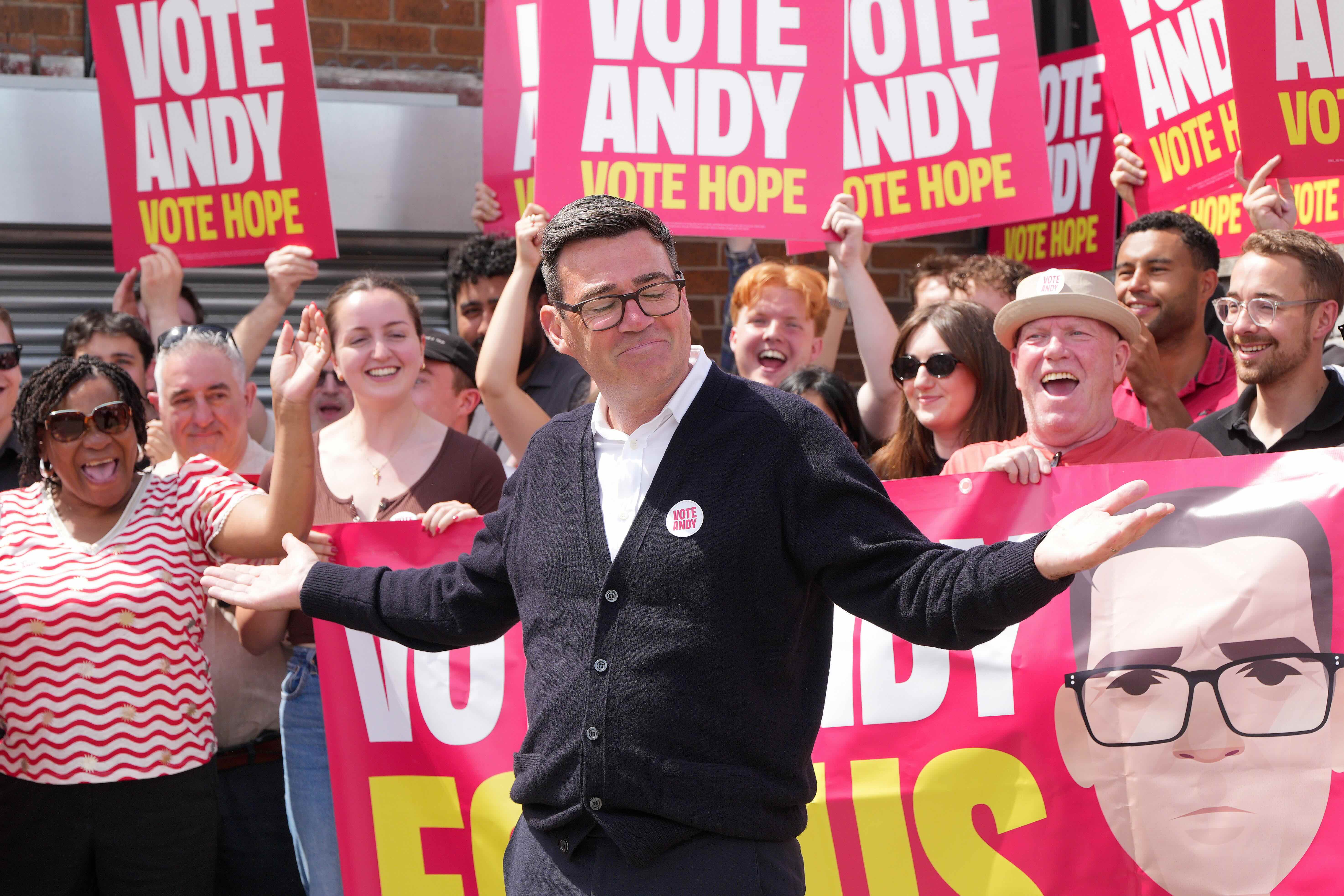
To the country, Burnham will offer an apology. ‘He thinks politics hasn’t been good enough,’ an adviser reveals. ‘He’ll say it’s not met the bar of people’s expectations, and politicians haven’t, and we need to do better.’
Burnham also plans to weaponise his natural optimism, giving voters the impression that ‘the cavalry’s arrived’. He has learnt from Starmer’s first mistake on arrival in Downing Street, peddling doom and gloom which affected economic optimism and growth. ‘Andy’s got a sense of fairness and hope and optimism in his framing of announcements,’ an aide says. ‘He’s really trying to do things differently from how Keir set off two years ago. The tone needs to be more optimistic while still confronting the very real challenges that are ahead of us.’
So far so good, but also so vague. What does it all amount to? Many in Labour and the civil service remain unsure. Officials complain (very quietly, it should be said) that the access talks between Burnham and Romeo have not gone into the usual level of detail. The prime minister presumptive has only been accompanied by James Purnell, his chief of staff, and Louise Haigh, his closest MP ally. The refusal to announce any cabinet appointments before he visits the King on Monday means there has been no opportunity to quiz incoming ministers on their portfolios. ‘It has been vibes heavy and detail light,’ says one official.
Those searching for clues on what to expect look at tensions – in policy if not personality – between Josh Simons, the former Labour Together boss who gave up his Makerfield seat for Burnham, and Miatta Fahnbulleh, who is much further to the left – an Ed Miliband ally who has also been doing policy work. ‘For the last week Josh has been the main point of contact on policy,’ says a ministerial aide who has been prepping the Burnham team. ‘Miatta told everyone she had finished her work and submitted it. She seemed annoyed.’ Simons has decided not to go into Downing Street as an adviser, preferring to take a break from frontline politics to be with his young family.
Burnham’s closest aides argue that this period without a cabinet will increase the coherence of his plan, since what has been discussed is what he wants from each department. ‘This will be Andy’s programme in a way it was never Keir’s programme,’ a senior ally says. ‘He knows what he wants.’
Friday’s speech will repeat his mantra of ‘jobs and growth in every postcode’ through ‘reindustrialisation’, but he will also promise tangible state interventions on the cost-of-living crisis, telling voters he wants to give them ‘more breathing room’. One of his moves in the first ten days will be to help the less well off. A move on energy prices, or a tax cut for the lower paid, have both been floated by his camp.
The main policy theme is to devolve power away from London. ‘One key line from the speech is the idea that the communities that powered Britain and built Labour have had that power taken away from them by Westminster – and he will return it to them,’ a senior figure says.
It remains unclear how much time Burnham is going to spend in Manchester rather than London, but he knows that unless he does so, the plan will not work. ‘He recognises that for this to be an actual thing which people take seriously, he is going to have to drive it,’ a close ally says. Romeo, the top civil servant, is unlikely to spend much time in Manchester – though when one friend suggested to her that, as a party-loving inhabitant of Zone 1, she was averse to the north, Romeo joked: ‘As long as there is a Malmaison, I’ll be fine.’
Officials see practical problems with Burnham’s plan, not least how to transport the new prime minister from one location to another. The protection squad officers who guard the PM will not want him to carry on with the train trips between north and south which have characterised the interregnum. ‘Power is where the prime minister is. You can’t have the prime minister regularly getting the same scheduled train services,’ a former mandarin points out. ‘The protection people won’t allow it.’ The practical alternative would be a helicopter to and fro – though that would hardly endear him to the environmentalists his allies hope to win back from the Green party.
There is also the issue of how secure the new No. 10 North campus is likely to be. ‘The Manchester building has no Home Office-grade security and no secure comms,’ a Whitehall veteran says. ‘It is not the work of an afternoon to fix that.’
Another says: ‘It’s all becoming a bit too Manchester-focused. Even Lou [Haigh], I think, is quite concerned about that. Practically speaking, MPs have to vote in Westminster, unless you’re just not whipping any-thing and it becomes some sort of Manchester-based hippie free-for-all festival.’
Caroline Simpson, the chief executive of the Greater Manchester Authority, is expected to become the chief civil service point person for No. 10 North, but the identity of the main political figure based in Manchester will be crucial. A Labour strategist says: ‘The key decisions are: who is chancellor and who is the Manchester political lead, because that is basically the person who’s going to run the general election… Labour needs to win seats in the Midlands and north-west, so you base your political operation there.’
Romeo ‘needs politicians to give her the licence to do all the bad shit she wants to do… and then blame them’
One of those who could play a role there is Nathan Yeowell, an ally of Starmer’s chief aide Morgan McSweeney, who worked with Purnell and Helen MacNamara, the former deputy cabinet secretary, on a report last year for the Future Governance Forum, which recommended a beefed-up Prime Minister’s Department at the heart of Whitehall, something Purnell is expected to pursue.
Romeo, whom Burnham’s team think is ‘very impressive’, is also keen to use the change of regime to make it easier to sack failing civil servants and pay the best ones more. ‘She wants to be able to pay younger talents more by giving them more salary than pension. She also wants to reduce head-count so she can give more to the best people. She needs politicians to give her the licence to do all the bad shit she wants to do to her own civil service and then blame them,’ says one Whitehall cynic.
The decision of Olly Robbins, the former permanent secretary at the Foreign Office, to seek a judicial review over Starmer’s decision to sack him has thrown a spanner in the works. Not only would a hearing force the government into making embarrassing disclosures; experts say that if Robbins won, that would ‘effectively make perm secs unsackable by the back door’. A senior official says: ‘If Antonia wants to sack anybody, and she 100 per cent has a list, she needs to not let this [review] continue.’ That makes it more, not less, likely that Robbins will be offered a senior job by Burnham.
Key figures from Starmer’s No. 10 are also expected to stay, including Jonathan Powell, the national security adviser, and Varun Chandra, the head of business outreach. Parna Taylor, a former employee of Purnell’s, has been helping him ‘sift the CVs’ of incoming staff. Danny Coyne, a former special adviser to John Healey who has been advising Burnham for months, has emerged as a player in the policy arena, as has Graeme Cooke, who also used to work for Purnell.
Sarah Brown, Sadiq Khan’s director of communications, is planning a shakeup of government comms, which will see her run an empire encompassing both media and message delivery. Grace Pritchard, who ran communications for Burnham in Makerfield, is likely to become ‘director of new news’.
Whatever the details of Burnham’s policy blitz, what really matters is his approach to the economy – where he wants to borrow more to invest and raise taxes on wealth. (Insiders are clear that will be the case, regardless of who runs the Treasury.)
By lunchtime on Tuesday, The Spectator was hearing the same noises from the Burnham camp that were later reported by the Times that Shabana Mahmood, rather than Ed Miliband, was set to become Burnham’s chancellor. Even quite left-wing members of his team, such as Haigh, had voiced doubts about Miliband’s appointment, on the grounds that it would unnerve the markets and get in the way of opening up North Sea fossil fuel extraction.
However, those in the know caution against seeing a Mahmood appointment as a victory for the Labour right. ‘Slightly depressingly,’ a senior female civil servant says, ‘the decision seems to be because she’s a woman. They’ve got to the right answer but for the wrong reasons.’
One source who has been close to the transition planning said that if Mahmood becomes chancellor, it opens the door to Miliband as home secretary, though the former defence secretary John Healey has also been mentioned. More intriguing still, for Kremlinologists of the Miliband family psychodrama, one Labour source says: ‘They want Shabana for chancellor, but Ed could become foreign secretary.’ Foreign secretary, however, is the job coveted by David Miliband, who was vanquished by his younger brother in the 2010 leadership contest and who has made no secret of his desire to return to frontline politics. The same source says that David Miliband has ‘made clear that he really wants it’, through intermediaries and at least one direct conversation with Purnell, an old friend of his.
One important figure in Burnham world, asked what chance there is of Mahmood going to the Treasury and Ed Miliband to the Foreign Office, says: ‘Seven out of ten, but I know Andy – and only he, and maybe Lou, will know for sure.’
The two roles which insiders say are nailed down are those that have been lined up for the two most important women in Burnham’s campaign team. Haigh, the former transport secretary, is expected to become Chancellor of the Duchy of Lancaster (‘CDL’ in Whitehall-speak), effectively replacing Darren Jones as the prime minister’s cabinet consigliere. ‘Lou kicks ass and gets things done’ is the verdict expressed by a ministerial aide who is not of her politics. That is the generally held view.
‘Up until now, Burnham’s magic power has been no choices, no trade-offs. You have it all’
Anneliese Midgley, the MP for Knowsley and former political director of Unite, is expected to become chief whip. Burnham is openly dismissive of the traditional culture of whipping, with its threats and inducements. ‘My aim is to create a team and culture where everyone is valued, seen, listened to and can make their mark and make a difference for their constituents,’ he recently wrote to all Labour MPs – a message he repeated when he addressed the Parliamentary Labour party on Monday evening.
Midgley is a canny operator, but this approach is likely to be tested immediately with early votes on Mahmood’s crackdown on migration, which has already been watered down to reduce the ten years she wanted new arrivals to spend in Britain before they get indefinite leave to remain.
These are strange times for Burnham. The Hillsborough Law, which he advocated for, was passed by the Commons earlier this week, creating the duty of candour in public servants. On Wednesday, he was in Wales for his daughter’s graduation. That same morning he went running with Mo Farah, the Olympic gold medallist. ‘He’s been going on a run every day,’ a friend notes. ‘It helps him clear his head and gives him space to think. He’d like to keep that up. He did it throughout the by-election. It sets up his day.’
Like Mo Farah, Burnham has timed his run to perfection. After learning the lessons from two failed leadership bids, he has sent Starmer packing without most of the angst and psychodrama that have characterised changes of Conservative prime ministers over the past decade.
Yet no one, probably not even Burnham himself, knows what he will be like in the hot seat. Bill Clinton was once asked whether he was ready to be president and replied: ‘No one is ever ready to be president.’ A Labourite observes: ‘Up until now, Burnham’s magic power has been no choices, no trade-offs. You have it all. The question is whether we’re going to do trade-offs like grown-ups or whether we’re going to do Keir Starmer, ditto, repeat.’
Going back to that old joke, Burnham’s economics will have a whiff of Corbyn, but the real question is whether he will resemble Blair or Brown more. At the summer reception for the Tony Blair Institute, Blair offered Burnham advice, saying he should not try to be loved.
A New Labour cabinet minister was present who voiced the fears that some harbour: ‘Andy, like Gordon, got the job with no contest, and everyone was hopeful, but Gordon could never decide if he was continuity or change. Can Andy?’
In a week’s time we’ll have a better idea.



Comments