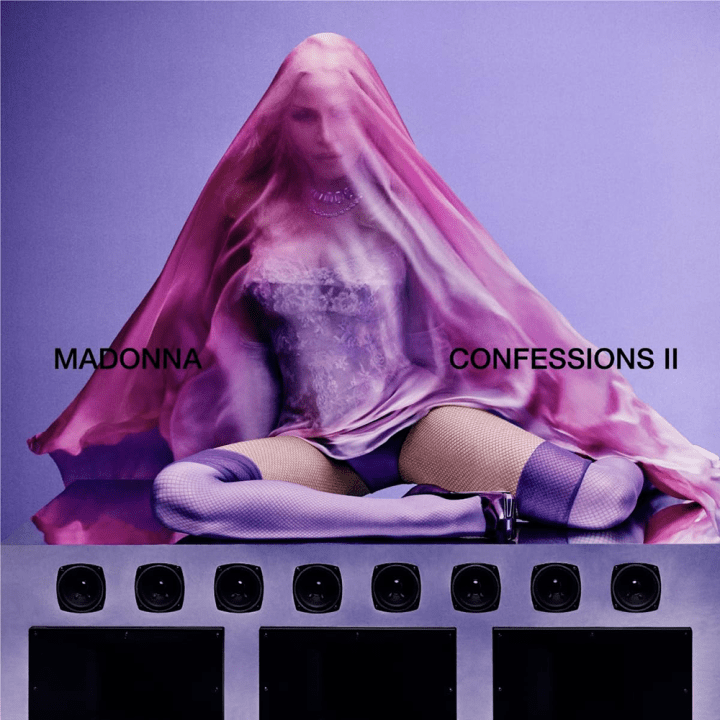
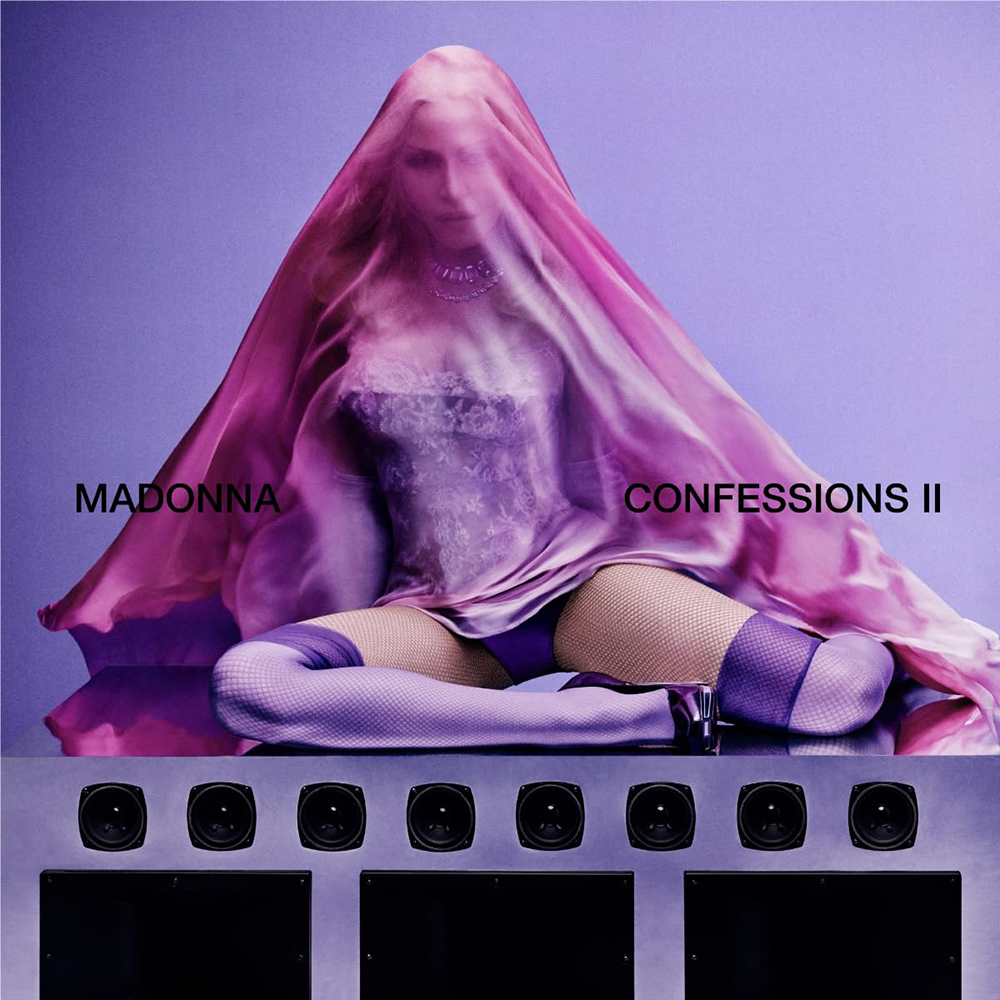
There comes a point in the career of any established artist when looking backwards seems to be the only possible way to move forwards.
Madonna was a great pop star until she wasn’t. Confessions on a Dance Floor, released in 2005, was her last really successful record; ‘Hung Up’, from that album, her last truly unforgettable single. Ever since she has been chasing musical trends with increasingly diminishing returns, the heavy-handed concepts and contrived personae – Madame X, anyone? – no longer supported by anything approaching a properly decent song.
Ms Ciccone seems to have belatedly remembered that Madonna is, and always has been, the concept
So Confessions II is an act of both commercial and creative necessity. Its reclamation of the past is twofold. Most obviously, it calls back to Confessions on a Dance Floor by reuniting Madonna with producer and co-writer Stuart Price, as well as returning to the direct, uncomplicated house-adjacent sounds and love-to-club themes of that record. Good call. Direct, retro dance-pop proves a far better fit than recent attempts to hitch her wagon to anything from trap to fado.
But Confessions II goes back further than that. Several songs reminisce on Madonna’s origin story. This is rich source material: the young and hungry heroine newly arrived from the Michigan sticks, trying to make it as a dancer in the fleshpots of early 1980s NYC, liberated by dance and the scuzzy Lower East Side counter-culture.
There are pop stars who make the whole thing seem effortless, but Madonna has never been one of those; the underlying sense of acute desperation was always part of her appeal. While it’s interesting to hear her open up on the subject, the revelations that follow aren’t terribly profound. ‘Out here on the dancefloor I feel so free’ is, after all, a sentiment she has been expressing ever since ‘Into the Groove’ more than four decades ago.

But at least Ms Ciccone seems to have belatedly remembered that Madonna is, and always has been, the concept. And if you’re not all that interested in the 2026 version, then how about the Madonna of 2005, or 1981?
The best moments here are where these two strands of nostalgia coalesce. ‘Danceteria’ feels thrillingly close to vintage Madonna. Named after a legendary Manhattan club, it’s a whirring disco zinger featuring a generous smattering of classic tropes. There’s a ‘Vogue’-style rap glossed with the usual glib credo – ‘everyone here is a work of art’ – alongside too-cool namechecks (for, among others, Jean-Michel Basquiat, Keith Haring and David Byrne) and a passing snatch of Lou Reed’s ‘Walk on the Wild Side’. Catchy, upbeat and confident, ‘Danceteria’ is the one track that could hold its own on a best of Madonna collection. ‘One Step Away’, with its dreamy Balearic vibe, might also make the cut, while the hard grooves of ‘Everything’ are mildly intoxicating.
The decision to present the tracks as a club mix, each blending into the other, works until the energy flags halfway through. Confessions II is much too long at 16 tracks and 64 minutes. ‘Bring Your Love’, a bland collaboration with the bland Sabrina Carpenter, is one of a fistful of songs that are bleached from memory as soon as they end.
As though aware of its own exhaustion, along its final furlong the album pivots to a scene of morning-after calm. Reflections on where Madonna came from give way to a more sombre reckoning on where she is today. The vulnerability that has always existed in her music – from ‘Live To Tell’ to ‘You’ll See’ – shows up on ‘Fragile’, a Latin-tinged acoustic ballad dedicated to her younger brother Christopher, from whom she was estranged for many years before reconciling before his death in 2024.
‘Danceteria’ feels thrillingly close to vintage Madonna
‘The Test’ is a duet with her daughter Lourdes, credited as Lola Leon, which acknowledges the not particularly surprising fact that having Madonna as a mother might not be the easiest of rides. Leon’s voice, incidentally, fully earns its place on the album: cool, jazzy and strong, it contrasts well with Madonna’s pinched, trebly tone.
Confessions II ends with ‘L.E.S. Girl’, a pretty little song scored with twinkly indie guitar lines and propelled by the rather sad pat-pat of a vintage drum machine. It is an understated, sweetly poignant remembrance of things long lost in the past. ‘Everything fades away,’ she whispers, remembering days of whisky, cigarettes, Polaroids and overdue rent. The goldrush highs of hit singles might be gone, and I’m sure she can cover the mortgage by now, but Madonna hasn’t vanished from cultural relevance just yet.




Comments