
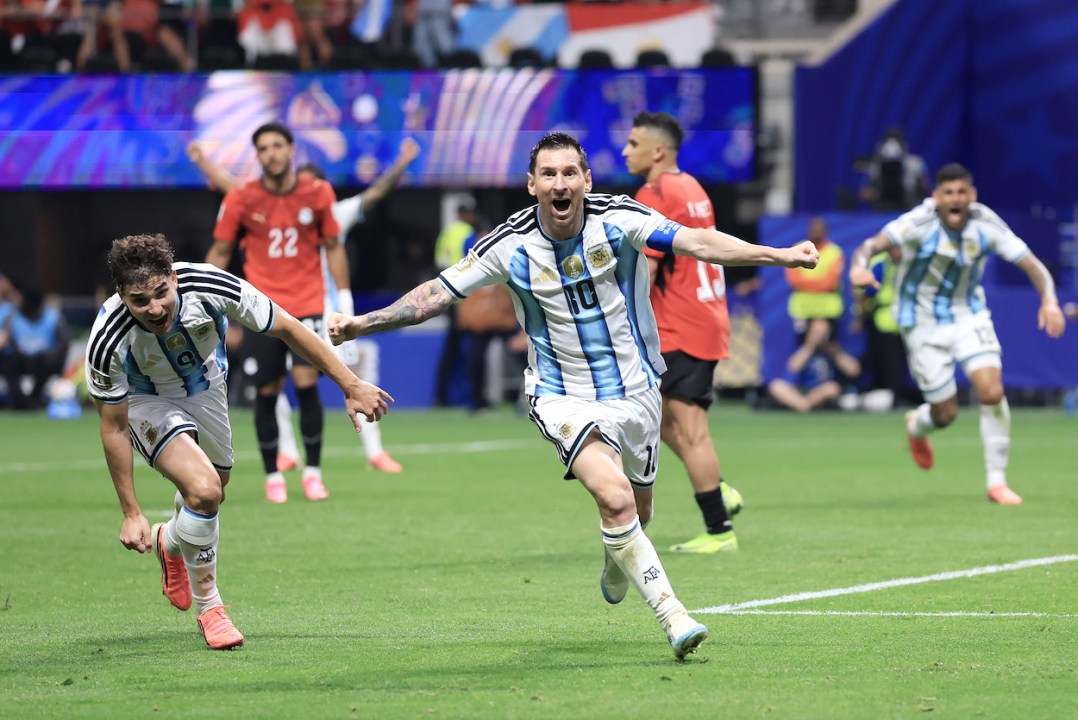
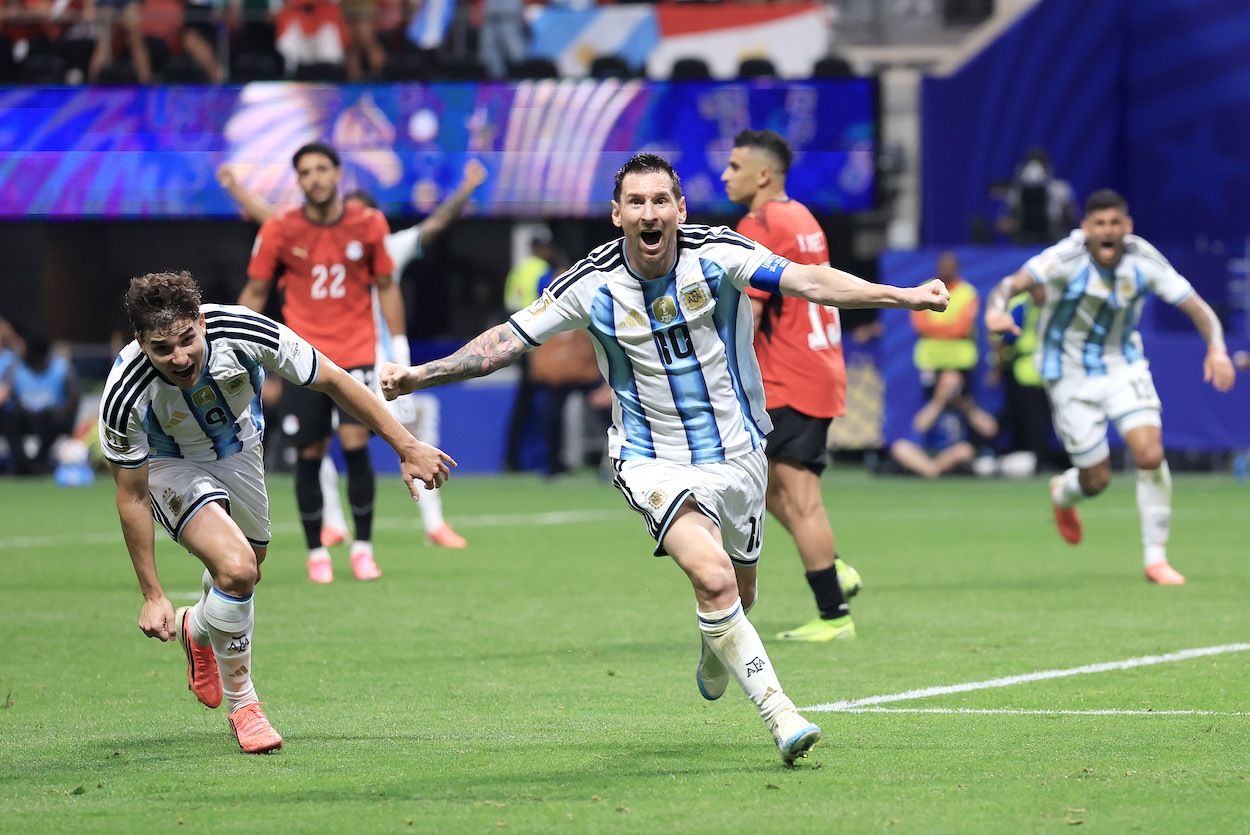
To be on the cusp of their nation’s greatest triumph and see it collapse in ten minutes was too much for many of the Egyptian side that lost 3-2 to Argentina on Tuesday. ‘It is clear that this tournament has been fixed,’ said winger Mostafa Ziko, whose goal was chalked off by the video assistant referee. The Egyptian FA wants the referees banned from the remainder of the tournament. Manager Hossam Hassan suggested it was a Fifa conspiracy ‘to keep the world champion in the competition… Perhaps they wanted Messi to stay in the running.’ Are they right?

The main point of contention was the disallowed Ziko goal that would have put Egypt 2-0 up in the 59th minute. Winger Haissem Hassan received the ball in his own half and weaved through the Argentine defence before squaring it to Ziko, who stabbed it past the keeper. It should have been one of the goals of the tournament, but the VAR referee deemed there had been a foul at the other end of the pitch 17 seconds earlier: an Egyptian defender had accidentally stepped on Lisandro Martínez’s toes, so no goal.
Worse still, Argentina’s winner in the 93rd minute was almost a play-by-play repeat: the ball recovered in their own box, Lautaro Martínez charged forward and crossed it to Enzo Fernández. In the build-up there was a clear foul on Egypt’s star forward Mo Salah – arguably a penalty – but VAR did not budge.
So Twitter investigators and pub pundits lit a conspiracy that already had plenty of kindling. After all, this is the Fifa that fudged Ronaldo’s ban to let him play Portugal’s opening game and folded when Trump leant on them to cancel the suspension of USA striker Folarin Balogun. (Fifa denies that Trump had any sway over the decision.) They added hydration breaks to allow US broadcasters to run extra adverts (worth some $250 million in the US alone and perhaps $1 billion worldwide), raised ticket prices higher than at any previous World Cup, and then stuck their hands into fans’ pockets a second time by taking a 30 per cent cut of any ticket resale.
In the Egypt game, observers said, Argentina received no yellow cards despite committing more fouls than their opponents. Across the tournament, it looked as though referees were going soft on the Argentinians, who received only one booking for every 20 fouls, versus a booking every five fouls for poor Egypt. Is this a sign of the conspiracy? I doubt it, given how rough a metric that is: it doesn’t account for bookings for dissent, or players penalised for taking their shirts off in celebration. Spain and Germany are on 18 and 17 fouls per booking respectively – are they in on it too? Germany were booted out by Paraguay, and Spain have simply been consistently strong throughout. Would 2018 winners France also be looked on kindly, given their star line-up? In the France-Paraguay game the referee was unduly lenient on the Paraguayans, who were kicking and hacking at any player in a blue shirt: he called only 13 fouls against them and gave no bookings. Argentina, like every team, have had a different set of referees officiating each of their games. They can make, and have made, some awful decisions, but a genuine conspiracy would require consistency.
It’s the same with penalties. Critics say Argentina have won more than any other team in recent years, so it must be the referees giving them the upper hand. The problem is that the team still has to score them (Argentina have missed two of their three this tournament), and that Argentina win more penalties because of their style of play: rather than slinging crosses into the box, they play quick, short passes around the edge of the area, inviting more challenges. Argentina have the lowest cross rate of any remaining World Cup team, at about half that of England, Spain and Belgium.
We can blame the referees for shoddy decision-making and the hopeless use of VAR despite some of the Egypt side’s insistence that the tournament is rigged in Argentina’s favour. Coach Hassan said: ‘We looked better than the reigning champions – better in everything.’ That's true for most of the game, but it cannot excuse Egypt’s collapse in the last ten minutes. They were hard done by, but there is no grand conspiracy, as appealing as the story may be.


Comments