Will photography as an art form survive the age of Instagram? Now that we think we are all photographers, and curators and collectors too, constantly cropping, sifting, saving and storing, our sensibilities risk becoming blunted, and our attitudes blasé. Two new shows confirmed to me that galleries are going to have to be clever to maintain photography’s hard-won status.
In Milton Keynes, the MK Gallery hosts a new retrospective of the photographer’s photographer, Jacques Henri Lartigue (1894-1986). Although on the weekday I visited it was empty as a tomb, the Insta generation would enjoy it; would probably recognise Lartigue as their kin, the first of their kind, a photo addict, who shot every day to archive the beauty he saw around him, and who, like a true millennial, said he struggled to remember anything unless he photographed it.
The final series moved me to tears. I stumbled out of the space aware that it had packed a huge punch
Lartigue was a sensitive boy born into privilege in the belle époque; as with Proust, you can feel in his work his lively, direct consciousness rubbing against the formality of his class and era. Lartigue’s father was, handily, the eighth richest man in France, and a keen amateur photographer too, who shared his cameras with his son. The young Lartigue enjoyed making 3D stereoscopes for his family’s entertainment (he was allowed to shoot 5,000 negatives!) and captured his brother Zissou’s madcap experiments with homemade prototype aeroplanes, gliders, go-carts, bicycle-boats, and so on. It all fed the films and imagination of Wes Anderson.
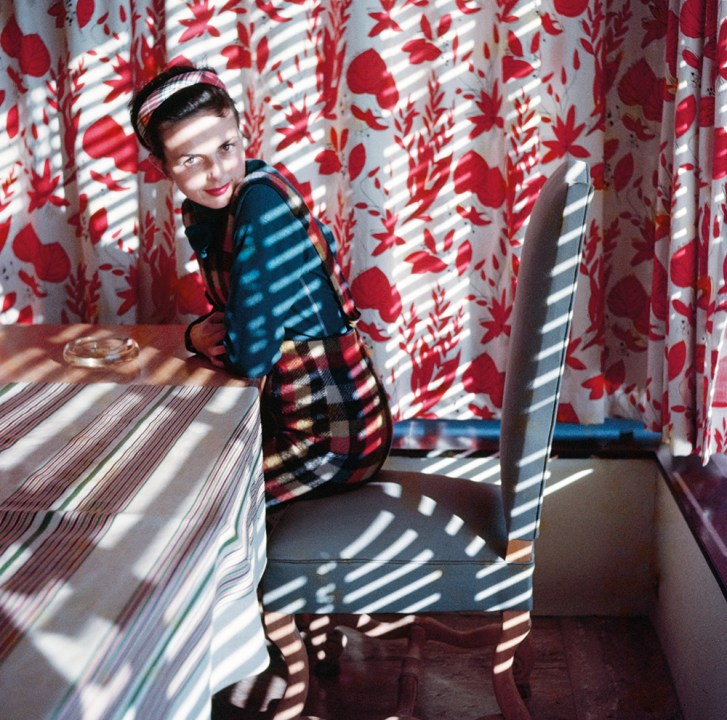
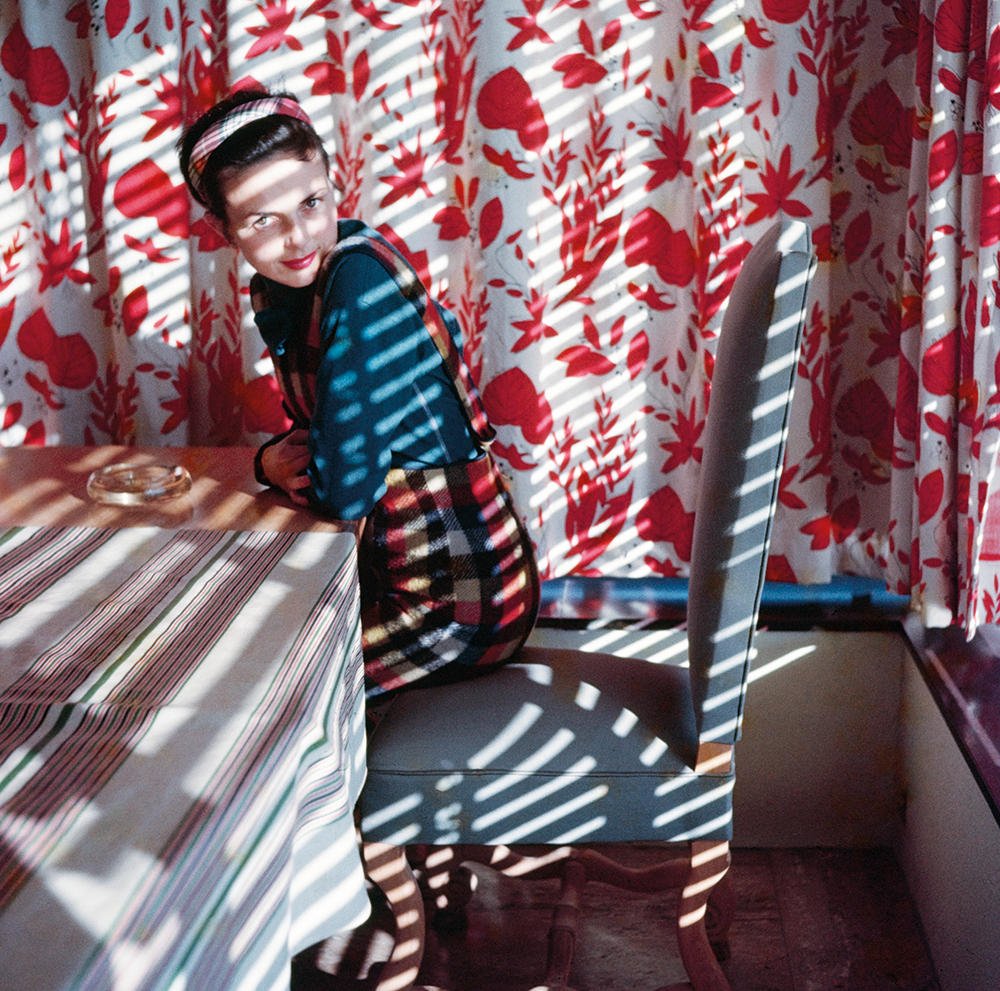
Aged 17 Lartigue laid eyes on his first colour photograph: ‘I became nearly dizzy.’ He started making stereoscopic autochromes, three-dimensional pictures in subtle colours, derived from dyed potato starch. There are ten to see here – one peeps through binoculars affixed to the false wall – charming, clunky portals into the past.
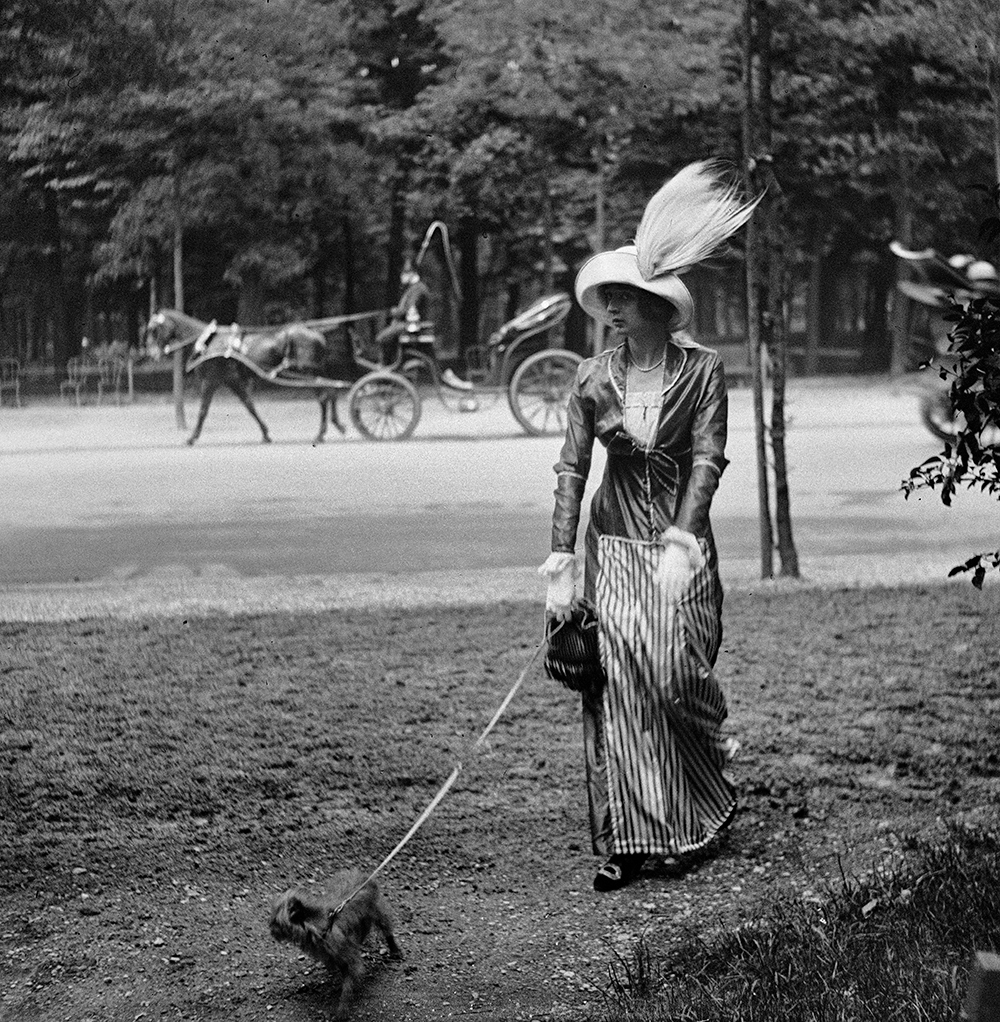
More riveting are the silver-gelatin prints of fashionistas walking their lapdogs in the Bois de Boulogne, which he shot between 1906 and 1911, and are now considered the first street photography. The women seem oblivious or dimly aware of Lartigue; he must already have had the art of self-effacement, the ability to become a plausible shadow, part of the scenery – a skill I observed in Dafydd Jones, also a genius reportage photographer, when I worked alongside him at the Independent.
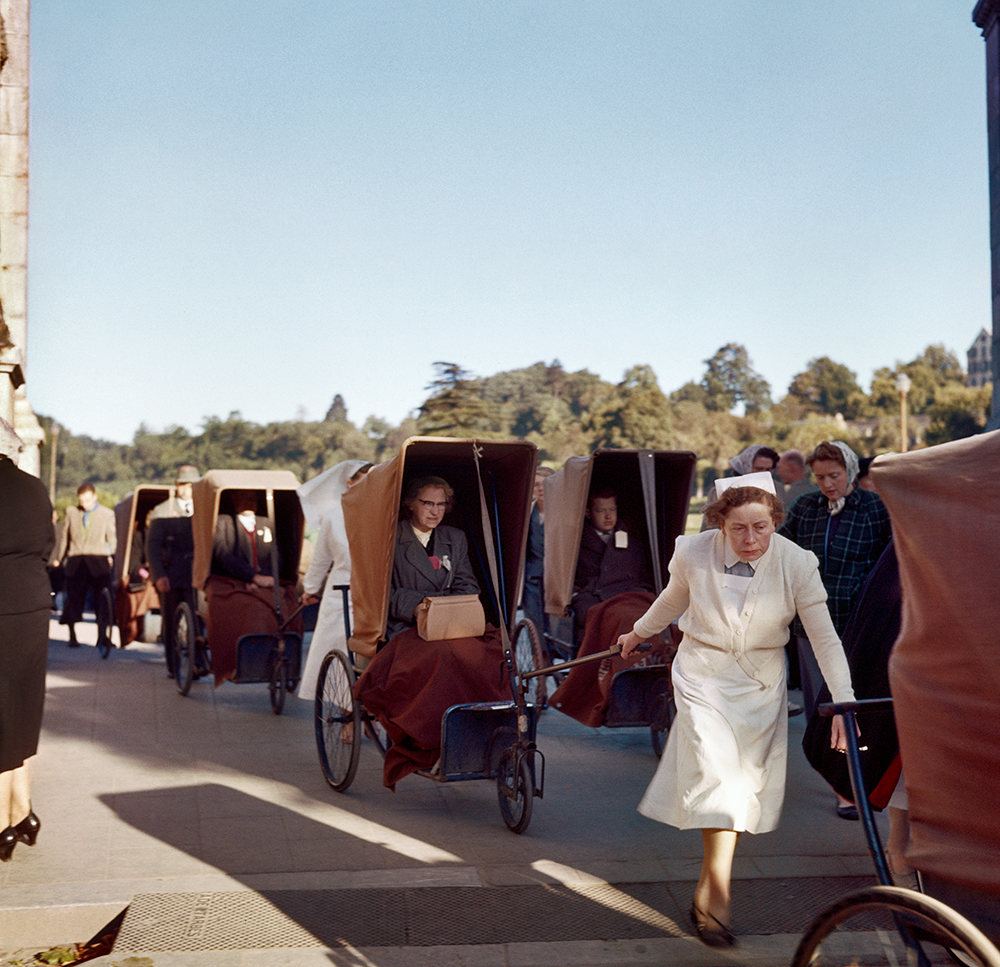
Lartigue’s work in colour is ravishing, off-beat and personal. By the time colour came in, all his family money had long since been lost between the first war and the Wall Street crash, and the family estate sold. Lartigue made a living working as a painter (like Cartier-Bresson, painting and photography were his twin loves) and receiving commissions from magazines and photo agencies. But he always maintained his quirky perspective. When Point de Vue sent him as an official reporter to cover the wedding of Grace Kelly and Prince Rainier III of Monaco in 1956, the shots he filed were of the crowds and the press. They went unpublished. His colour reportage from Lourdes in 1957 for a Catholic magazine is stunning, in a sombre and theatrical key, full of human understanding. His shots of Picasso presiding at a bullfight in Vallauris in 1955 were clearly taken from inside the ring, and even, if the viewers’ faces are to be believed, during the fight.
The myth was always that Lartigue was ‘discovered’ at the age of 69 in 1963, when he arrived with his portfolio at MoMA in New York and was instantly offered a solo show. But this exhibition explains he had been prominent in France before that, sitting on committees to promote photography and exhibiting alongside Man Ray, Brassaï and Doisneau in the Gens d’Images show at the Galerie d’Orsay in 1955. The MoMA show only represented his breakthrough into international acclaim as an artist.
In 1979 he willed his archive as a ‘donation’ to France, and it forms the backbone of this show, so alongside a few lightboxes, we see here a selection from his scrapbooks: small to medium-sized photo prints stuck carefully on the pages, and captioned in felt tip. These are precious and personal exhibits, fascinating in their way, but they don’t make the best case for his work as art.
Kyotographie, a show in the basement of Japan House in Kensington, never for a moment makes the same mistake. There is nothing prosaic about the display, in which large-format images, expertly lit, loom out of the dark. A sense of hallowed ceremony is quickly established. And there before us are the totemic images Kawada Kikuji took in Hiroshima in 1958 of the stained ceiling of the ruined dome, a busy building when it was caught at the centre of the blast. Abstracted shadows and cracks, it is left to us to consider what they represent.
Kawada, now 93, posts regularly on Instagram, aware he reaches more people there than would pick up a magazine. He seems energised by this new format for new work. But uploading his archive is a different matter. ‘Scanning old work in various ways, something that always strikes me is how images seem to lose their old light once they have been converted into data,’ he says. Data, it seems, has a different soul, for which we are still searching.
Paired with Kawada is the photographer Iwane Ai (b.1975) whose work explores the devastation of Fukushima. She photographed deserted avenues of cherry trees there during the pandemic looking very spooky, with glimpses of traditional ogre-like demons called oni as a way of conceptualising the radiation released from the power plant’s meltdown. I didn’t understand it all, but when I saw the final series, ‘My Cherry’, of images of her sister who died by her own hand in 2007, I was moved to tears, and stumbled out of the space aware that it had packed a huge punch.



Comments