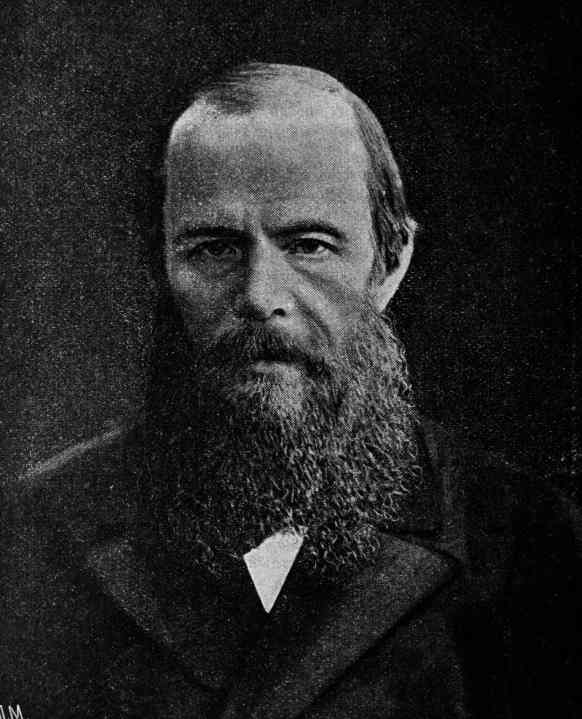
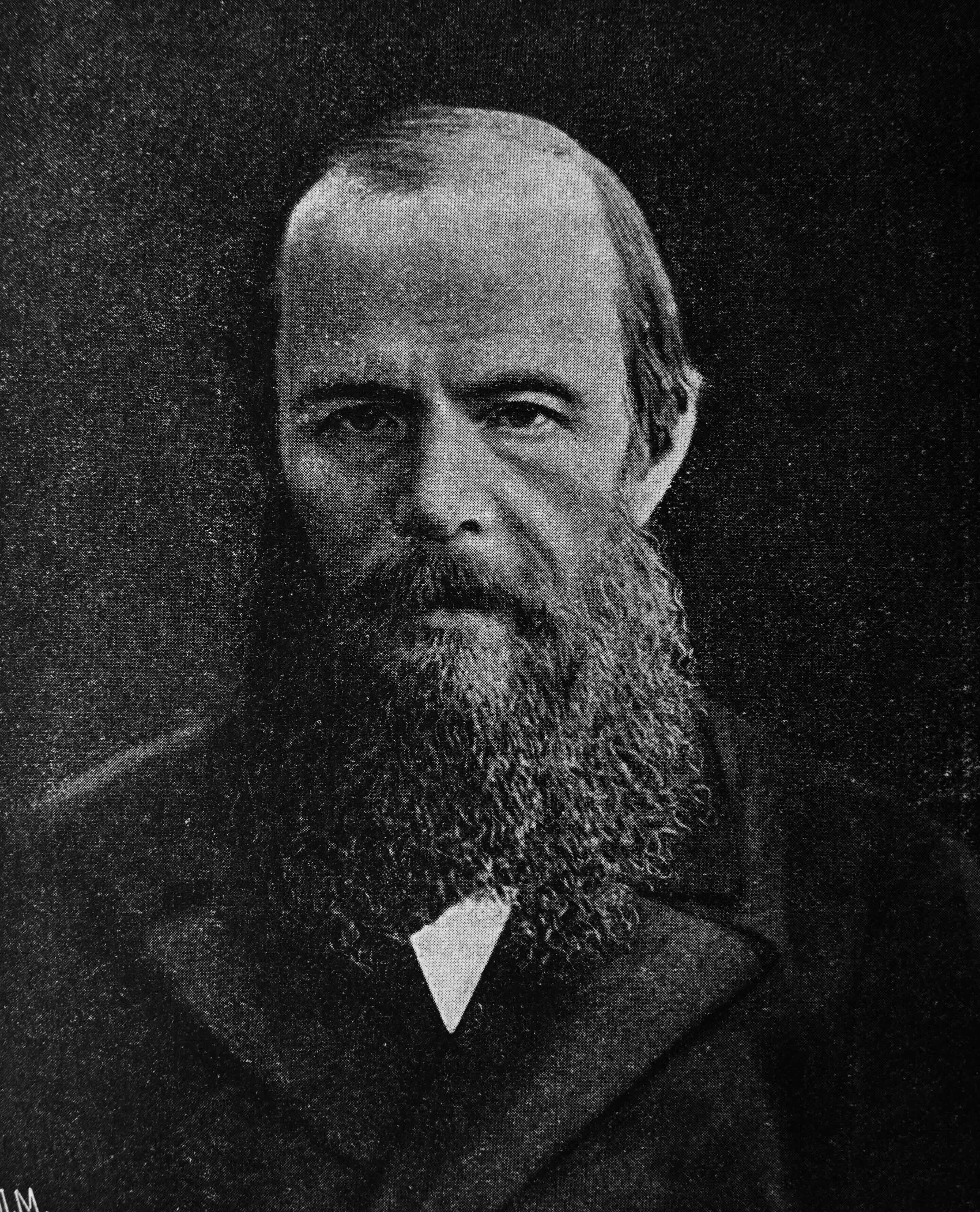
On the back of my copy of Fyodor Dostoevsky’s 1869 novel The Idiot, there’s a quote from A.C. Grayling that tells you what to think of it. ‘One of the most excoriating, compelling and remarkable books ever written,’ it reads, ‘and without question one of the greatest.’ That ‘without question’ bothered me. Why assume that every classic deserves its reputation? We should make up our own minds after having read one, as we do with any other book.

That wasn’t the only reason why I treated Grayling’s claims with scepticism as I edged my way into this gargantuan novel (I can’t remember exactly when that was, but I know I was a much younger man at the time). Having kicked and dragged myself through the same author’s late ‘masterpiece’ The Brothers Karamazov (1880) last year, I knew what I was in for. And now, having almost finished The Idiot, I can say with confidence that Dostoevsky is a dreadful writer. Dreadful.
I don’t say this lightly. I am a patient, generous reader (also a professional reviewer) and I have given Dostoevsky plenty of time to prove my first impressions wrong. The Brothers Karamoz runs to 776 pages, The Idiot to 718. That’s a lot of reading hours. In fact, these books’ length is part of the reason they’re such ordeals. Both could be cut by half and would be much better for it. The plot of The Idiot, especially, is very thin, more of a vehicle for the exposition of ideas than a compelling story. The same could be said of Dostoevsky’s characters, most of whom stubbornly resist the reader’s efforts to care.
Given Dostoevsky’s reputation as one of the untouchables of literature, I was surprised at how bad his prose is. It lacks grace and balance. Instead of taught, stylish sentences, Dostoevsky works in messy, interminable paragraphs that erode the reader’s goodwill. I’m partly grateful, though, because his exhausting prose at least forced me to reflect on the complex relationship between reader and writer.
From the earliest pages of The Brothers Karamazov I sensed that I was not important to Dostoevsky – that he wrote without worrying too much about what he put his readers through. That impression has been reinforced by most pages since. In his last book Inside Story, Martin Amis likens a writer to a host, welcoming the reader in, making them comfortable, entertaining as well as edifying them. Amis was a wonderful host, but Dostoevsky is insufferable. I couldn’t wait to leave and doubt I’ll be going over again.
My negative reaction to Dostoevsky, as I recently discovered, places me in distinguished company
But it wasn’t all drudgery. The murder mystery at the core of The Brothers Karamazov has gripping twists and the final courtroom scenes unfold with high drama. The character of Aglaya in The Idiot is hilariously capricious and nasty. I also enjoyed Dostoevsky’s scathing critique of the hypocrisy and superficiality of Russian ‘high’ society in the latter novel (especially in Part Four, Chapter Six). And every now and then there was a flash of that famed psychological insight: ‘In order to achieve perfection, we must first of all fail to understand a great many things! And if we understand too quickly, we may not understand very well’ (The Idiot).
Overall, though, I felt like I was indulging Dostoevsky. Every time I picked up one of these novels – and I persisted with both mainly because I hate not finishing a book once I’ve started it – I had to steel myself for a joyless couple of hours. At first, I thought that this was a necessary period of adjustment: often, great books are difficult. But there’s a difference between difficulty that you want to master and that which seems sloppy and redundant – the result of carelessness rather than an unavoidable aspect of depth. Difficulty can be exhilarating, as it is in some works of philosophy (Schopenhauer’s The World as Will and Representation, for example); in Dostoevsky, it’s deflating.
My negative reaction to Dostoevsky, as I recently discovered, places me in distinguished company. Vladimir Nabokov once described him as ‘not a great writer, but a rather mediocre one – with flashes of excellent humour, but, alas, with wastelands of literary platitudes in between’. Ernest Hemingway had mixed reactions: ‘How can a man write so badly, so unbelievably badly, and make you feel so deeply?’ he asked. For Henry James, Dostoevsky’s novels were ‘loose baggy monsters’ and ‘fluid puddings.’ James couldn’t finish Crime and Punishment. Reading it, he said, was ‘like having an illness’.
We too often blame ourselves if we don’t like or ‘get’ a classic work of literature, thus absolving the writer of all responsibility. But after battling my way through almost 1,500 pages of Dostoevsky, I’m in no mood to be generous. The fault is mainly his.




Comments