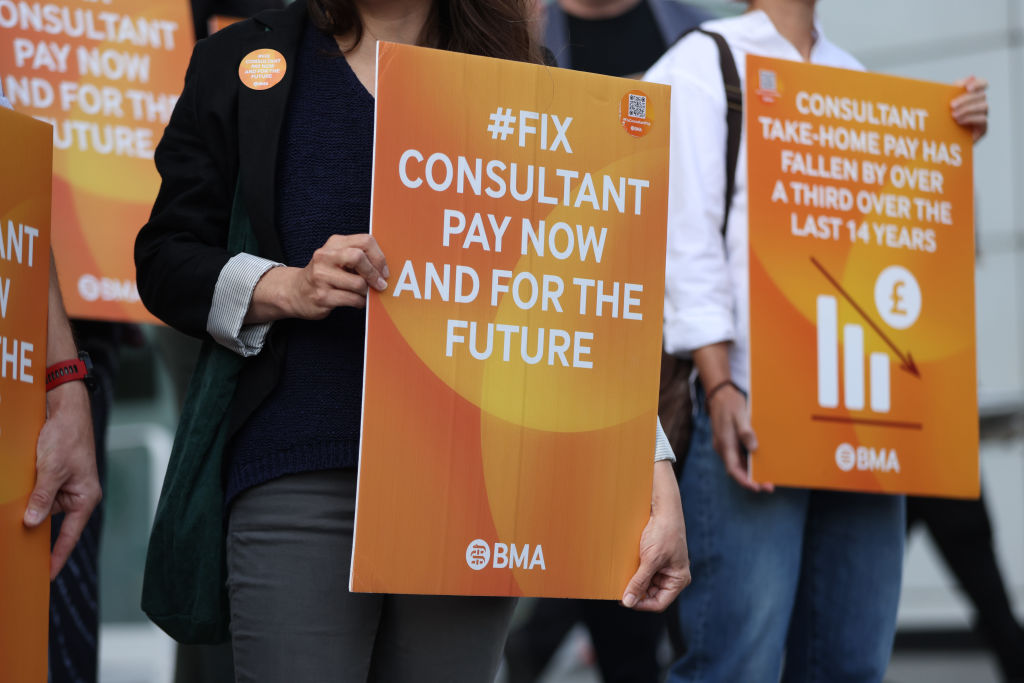
‘Only the little people pay taxes,’ New York hotel tycoon Leona Helmsley was once reputed to have said. She later discovered, as she was jailed for tax evasion, that that wasn’t quite true. But her ethos still lives on, in the British Medical Association’s (BMA) campaign for a rise in consultants’ pay.
Consultants now seem to think that they ought to be compensated for the tax increases which are paying their salaries and pensions.
This week, consultants voted to strike by a margin of 76 to 24 per cent – albeit on a turnout of just 51 per cent. This gives the union the right to call repeated strikes for the next 12 months. The new health secretary James Murray has complained that it is thoroughly unreasonable of them given that they have received a fat pay rise of 28 per cent over the past four years and that the average consultant now earns an average basic salary of £152,000, putting them in the top 2 per cent of earners even before overtime and private work is taken into account. But then he might reflect that it was his government which made it much easier to call public sector strikes: previously, this week’s vote would have empowered the BMA to call strikes for six months rather than 12. It was Murray’s government, too, which repealed the legislation demanding minimum service levels on strike days.
But there is something especially outrageous about the BMA’s case. The current campaign began in 2023 when the BMA was bleating that consultant pay had fallen by 35 per cent in real terms since 2008. Thanks to recent pay rises, the union (and that’s what the BMA is, even though many might be fooled into thinking it is a learned body) now claims pay is down 26 per cent in real terms. But crucially, it has based its claims not on gross pay but on take-home pay, i.e. after tax and pension contributions have been subtracted. A large slice of that real-terms fall is down to an increase in the top rate of income tax from 40 to 45 percent, the removal of the tax-free allowance for anyone earning over £100,000 and the freezing of income tax thresholds.
There is, of course, a very good reason why taxes have risen sharply in recent years: to pay for fat pay rises for public sector employees, NHS consultants included. Yet those same consultants now seem to think that they ought to be compensated for the tax increases which are paying their salaries and pensions. Tax rises, in other words, are not for them, only the little people.
Another factor in the fall in take-home pay amongst consultants is that they are contributing a higher proportion of their salaries into their pension scheme. But so, too, is everyone else, if they want to preserve the value of their retirement income. That is the reality of an era of lower investment returns. Not that many consultants are necessarily aware of financial reality in the outside world because they live in a bubble where the taxpayer will always stump up to pay their gold-plated pensions.
How about a deal? If consultants want a rise in take-home pay then fine, let them keep more of their salaries. But in return they should be made to relinquish their generous, guaranteed pension rights and have to make do as the rest of us do: with pensions which are linked to investment returns. That would concentrate their minds.




Comments