
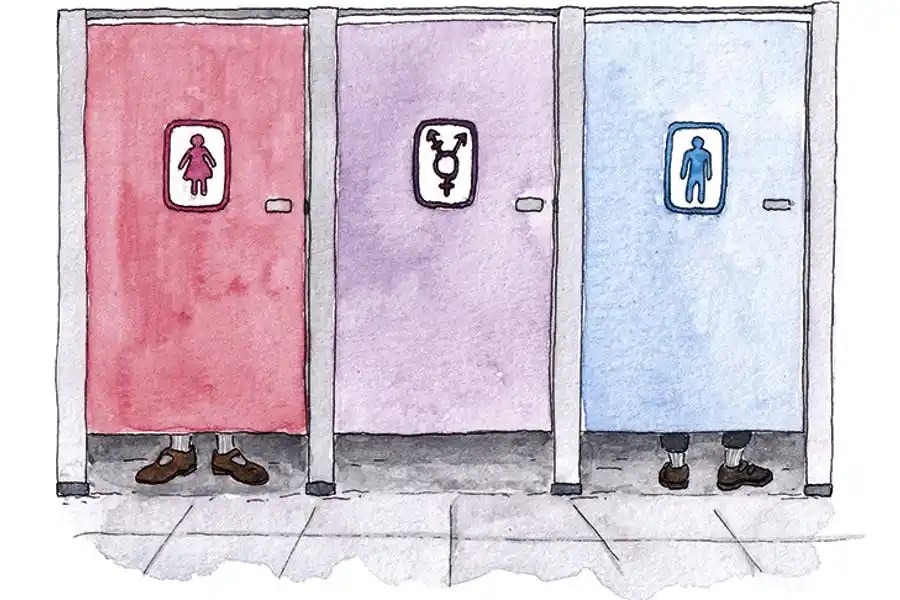
The Labour government has just announced plans to push forward with a ban on conversion therapy, apparently to protect LGBT+ people from harm. Its proposed bill is unnecessary, unwanted and unhelpful.
Labour’s proposed bill is unnecessary, unwanted and unhelpful
Maybe that is a fitting epitaph to Keir Starmer in the last days of his administration. He might be gone in a few weeks, but this time bomb he plans to leave in his wake could ultimately cause immense harm, principally to young people who might otherwise grow up to be gay or lesbian.
There has been talk of a ban on conversion practices for almost a decade. Back in 2018, the then-Tory government’s LGBT Action Plan promised to ‘end the practice of conversion therapy in the UK.’ Three years later, a public consultation was launched. Only 6 per cent of respondents reported experience of what they considered to be conversion practices. Crucially, however, that glossed over a range of experiences, historic as well as current.
Let’s be clear: harmful and coercive practices are already illegal. For example, quacks who use violent methods in a vain attempt to change someone’s sexual orientation can be dealt with under existing legislation. And gay men can no longer be given electric shock treatments, as in years gone by.
Campaigners, however, seem to have more mundane practices in their sights. Saba Ali – chair of the Ban Conversion Therapy Coalition – was quoted in the government’s press release announcing the new bill. She said, ‘No one should ever be told they can’t be who they are, or love who they love.’ Really? Is that what this conversion therapy bill is targeting? And does that mean a simple conversation in a pub could result in a criminal conviction?

The government might claim not. It says the proposed bill will set the criminal threshold for conversion practices as ‘conduct that aims to change someone’s sexual orientation or transgender identity through abusive acts that seriously harm the victim’. But crucially who decides what constitutes serious harm?
When assessing abuse, the draft bill says that ‘controlling or coercive words or behaviour’ and ‘use of psychological or emotional pressure’ should be kept in mind. And someone is guilty of conversion abuse if they cause ‘serious harm to the individual’s physical or mental health’ or ‘serious alarm or distress to the individual which has a substantial adverse effect on their usual day-to-day activities.’ This is remarkably vague, given the offence will have a maximum sentence of five years in jail.
Talking therapies – and those informal conversations – might well be in the frame. Let’s consider, for example, a hypothetical married man in his 30s who is struggling with his sexuality. He wants to remain faithful to his wife, but he struggles with feelings of attraction to other men. He seeks help from a counsellor. Would that be a conversion practice? The draft bill has exceptions for those providing health care services, unless they act ‘in a way that falls far below the standards reasonably expected of a person in their position.’ But what if the man went to a church minister? ‘Spiritual, religious or faith-based activities (such as prayer healing)’ are listed as a context for conversion practices. Mentoring is another, so perhaps those conversations in the pub are in scope?
Of far greater concern, however, are children. Consider a teenage girl struggling with the sense that she is attracted to girls. Online influencers convince her that, since she likes girls, then she really must be a boy trapped in a girl’s body. Her parents seek help for her, not to pump her full of drugs and cut off healthy body tissue, but to help her come to terms with the reality of her sex.
Who might be guilty of engaging in conversion practices – the influencers who tell her that she is not a lesbian but a straight boy, or the parents who have no problem with her sexuality but want to protect her from making a colossal mistake with profound and lifelong consequences?
That dilemma sums up the incoherence of this proposed bill, which conflates sexual orientation and transgender identity – two very different things. But situations like these should alert MPs to the potential hazards. If the girl, egged on by people online, decides in the moment that her parents are causing her serious harm, then those who love her the most could be the ones to feel the consequences of the law.





Comments