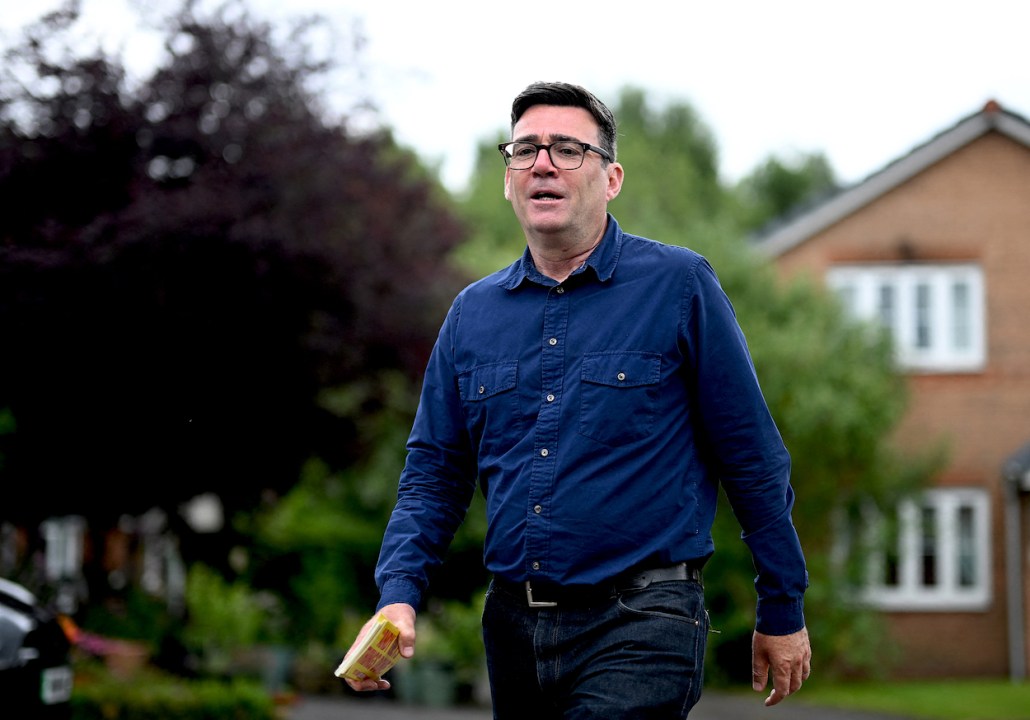
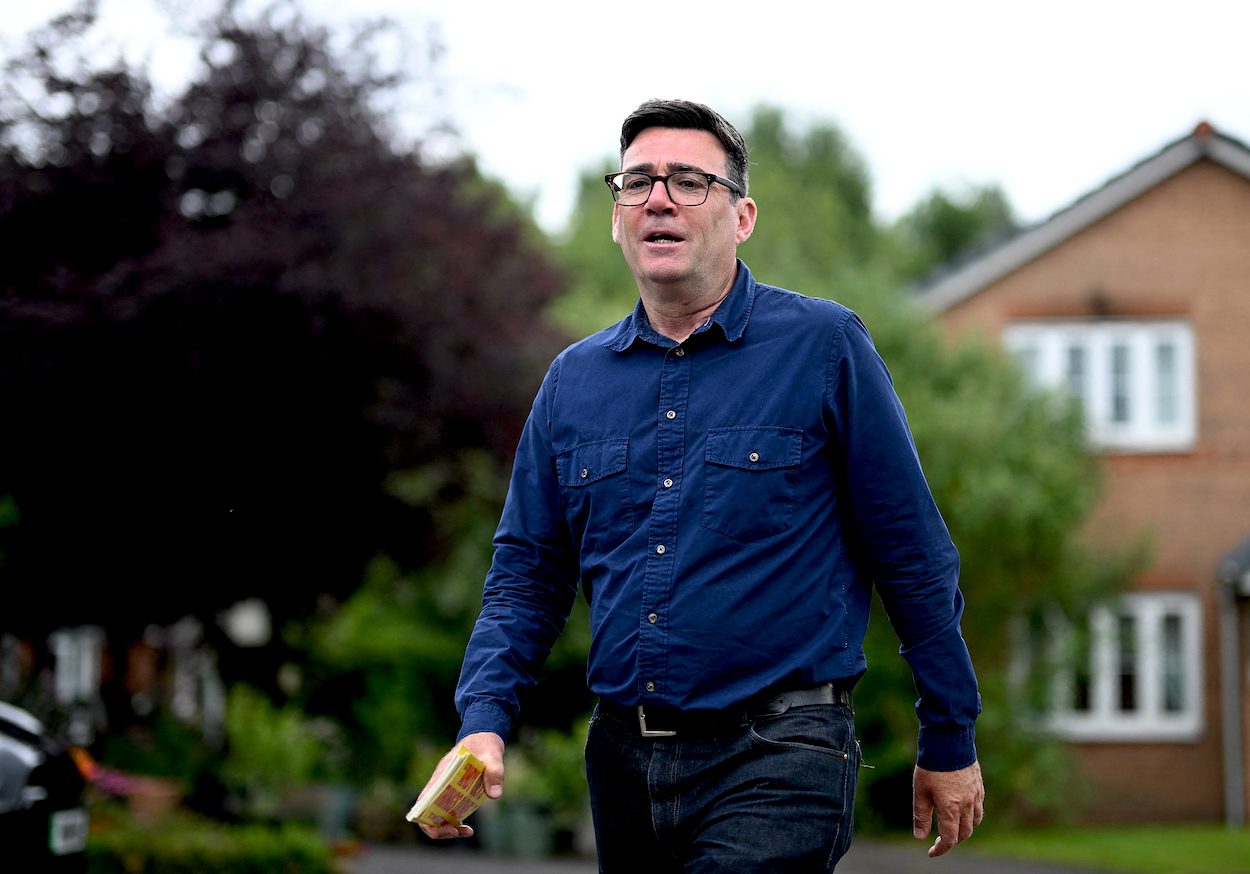
Pollsters should generally avoid hyperbole, but what we saw last night was nothing short of an electoral earthquake. On every standard political and demographic indicator, Makerfield was Reform’s to lose: almost exactly ten years ago, around 65 per cent of Makerfield voted for Brexit, and just six weeks ago Reform swept the board in the local elections – taking more than double Labour’s share of the vote.
In winning Makerfield so decisively, Burnham broke many of the rules of modern politics: the idea that demography is destiny, or that the Brexit divide is insurmountable. Burnham proved you can unite the left while still appealing to socially conservative voters who might be tempted by Reform. Perhaps most impressively, he overcame the toxicity of the Labour party brand. The voters we spoke to in Makerfield often had different views on Burnham, Kenyon and Farage, but they almost all converged on one thing: sheer anger towards Keir Starmer.

So how did Burnham do it?
In his speech, Burnham spoke of putting a ‘Makerfield test’ at the heart of British politics. Politicians have spent the post-Brexit decade promising a better offer for places that feel neglected by Westminster and cut out of our national story, but have failed to follow through. From our nine focus groups in the run-up to this by-election, it was clear three things convinced voters that, in Burnham’s case, the promise might this time be real.
The first is that Burnham had proof points that he genuinely cares and understands the people he seeks to represent. In part through showing people he had already championed Greater Manchester, particularly during the pandemic. But there was also a personal dimension: Makerfield residents told us, unprompted, about seeing him out and about in the area. ‘I’ve seen him at the football,’ Derek explained. ‘I’ve seen him in the pub outside the football stadium just talking to fans. I know he’ll buy people a drink. Comes across as an ordinary bloke – who you’d actually want to speak to.’ Those who had interacted with Burnham – a striking number of voters – said he seemed to really listen, to be interested, and to care about the issues voters were worried about. Relatability matters at the best of times, but in the age of the attention economy, having a personal brand matters tenfold.
That sense of being in touch was also contrasted, again and again, with Starmer. As Alice said: ‘I get the impression that he [Starmer] doesn’t understand the depth of feeling in the country.’
Makerfield voters also believed that Burnham had a record of delivery. Here the by-election had a particularly important local element which both boosted Burnham, but also presented challenges. Voters cited local improvements, such as the Bee Network, but this far from Inner Manchester there was often also a feeling of neglect. Some felt Burnham’s portrayal of Greater Manchester was too rosy – glossing over the ‘spice heads’ in Wigan town centre – and the abortive Clean Air Zone felt like a major Achilles heel for the Mayor. ‘Two words’, retiree Mary told me when I asked why she wasn’t a fan of Burnham. ‘Congestion. Charge.’ Despite these shortcomings, Burnham’s work in Manchester was seen as a net positive and he was helped by what we found was a real affection for the MP who gave up his seat for Burnham, Josh Simons.
The third component of Burnham’s appeal was a vision for the country as a whole – he conveyed an ambition to make central government work again. Voters are not naive; they recognised Burnham’s ambitions from day one of the campaign, and while some worried about being used as a ‘stepping stone’, for many the prospect of a national profile was a plus: ‘We’ve been put in a privileged position to be able to make such a massive decision.’
Changing Westminster, fighting for a better deal for places like Makerfield, fixing a social contract that feels broken, these things appealed to voters frustrated with what they saw as a failing status quo. ‘I think it’s the system that’s broken, isn’t it?’ Allie, who could not decide between Labour or Reform, told us. Mike, who was tempted by Restore Britain, agreed: ‘If we don't get our own country sorted out soon, we’re going to be in big trouble.’
Of course, there were negative drivers of Burnham's vote too. For the third by-election in a row, Reform chose a candidate who hurt them. Robert Kenyon's misogynistic comments were overlooked by many, but his refusal to apologise turned some undecideds against him. The Henry Nowak case was also a defining moment for Farage during the campaign – his call for ‘pure, cold rage’ struck many as distasteful, and even voters sympathetic to his arguments on two-tier policing baulked at the way he disregarded the family’s wishes. Despite Burnham’s appeal, many told us they felt they were voting against something rather than for it. ‘I think it might be the first time I vote negatively,’ Rachel told us, ‘and that sits really uncomfortably with me.’
Burnham’s victory had many drivers: fear of Reform, personal charisma, relatability. But as he now eyes what looks like an inevitable move to Downing Street, the question is whether he can genuinely make a reality of the ‘Makerfield test’ and deliver in government – and whether that success can transfer to Labour as a whole, or whether, like Trump, he can only turn out voters for himself. Winning the by-election, it turns out, was the easy part.





Comments