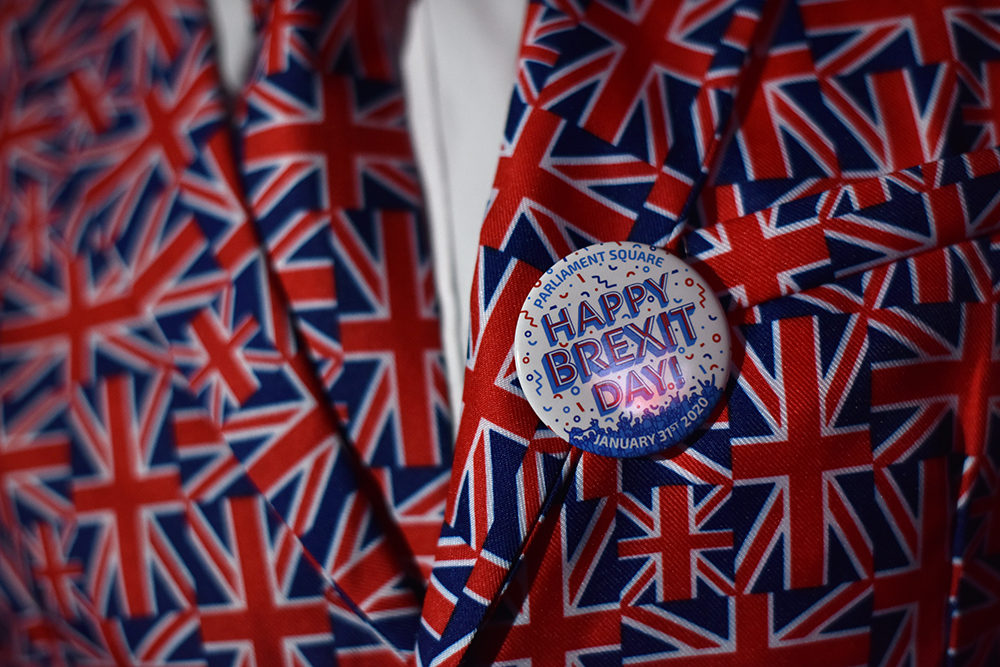


The Damascene moment in my personal Brexit journey came not when my pen hovered over the referendum ballot on 23 June 2016, but a month earlier. In Amsterdam for a British commercial property jamboree, I was about to speak on a panel with the pro-Remain pundit Steve Richards and the ultra-federalist Belgian MEP Guy Verhofstadt. ‘What you need here is a tub-thumping pro-Leave rant,’ I told the organiser. So that’s what I attempted, including some low jibes at the glowering Belgian, who for comic effect I claimed was my cousin. Then I called for an out-or-in show of hands and lost it (this was an audience reliant on European investors) by roughly 500 to five.
Afterwards I thought: did I really offer a blueprint for freedom and prosperity or was that just undergraduate knockabout? And that’s when I jumped off the Leave bandwagon. But I’ve been listening carefully to serious Brexiteers’ analysis of the outcome. I’m persuaded by Roger Bootle, author of The Trouble with Europe, that the ‘net negative’ impact of Brexit so far is largely down to the failure to deregulate our own economy (we’ve gone the other way) and to maximise trade with the rest of the world.

I also learned from the former Vote Leave chief Matthew Elliott that the sole measure enacted by Labour which would have been impossible within the EU is the imposition of VAT on school fees. Ten years on, Brexit still looks like a triumph of mischievous rhetoric: let’s also agree it was a huge opportunity shamefully mishandled.
Who’s the Boss?
Then again, don’t you just love a bit of Brexit knockabout? There could hardly be a better anniversary gesture than a bid by the high-street tycoon Mike Ashley for Hugo Boss, the German fashion designer that once made Nazi uniforms. Ashley’s master company Frasers is offering £1.7 billion for the 74 per cent it doesn’t already own of Boss, which it describes as a ‘key brand partner’ and has stalked since first taking a stake in 2020. The German response to the bid was icy and Frankfurt’s financial establishment, culturally averse to foreign takeovers, can be expected to close ranks in Boss’s support. Meanwhile, the Boss share price jumped above Frasers’ offer, so the game may well go to extra time. Sadly, I doubt it will be all over in Ashley’s favour in time for the 60th anniversary of England’s 1966 World Cup final defeat of West Germany on 30 July.
AI stampede
If you weren’t brave enough to join the herd of private investors who applied for $100 billion worth of SpaceX shares, you might enquire whether you (or any charity whose investments you oversee) will end up owning some anyway, through one of those impenetrable fund-of-funds favoured by wealth managers. Whatever you think of the AI stampede, if your fund doesn’t bag a slice of SpaceX, Anthropic and OpenAI this year, it will sag below the indices – as did those who managed to miss the three-year surge of the chipmaker Nvidia. But let’s pause to salute the bold but oddly named Scottish Mortgage Investment Trust, which took a £150 million stake in SpaceX back in 2018 that has now multiplied in value 25 times over.
Finger-wagging
Emma Reynolds has said remarkably little about the future of all-but-bankrupt Thames Water and its year-long negotiation with creditors since she became Environment Secretary last September. There were hopes that a pragmatic rescue deal might be approved in March, ahead of a critical cashflow juncture for Thames. But no: only now, two days ahead of the Makerfield by-election, has the minister grabbed a passing headline with a finger-wagging letter to the regulator Ofwat setting out ‘my early concerns that the creditor’s proposals don’t do enough to protect consumers and the environment’. The letter does not directly threaten a temporary ‘special administration regime’ or permanent renationalisation, though the media read it that way and it was clearly designed to play to Andy Burnham’s theme that a return to public ownership of water is ‘absolutely an option’.
Except of course that if a Burnham (or any other) cabinet can’t fund an adequate defence investment plan and dare not make significant welfare cuts, it certainly can’t afford the expenditure needed to repair the nation’s pipes and sewerage. So stand by for more months of ministerial inaction after this Thursday. But at least Emma Reynolds has done the equivalent of posting her CV to the likely next prime minister with a view to hanging on to her job.
Ungonged
When Britain punched well above its weight in the world, our love of gongs and parades was the dignified icing on the national cake. Now, I fear, these fripperies just make us look more diminished. Foreigners might be forgiven for thinking our entire military strength consists of Red Arrow aircraft, mounted bands and guardsmen in fur hats. They must also be baffled by an archaic honours system that rewards diversity and wokery with membership of the ‘most excellent order’ of the lost British Empire.
And they probably share this column’s constant puzzlement at the paucity of recognition for business role models who represent the best of what’s left of our declining economy. It certainly helps to be female: from the King’s Birthday list, I doff my own hat to Citigroup’s Scottish-born chief executive Jane Fraser (Dame), cosmetics entrepreneur Charlotte Tilbury and nuclear power promoter Julia Pyke, both CBE.
But I commiserate with the male chiefs of Barclays and the London Stock Exchange, respectively C.S. Venkatakrishnan and David Schwimmer, who were named by the Financial Times last month as having received ‘early-stage approval’ but remain ungonged. In a supposedly deep-secret process, how on earth did that leak out?




Comments