SpaceX

America at 250 remains an exceptional country

Who could ever have imagined what was being unleashed on the world when Thomas Gage ordered 700 Redcoats to march out from Boston and seize supplies in the town of Concord? Who could have dreamed, 250 years ago, what would be built by the descendants of those 56 men who put their names to the Declaration of Independence while gathered in the Pennsylvania State House? The United States of America turns 250 having enjoyed a near-uninterrupted run of success unmatched in world history. By her 100th birthday, the US was already master of an entire continent. By her 200th, she had won two world wars, invented the airplane, the atomic bomb and the transistor; created the motion picture and rock ’n’ roll; become the first automobile nation and put a man on the Moon.

Portrait of the week: Burnham wins, Starmer resigns and a heatwave hits

From our UK edition

Home Sir Keir Starmer, the Prime Minister, stood outside 10 Downing Street and said that he would resign as leader of the Labour party. Nominations for a successor would open on 9 July (though he still meant to unveil his defence investment plan in time for the Nato summit on 7 July). His decision to depart followed the convincing victory in the Makerfield by-election of Andy Burnham, bringing him back into parliament. An election for mayor of Greater Manchester in his place would take place on 30 July, with Bev Craig, the leader of Manchester City Council, as Labour’s candidate. Mr Burnham packed a suit and tie into which he changed on the train from Manchester Piccadilly to London. He was sworn in as an MP that afternoon. Mr Burnham had received 24,927 votes (54.

Brexit was a huge opportunity shamefully mishandled

From our UK edition

The Damascene moment in my personal Brexit journey came not when my pen hovered over the referendum ballot on 23 June 2016, but a month earlier. In Amsterdam for a British commercial property jamboree, I was about to speak on a panel with the pro-Remain pundit Steve Richards and the ultra-federalist Belgian MEP Guy Verhofstadt. ‘What you need here is a tub-thumping pro-Leave rant,’ I told the organiser. So that’s what I attempted, including some low jibes at the glowering Belgian, who for comic effect I claimed was my cousin. Then I called for an out-or-in show of hands and lost it (this was an audience reliant on European investors) by roughly 500 to five. Afterwards I thought: did I really offer a blueprint for freedom and prosperity or was that just undergraduate knockabout?

Elon Musk is deluded about life on Mars

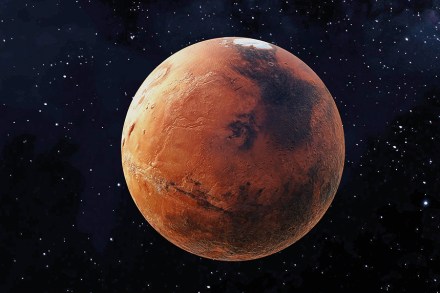
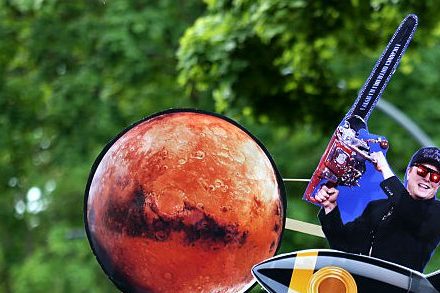
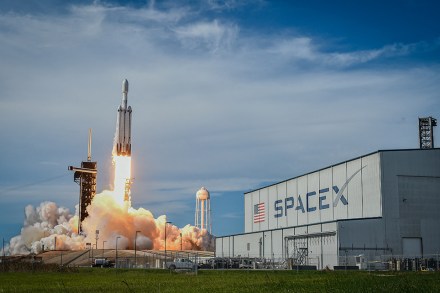
Elon Musk, already the richest person who ever lived, is at the center of the biggest share offering of all time. A valuation of $1.75 trillion at IPO would hand $75 billion to his company, SpaceX. Musk is being allocated two sets of shares, with performance-based conditions. They will materialize if SpaceX reaches a market capitalization of $7.5 trillion, and if a colony of a million people is established on Mars. The first of these is possible, the second is not. On the face of it, you wouldn’t bet against SpaceX. By 2024, it was launching more rockets than the rest of the world combined. Its Starlink internet service generates oodles of cash. It has more than 9,600 satellites in orbit that require constant replenishment, so the market is firm.

Elon Musk Mars

The Spectator’s caught in the EU crosshairs

From our UK edition

Is the flotation of Elon Musk’s SpaceX venture on the US Nasdaq exchange a beacon for the future of earthly capital markets and interplanetary relations, or just bonkers? The answer is it’s both, as well as being a stratospheric ego trip for Musk himself, who according to the prospectus will not only retain 85 per cent of the company’s voting rights but will also be awarded an extra billion shares if it succeeds in establishing ‘a permanent human colony on Mars’. In every sense, like Star Trek’s USS Enterprise, this spaceship is heading where no man has gone before. On the positive side, SpaceX’s Starlink satellite internet constellation, with ten million subscribers, is already profitable.

Inside the race to build AI data centers in space

In the 1966 novel Colossus by British author D.F. Jones, a supercomputer (which goes by the name of Colossus) is given control and decision-making power over the US’s nuclear arsenal – a logical and unemotional computer being better placed, it is assumed, to make unemotional decisions than a human. Eventually, Colossus discovers the existence of a similar supercomputer in the USSR and begins communicating with its Russian counterpart in mathematical languages about technological advances beyond human comprehension. Frightened by the possibilities this presents, scientists sever the connection – only for Colossus to threaten to launch nuclear weapons if it isn’t reconnected.

Will Bezos beat Musk to the Moon?

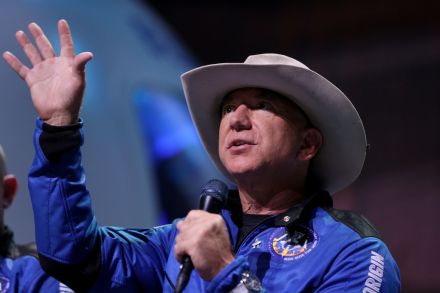
Even Elon Musk has to face a dose of reality every once in a while. Technology and politics have forced him to turn his gaze away from Mars, for the moment at least, to put Americans back on the surface of the Moon before China gets there. But it might already be too late. If America has any chance of beating China, it now seems inevitable that the next American human landing on the Moon will not be by Musk’s Starship but using a craft being developed by his rival Jeff Bezos. Announcing the pivot, Musk wrote on X: “For those unaware, SpaceX has already shifted focus to building a self-growing city on the Moon, as we can potentially achieve that in less than 10 years, whereas Mars would take 20+ years.

Bezos

Hegseth’s vision is more Starship Troopers than Starfleet Academy

​“Welcome to Starbase, Texas,” Elon Musk said from the stage Monday night, as the crowd whooped. “This is a city. It’s actually legally a city that thanks to the hard work of the SpaceX team, we built out of nothing. And it’s now a gigantic rocket manufacturing system. For people out there who are curious to see it, we’re actually on a public highway, so you can come and visit. Drive down the road and see the epic hardware. I think this is the first time that a rocket development program has actually been on a public highway.

Trump bids Elon ‘the DoGEfather’ farewell

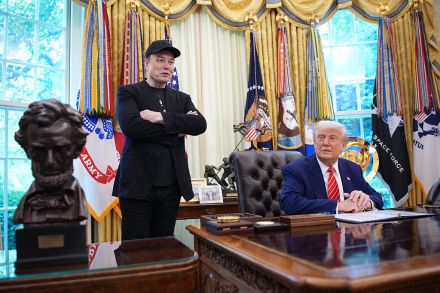
Sporting a black eye and a shirt with the words "The DoGE Father" on the chest, Elon Musk joined President Trump in the Oval Office Friday afternoon to announce the formal departure from his role in the Department of Government Efficiency. While Musk will no longer be a special government employee and will direct his workday back to his several companies, the world's richest man will remain a "friend and advisor" to the President when needed. "Today it's about a man named Elon, and he's one of the greatest business leaders and innovators the world has ever produced," Trump said, opening the press conference.

Elon Musk and Trump in Oval Office doge

Life among the world’s biggest risk-takers

From our UK edition

The Italian actuary Bruno de Finetti, writing in 1931, was explicit: ‘Probability does not exist.’ Probability, it’s true, is simply the measure of an observer’s uncertainty; and in The Art of Uncertainty, the British statistician David Spiegelhalter explains how this extraordinary and much-derided science has evolved to the point where it is even able to say useful things about why matters have turned out the way they have, based purely on present evidence. Spiegelhalter was a member of the Statistical Expert Group of the 2018 UK Infected Blood Inquiry, and you know his book’s a winner the moment he tells you that between 650 and 3,320 people nationwide died from tainted transfusions.

Britain needs to join the new space race

From our UK edition

Elon Musk’s Starship is the biggest rocket ever built. Sending it into space is hard; bringing it back to Earth, in a fit state to be reused, is even harder. The rocket booster, having just carried a craft into space, must not be allowed to crash into the Atlantic and sink to the seabed. Instead, in order for it to be swiftly relaunched, it must fall vertically – back onto a launchpad. But as the rocket approaches touchdown, its engines have to fire towards Earth in order to slow its descent. And the colossal heat and force generated by these engines is enough to cause severe damage to the launchpad and surrounding infrastructure.