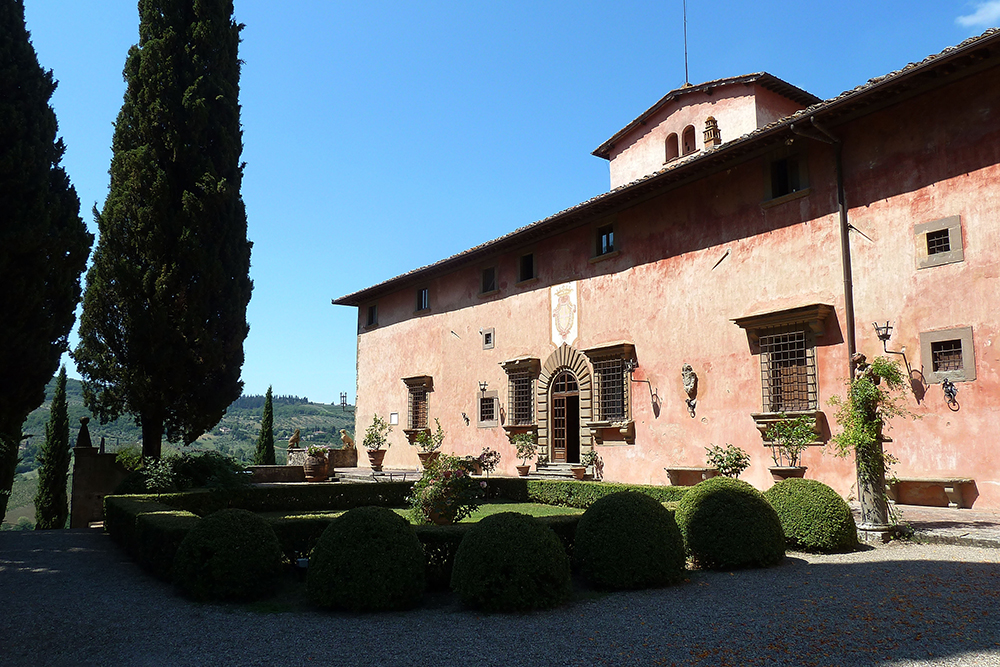
The comic novelist Andrew Sean Greer won the Pulitzer Prize for Less, a chronicle of the longings and humiliations of modern life. But now, he suspects, we’d all like an escape. ‘Whatever happened to the charm novel?’ he asks in his new outing, thinking of the lighter works of Nancy Mitford and Graham Greene. Since they are apparently out of fashion, he has decided to write his own. Villa Coco follows a young American archivist, hired to catalogue the antiques in Tuscany of an aged baronessa, known to her friends as ‘Coco’, only to find himself drawn into increasingly absurd adventures instead.
He arrives in late summer, with all the American fantasies of Italy in tow: ‘A confection of movies and food… pasta and accordions and Leonardo and cheese.’ The novel satirises these ideas even as it succumbs to them (hence it gains subtlety in the autumn and winter sections). But he is met by Italians with disdain for Americans: to them he can’t dress, knows nothing about food and speaks English in some incomprehensible dialect. He undertakes a whole cultural education in everything from anchovies to Vasari, with ‘one simple aim: becoming less American’. It’s cheering to see European standards prevail.
Greer is a well-known chronicler of middle age, but Villa Coco is rooted in the open-ended days of youth, our protagonist ‘still young enough for my qualities to change, like a fresco as the artist considers the position of a saint’. An André Aciman-type romance becomes part of his education, too. But gradually the novel turns its attention to old age, as he becomes caught up in Coco’s grand plans and realises he is not the only protagonist. Florence, Ravenna, Venice, mysterious packages and secret rendezvous: as its preface promises, the story crosses into the territory of Travels with My Aunt.
True to the ‘charm novel’, there are 20 jokes on every page. Greer loves bathos: the opening describes a statue of a saint ‘overburdened with a crosier, a scythe and a sleeping lamb, as if he were carrying the shopping for another, more important saint’. There are mistranslations, innuendoes, imperious pugs called Pushkin and Gorky. The jokes fly around and are amusing even when they don’t quite land. The anxious archivist must give up his precious systems and neuroses and join in with the antics around him. If you take this to the beach this summer, you might be persuaded to do the same.



Comments