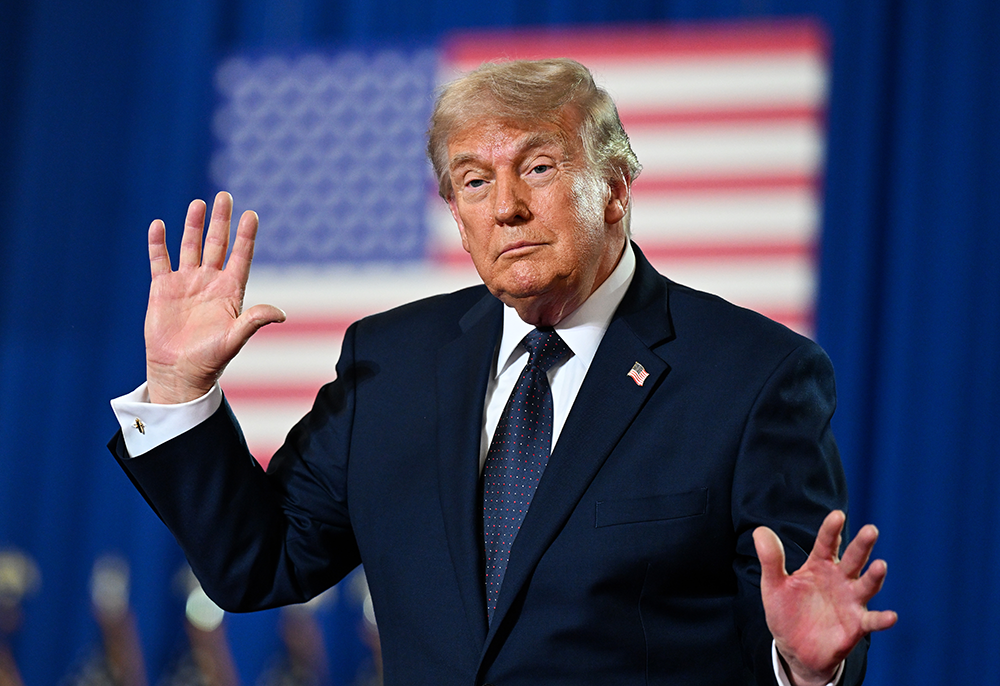
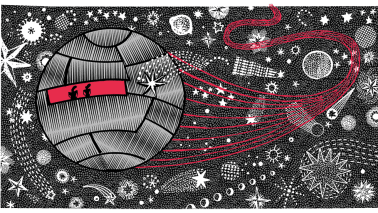
On 19 November 1941, King George and Queen Elizabeth paid a visit to Woburn Abbey, home of Britain’s covert propaganda war against the Nazis. Surrounded by a park full of rare monkeys, and among corridors bearing Old Masters, the King and Queen were presented with ‘Britain’s Secret Army’, a fleet of radio stations that broadcast subversive content deep into enemy territory.
Sefton Delmer, who before the war had been a foreign correspondent for the Daily Express, presented his new German station. While the officious BBC German Service was lecturing Germans about the virtues of democracy and the evils of fascism, Delmer was trying something different. His shows undermined Nazi propaganda by being even more racist, war-mongering, sweary, conspiratorial and sex-obsessed than the most extreme Nazi screeds. They accused Nazi elites of being secret Bolsheviks; of being too soft in their bombing of London; of being rife with sexual deviance and self-indulgence. The aim, Delmer explained to the King and Queen, was to carry ‘Nazi ideology just one phrase further into the ridiculous, where it is harmful to Germany’.
Delmer didn’t believe in preaching facts to people who had embraced fascism. He had a dim view of human nature generally, and didn’t think anyone who had embraced authoritarian propaganda thirsted for liberalism. He played to what he called people’s inner ‘pigdog’: our jealousy, anger, greed and resentment. He used the Nazis’ narratives to promote division, undermine confidence in leadership and paralyse motivation.
By the end of the war, more than half of all German soldiers listened to his shows. They were among the top three stations in big cities such as Munich and drove the Nazi elite wild looking for traitors in their midst. Soldiers said the shows inspired them to defect and surrender: if the Nazi elites were such traitors to their cause, why should soldiers suffer?
Today we can see the case for Delmer’s approach to propaganda when we look at the failures and successes in undermining the more extreme parts of MAGA or Vladimir Putin’s supporters in Russia. For a decade liberal media have tried to highlight the risks Donald Trump poses to democracy, but these arguments have failed to penetrate his base.
Instead he is being undone by his own narratives. Trump has long peddled conspiracies about the Deep State protecting paedophiles – but now he stands accused by his own supporters of that himself by not opening up the Epstein files. He always played on anti-Semitic tropes about ‘globalists’ controlling the nation – but now naked anti-Semitic conspiratorial narratives from the likes of Candace Owens accuse him of being a puppet of global Jewry.
Iranian propaganda has seized on these narratives to turn Trump’s tricks against him. Most famously they have churned out videos of the US President as a Lego character slavishly obeying Israel while trying to hide the Epstein files. They barely mention the Iranians killed by US forces, as most MAGA followers would be unlikely to care. They make no mention of Iranian religious-political ideology, as that would scare away MAGA audiences. Overlaid with rap music, the videos simultaneously humiliate Trump by making him look like a hopeless toy, while making the Iranian leadership look harmless. The videos undermine Trump’s claims of leading America to strength and glory, while detoxifying the Iranian leadership.
Or consider Russia. Putin’s most popular opposition hasn’t come from exiled liberals, but from warmongering imperialists baying for more efficient conquests. His greatest weakness is his paranoia, which has led him to ban the social media channel Telegram. This decision has weakened the Kremlin’s ability to communicate with its own population, alienated the usually supine small business classes and undermined the Russian President’s own propaganda forces’ ability to monitor and respond to changes in mood effectively. If Delmer were around today, he would be boosting the angry online imperialists and provoking Putin to be even more paranoid – and thus make more mistakes.
Using an enemy’s worst traits and narratives against them can, at times, be very effective. But it’s worth remembering the dangers too. After the war, Delmer lamented how his shows helped create the fantasy that there were Nazi officers opposed to Hitler, and this made it possible for ‘ex’ Nazis to crawl back into power, bringing their authoritarian attitudes with them. Likewise today the popularity of Russian imperialism or MAGA conspiracism may help to undermine Putin and Trump – but we need to be ready for the fallout it will inevitably cause. The ridiculous can turn toxic at any moment.




Comments