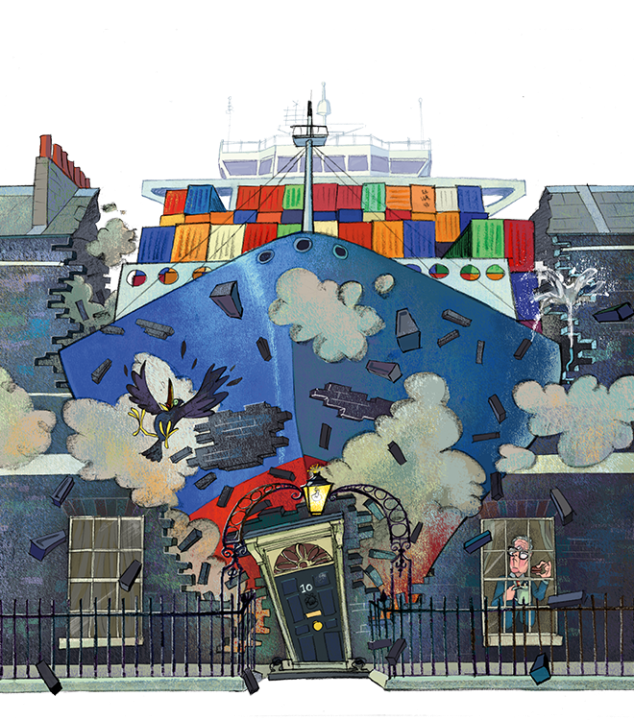


In the last few days, the government has performed two extraordinary about-turns. On Tuesday, it was revealed that the Treasury is covertly pressuring supermarkets to freeze prices on essential goods. This was odd: when Rishi Sunak floated a similar idea as prime minister, the Labour opposition accused him of acting like Ted Heath.
On Wednesday, we woke up to even stranger news: Keir Starmer would be lifting some sanctions on Russian oil to ease our supply problems. This is a prime minister who has spent the past year telling anyone who will listen that Nigel Farage is in league with Vladimir Putin; a prime minister who loves nothing more than being pictured with Volodymyr Zelensky on the steps of No. 10.
So how do you explain these two politically painful manoeuvres? The answer is simple: we are barrelling towards economic catastrophe because of the continued closure of the Strait of Hormuz. Iran’s leaders know their strongest weapon, essential to their survival, is the boot they have on the world’s most vital commercial artery. Whatever happens, we will be facing economic turbulence which not even the most energetic metro mayor can withstand.
Chancellor Rachel Reeves and Starmer, who are receiving privileged briefings about the situation every day, are well aware of the gravity of the situation. Soon, with shortages of some foods and spiking prices, we will be too. In a secret meeting of Cobra, the government’s crisis-management committee, in April, officials ran through the ‘reasonable worst-case scenario’ of the strait remaining closed until June. We are on the verge of that now. Vital raw materials are blocked in Gulf ports.
It is plausible that in the coming months you will find there is no fresh meat available at the supermarket
Carbon dioxide is a key component in food distribution, and relies on hydrocarbons. It is needed to create the dry ice used to keep goods fresh during transportation. Despite temporary measures to restart domestic production, stocks are still declining (according to a leaked government document), so much so that officials have been drawing up contingency plans for how to handle food shortages caused by the looming CO2 shortages. It is plausible that in the coming months you will find there are no carbonated drinks and no fresh meat available at the supermarket.
But while there may be some shortages, the main problem for shoppers will be inflation. In April, the Food and Drink Federation estimated that food inflation could hit 10 per cent this year because of the disruption caused to vital fertiliser exports from Gulf states: around 45 per cent of globally traded urea, a crucial ingredient in nitrogen fertiliser, is made in the Gulf states and passes through the Strait of Hormuz. But the Federation’s modelling was based on an optimistic scenario which is already out of date: it assumed that the strait would have opened again by April. It is now forecast that by November, food prices will have increased by 50 per cent since late 2021.
Between August 2015 and August 2020, food prices rose by just 4.6 per cent. Now, after five years of unprecedented rises which politicians have claimed is because of circumstances outside their control – a virus spreading from Wuhan, Russia invading Ukraine – the public will be told again that their living standards are about to fall.
There is very little the government can do about this. Ministers recognise that they have almost no fiscal headroom left to address the consequences of a sudden spike in household bills. The modelling suggests that consumers will start to feel the pain of fresh increases in the price of food and petrol by September – just as whoever is leading Labour will be addressing their party conference. Will any faction of the party be able to pass an autumn Budget which can, on the one hand, command a majority in the House of Commons, and on the other, convince the Office for Budget Responsibility (OBR) and the financial markets that Britain can repay its debts?
Donald Trump’s efforts to reopen the strait have run into frustration at every turn. The President had hoped his visit to China might lead to material diplomatic progress and pressure on Iran to move. No such luck. He has threatened renewed attacks on Iran to force the regime into submission but Gulf states have stayed his hand and insisted on more negotiation.
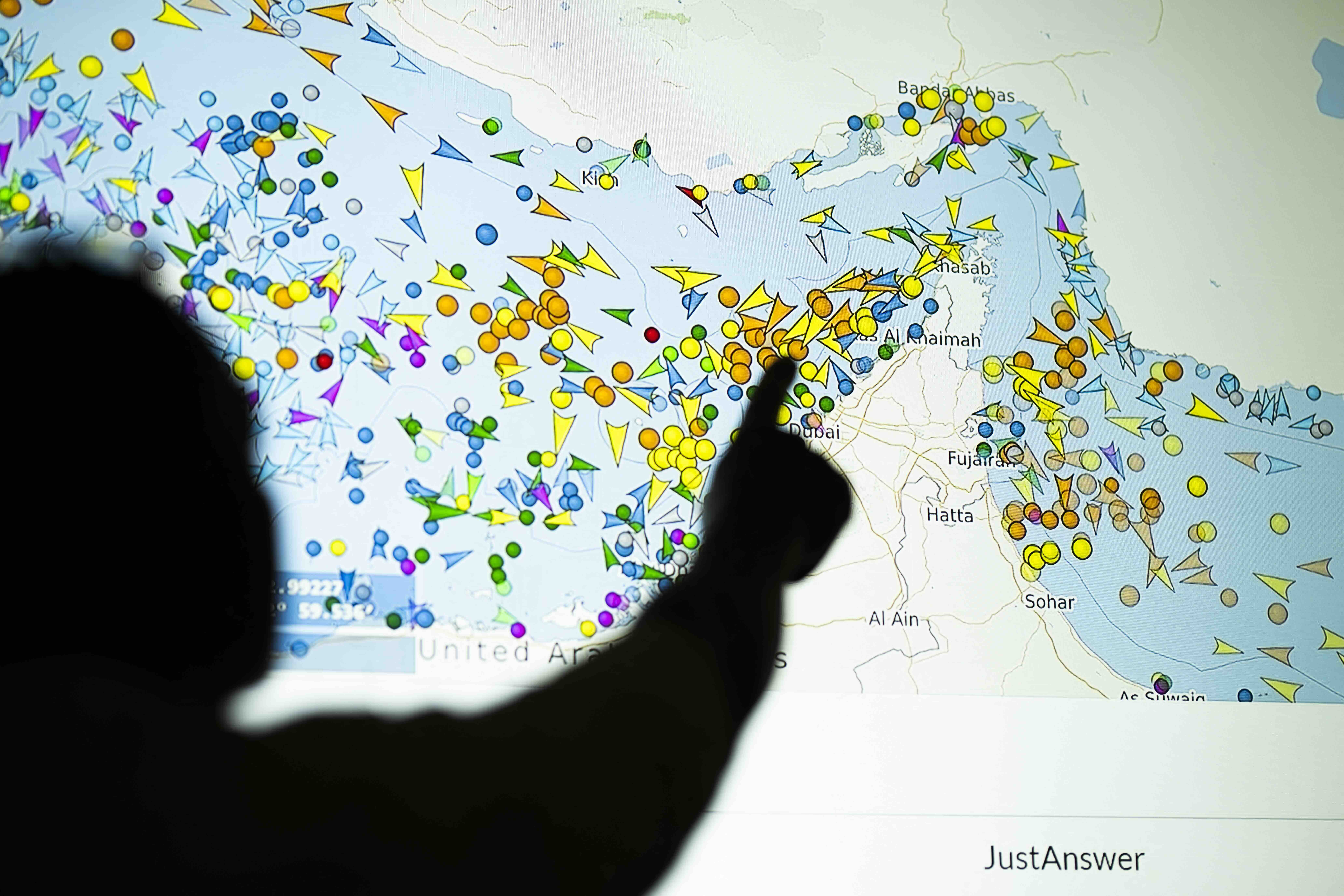
Trump remains insistent that no deal is possible while Iran retains nuclear capability, while Iran’s leaders are loath to hand Trump any sort of victory. But even if Trump were to wake up tomorrow and decide that permitting Iran to acquire nuclear weapons is a price worth paying to reopen the Strait of Hormuz, there is still no guarantee that the outlook would quickly improve. Shipping companies are unlikely to rush vessels back to begin moving goods stuck in Gulf ports. Those who own, run and maintain the container vessels on which international commerce relies are in no mood to take risks with their investments.
A peace deal between Iran and the US will not, to borrow from Churchill, be the beginning of the end but rather the end of the beginning. It will confirm we are in a new era where freedom of navigation is a historic memory; the trade routes we once relied on are now fractured, perhaps irreparably.
In the past three months, shipping companies have not only been losing billions of pounds – Iran has also been seizing their ships and attacking them with missiles. Lives have been lost. The companies and the people working on their ships will be understandably reticent to sail through a gap that has been mined extensively by a terrorist state. It is well observed that in the Middle East, conflicts often stop and start repeatedly for weeks after a deal is supposedly reached.
Trump’s instinct may be to force these companies to restart shipping and accept the danger. But these are not US companies over which he has jurisdictional control. America has next to no presence in international shipping. European operators control 44 per cent of global container ships. The top three companies globally for market share are all European: MSC in Switzerland, Maersk in Denmark and CMA in France. MSC alone controls 21.6 per cent of global market share. The largest American shipping company, Matson, accounts for just 0.2 per cent.
MSC is a privately held company, founded in 1970 by an Italian sea captain and his wife. It has since grown from one small second hand cargo ship to a fleet of more than 1,000. The company, which has had two of its ships seized by Iran, has already signalled that it does not believe Hormuz will be a viable shipping path in the future. It is instead investing in a new pathway for goods, which will travel by sea through the Suez Canal to Saudi ports on the Red Sea where they will be moved overland by truck. This pathway will be significantly more expensive, of course, and proves that MSC expects volatility in the Strait of Hormuz to continue for some time.
So when a peace agreement is eventually signed, goods will not return at a flood but a trickle. The process of moving the ships currently trapped in Hormuz could take weeks or months. Even if shipping companies do eventually return to pre-war shipping levels, higher insurance premiums will increase the cost of goods for consumers for years.
This means the Makerfield by-election takes on a particular gravity, for the result of the contest will likely decide our next prime minister. More than 400 Labour MPs, 300,000 Labour members and the 76,517 constituents of Makerfield will, over the next two months, decide who should lead our country through what will be a particularly difficult two years. All of us should hope they alight on an individual who has the moral character and technical competence to navigate the economic crisis that we know is coming – alongside the other crises which may emerge as a result.
What will Andy Burnham do if Donald Trump threatens again to invade Greenland because the Danish company Maersk is refusing to ship polypropylene through the Strait of Hormuz? How would Wes Streeting handle shortages that bring diesel lorries which restock pharmacies to a halt? Could Angela Rayner resist public calls to financially support households with the cost of energy, when gilt yields are spiking? Would Ed Miliband accuse the supermarkets of profiteering and threaten to impose a windfall tax on them?
There is little that the government can do to ease the pain, but lots of ways it could make it worse. The government is pressing ahead with more regulation – designed to reduce plastic usage – which will make food even more expensive. The Extended Producer Responsibility (EPR) levy, which taxes manufacturers for generating packaging waste, was given statutory footing in January 2025. The Bank of England’s Monetary Policy report in August of last year said that the introduction of the EPR was one of the reasons that Britain was already experiencing higher levels of food inflation than EU countries.
We are in a new era where freedom of navigation is a historic memory
EPR taxes are being phased in. In 2026 the penalty is a 20 per cent surcharge. In 2027 this will rise to 60 per cent, and from 2028 it will rise to 100 per cent. That would mean another burst of food price inflation at the beginning of next year. So here are more questions for Labour’s leadership candidates: will you permit a moratorium on packaging penalties when food prices start to surge? Or is cutting plastic waste more important to you?
This moment demands seriousness, not just because of the difficulties and the risks, but because, like Covid-19 and the war in Ukraine, the problems caused by a deepening of the cost-of-living crisis may also present the right leader with a once-in-a-generation opportunity to implement the structural reforms that are needed to recover Britain’s deteriorating economic position.
If there are visible food shortages and the housing market is crashing, the government of the day should feel empowered to act radically to promote growth, whether through vital planning reforms or the extraction of natural resources through mining or fracking. If Labour fails to rise to this occasion, as it ultimately failed to do when the country was sinking into squalor during the 1970s, it can look forward to spending the better part of two decades in opposition. Again.



Comments