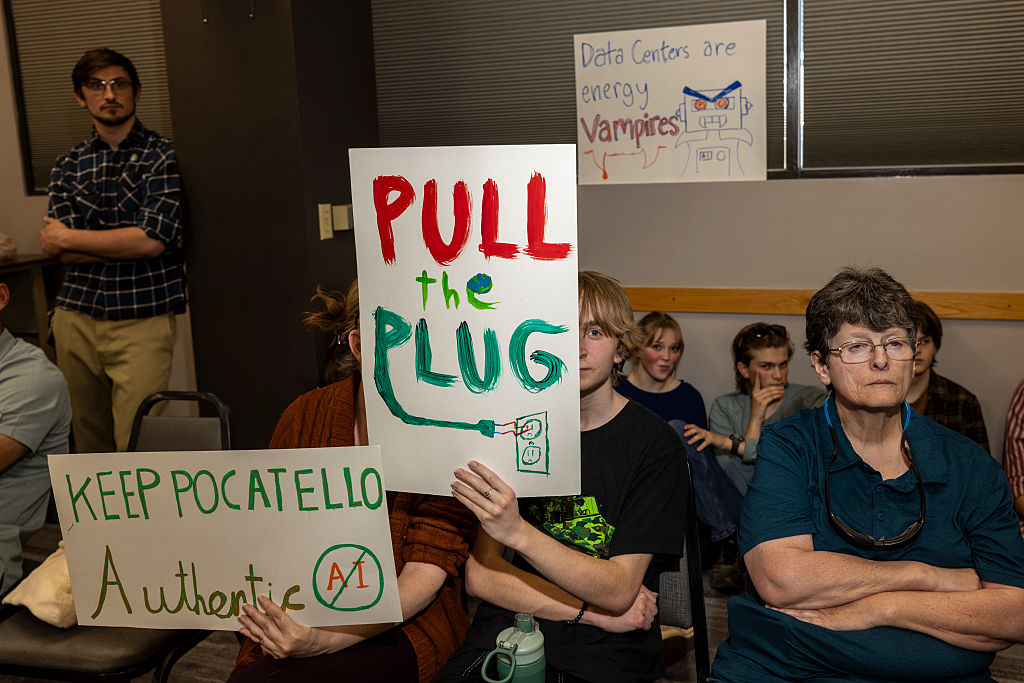

Last December, in a piece called “The Data Center Backlash Is Global,” I reported that residents around the world were rising up against Big Tech just as they have risen up against Big Wind and Big Solar, rejecting applications to use land.
Sure, AI may be a world-changing technology, but the rush to build massive new data centers has resulted in dozens of rejections or restrictions on projects from Indianapolis to Dublin, Ireland. People are worried about property values, water usage, electricity costs and what it means for the neighborhood: “quality-of-life impacts,” as a member of the Indianapolis council, who led the opposition to Google’s billion-dollar project, explained.
Since then, the opposition to Big Tech, AI and data centers has grown faster than I ever imagined. I have been covering land-use conflicts over alternative energy projects for 16 years. In that time, I’ve interviewed dozens of people all over the world about their opposition to solar, wind and battery projects. I’ve documented hundreds of examples of rejections or restrictions on alt-energy projects and created a Renewable Rejection Database. But the rage against data centers is different, not least because it is more widely shared.
Another 300 protesters gathered outside, where many chanted: ‘No data center’ and ‘We want water’
Over the past seven months, it’s become apparent that people all across the US are angry. They don’t like the super-rich tech oligarchs, they don’t trust Big Tech and they are ready and willing to fight to stop AI data centers from coming into their cities, towns and rural areas. Broad coalitions have organized to stop data center projects and there have already been more than 70 rejections or restrictions in the first four months of 2026 – that’s more than occurred in all of 2025. And remember, the rejection numbers for 2026 don’t include projects canceled or withdrawn due to local opposition. For instance, last month, Compass Datacenters withdrew plans for an 800-acre project in Prince William County, Virginia, after facing “intense pushback from local residents.”
Why is this happening? Yes, people are concerned about their neighborhoods, property values, views and noise. But the opposition to data centers also includes two other hot-button issues: soaring electricity prices and water availability. Now add in distrust – or even outright hatred – of Big Tech and fears about AI destroying jobs, and you get a dream issue set for activists across the political spectrum. In short, this is a broad cultural backlash that cuts across political and demographic lines.
Local people are looking at these big projects and asking a simple question: “What’s in it for us?” And in many cases, they are finding that the local benefits aren’t enough.
There have been claims outsiders are stirring up the trouble. A conservative group claimed last month that foreign money is funding the anti-data center movement and that it is “classic political warfare for the detriment of our sovereignty and ultimately our way of life.” A few days ago, another group, Power the Future, sent a letter to two members of Congress requesting “a formal investigation into a coordinated, billionaire-funded and potentially foreign-backed political campaign designed to block the construction of data center and AI infrastructure.”
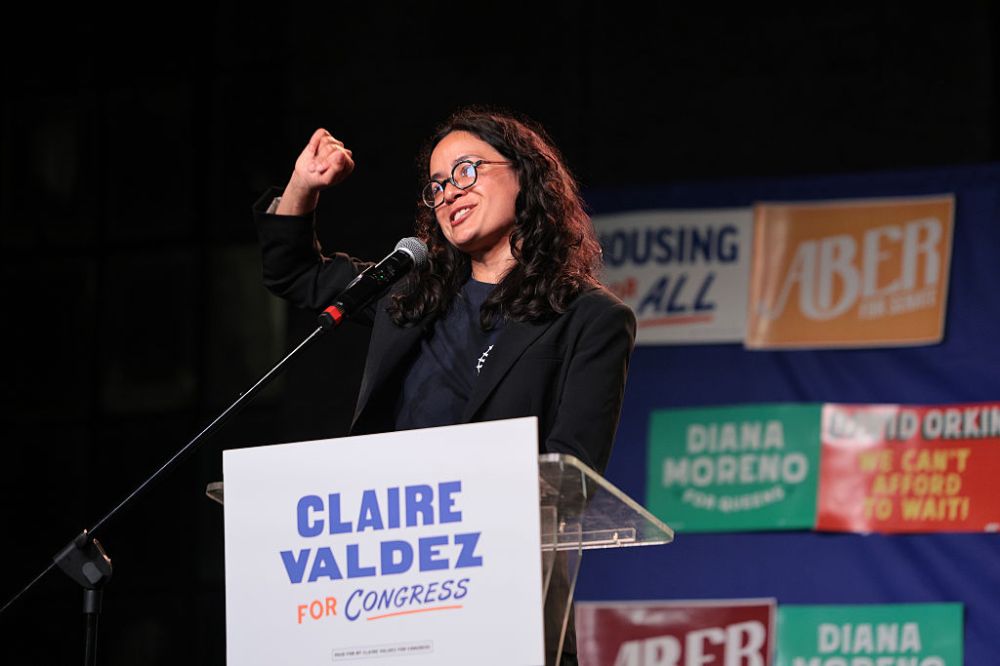
Those claims are bogus. Honestly, the opposition is real. If you doubt it, watch two videos from the Salt Lake Tribune, which show the huge crowd of people that gathered at the Box Elder County Fairgrounds to oppose the Stratos data center project being pushed by Kevin O’Leary, the irascible star of Shark Tank, who styles himself “Mr. Wonderful.”
They were there to attend the Box Elder County Commission’s hearing on the project, which aims to build up to nine gigawatts of data center capacity on a 40,000-acre tract north of the Great Salt Lake. If the project does get built, it could consume more than twice as much juice as what is now used by the entire state of Utah. The Tribune estimated that more than 600 people were inside the gymnasium-sized exhibit hall, while another 300 protesters gathered outside, where many chanted: “No data center” and “We want water.”
The meeting was standing-room only. The overwhelming majority who attended were opposed to O’Leary’s project. From the outset, the three commissioners were showered with jeers and catcalls by the project’s opponents. At the three-minute mark, one of the commissioners warned the crowd that if they continued to disrupt the meeting, they would be escorted out of the building by security. After about 28 minutes, a large number of people began chanting: “People over profits.” At that point, the three commission members stopped the hearing and moved into an adjacent room where they continued the meeting on Zoom. After they left the stage, dozens shouted: “Shame, shame, shame.”
The commissioners went on to approve the Stratos deal by a unanimous vote, but while O’Leary’s project may move forward, the proposed campus so far has zero tenants, no cloud providers or AI firms ready to rent.
And given the controversy over the project, and the fact that none of the infrastructure has been built and the fierce competition already underway across the data center industry for tenants, it will be difficult even for “Mr. Wonderful” to make the Stratos project work. The residents may yet have the last laugh.
A version of this article originally appeared on robertbryce.substack.com.





Comments