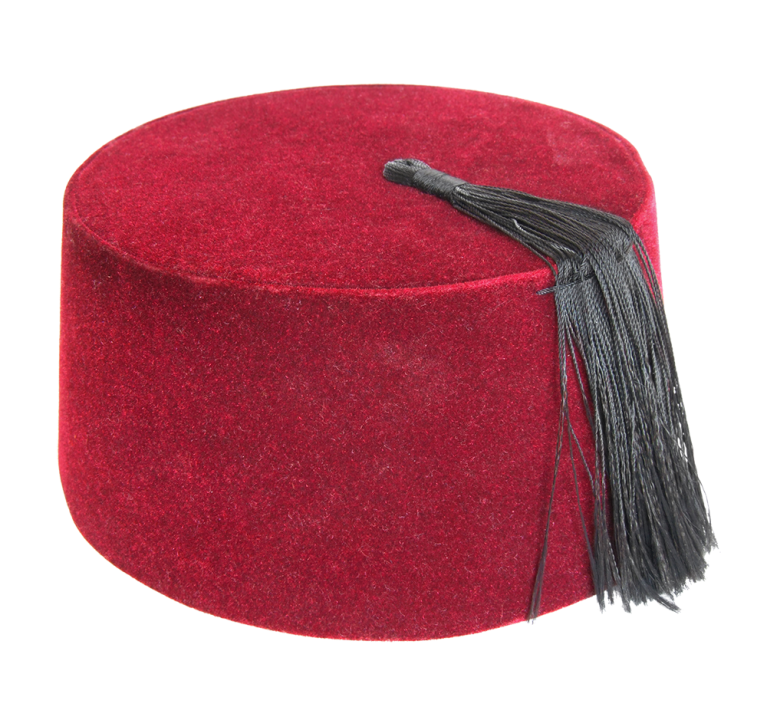

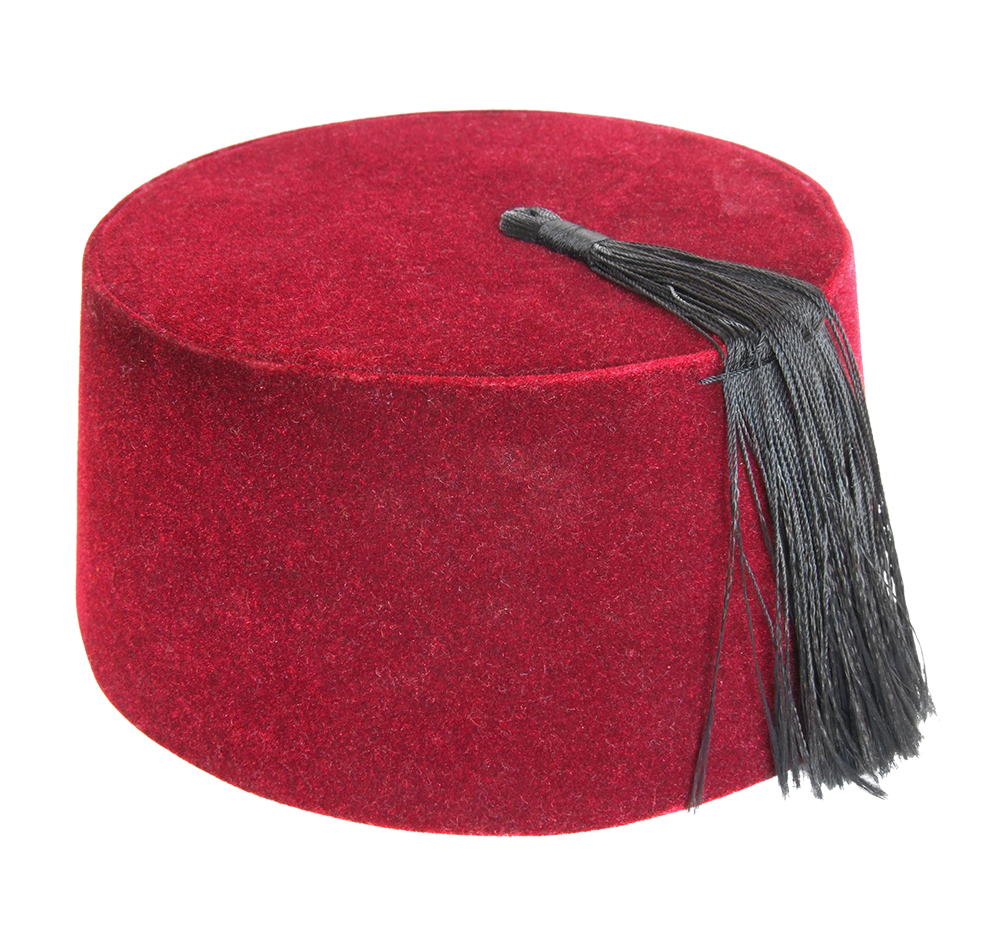
Ireturned from a recent holiday to Morocco with three mementos: a bright red pair of swimming trunks (teenager-sized; the largest the supermarket had), a bright red nose (thanks to my unscientific aversion to sun cream) and a bright red fez.
I’ve always wanted to own a fez and since purchasing it in a Marrakesh souk – ‘For you, sir, special price’ – I have been besotted with it. I’ve worn it on the Tube, to a pub quiz and around the Spectator offices, to variable enthusiasm from colleagues. As far as practicality goes, it is a useless hat. It doesn’t keep the sun off. Its finest Moroccan cardboard will wilt in its first brush with the rain. But that won’t keep it off my head.

In Britain, the fez is associated with eccentrics: the comedian Tommy Cooper, the baggy-trouser enthusiasts of Madness and Matt Smith’s incarnation of the Doctor in Doctor Who (‘I wear a fez now. Fezzes are cool’). But the fez has a more noble, less wacky history. Its origins are unclear. Some claim that it descends from the pileus, an ancient Greek felt cap that – from the evidence of surviving pottery – made the wearer look a bit like a garden gnome. Others suggest it originated from Albania, where similar red headpieces were worn by Christians and Muslims long before they became popular with the Ottomans.
Often known as the tarboosh – a word combining the Turkish for sweat and light-clothed turban – the fez has been described as having the benefit both of being easier to wear during the bows of Muslim prayers and of covering up the perspiration of one’s head. While Ottoman sultans wore sparkly tarbooshes to celebrate their victories over the Byzantines from as early as the mid-1400s, it was with the stylish Sultan Mahmud II in the 1820s that the fez took off, taking its name from the Moroccan city which provided the berries used to dye them red.
Modernisation can take many forms. Just as Britain was debating whether to enfranchise Catholics and ditch the rotten boroughs, Mahmud ordered first his military and then all his civil officials to wear fezzes in place of turbans as a radical break from tradition.
As the fez exploded in popularity, other empires cottoned on. It became standard issue wear for colonial troops ranging from British and French North African and Indian regiments to the 13th Waffen Mountain Division of the SS Handschar – a Nazi unit composed primarily of Bosnian Muslims – whose fezzes were decorated with an eagle, swastika and skull and crossbones.
Since the fez was unavoidably associated with Ottoman rule, Mustafa Kemal Ataturk, when overseeing Turkey’s secularisation, launched the Hat Revolution in 1925 to promote European hat styles, swapping his own fez for a Panama. This led to a revolt, forcing Ataturk to send a cruiser to enforce proper hat-wearing. His fez ban remains on the statue book, incorporated into Turkey’s constitution. Similar anti-fez revolutions have taken place across the Middle East and North Africa.
But in Morocco, the fez’s popularity endured: first as a symbol of resistance to French occupation, then as part of royal and formal dress, and finally as a way of fleecing sunburnt and gormless English tourists.





Comments