If I were offered the option of eating just one country’s cuisine forevermore, it would have to be Greek. Even on a rainy day in north London, just one bite of souvlaki is enough to conjure sun-drenched landscapes, fresh olive oil and vibrant Mediterranean flavours.

Clearly plenty of others agree. Greek restaurants seem to be popping up all over London – with at least five opening in the past two months. There’s more to come with the much-anticipated opening of Zylia in Covent Garden next month, from Greek chef Nick Molyviatis (formerly of Borough Market hotspots Oma and Agora) and Cypriot restaurateur Barry Karacostas. No wonder lifestyle platform SheerLuxe was cooing about ‘London’s love affair with Greek food’ earlier this month. If you can’t get your feta fix in Corfu any time soon, it’s becoming easy enough to find closer to home.
Even so, Greek cuisine often gets a bad rap – mainly from those who haven’t explored it properly. To those anti-classicists, all I ask is that you steer clear from the street market stalls and tuck into a real Greek feast instead.
Start with fava – a smooth, creamy dip made from split peas – or skordalia – pureed potato blended with crushed garlic and olive oil, and often served with fried cod. Or how about kolokithokeftedes (courgette fritters) or chargrilled octopus with bitter, wild greens? Speaking of which, did you know that more than 300 varieties of wild greens are grown in Greece? These include chicory, dandelion and purslane which can be boiled and drizzled with olive oil and lemon juice. Most of the greens are gathered in Greece’s mountain regions where, coincidentally, the best spanakopita (spinach pie) can be found. In Crete, every menu features hortopitakia – small pies stuffed with greens and feta.
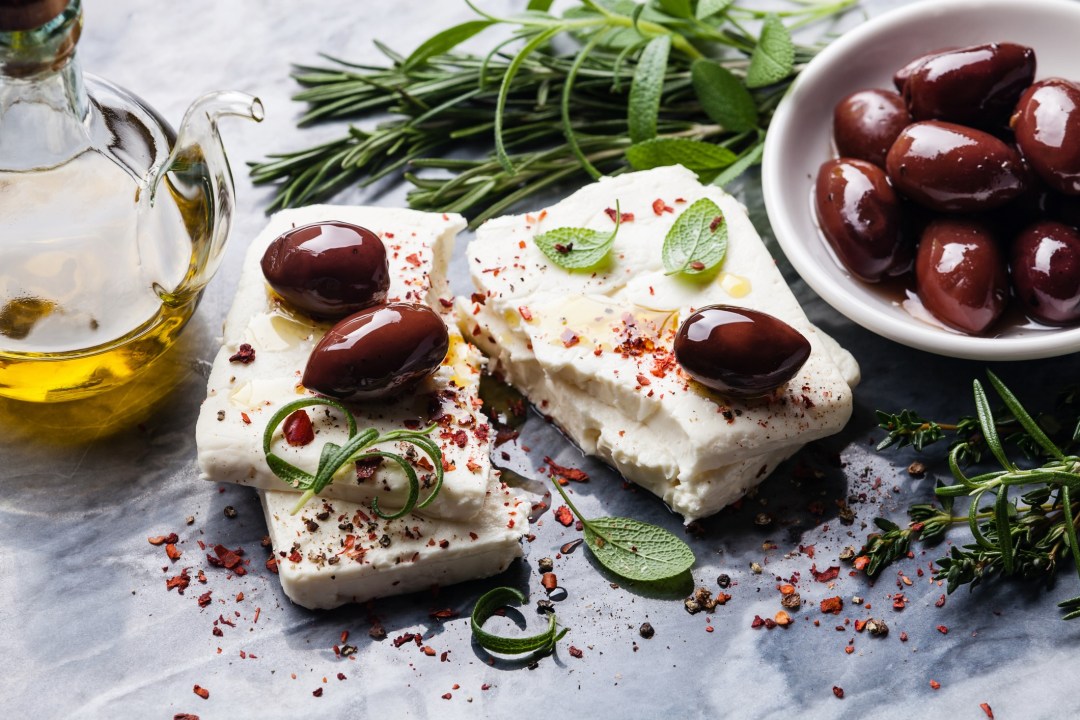
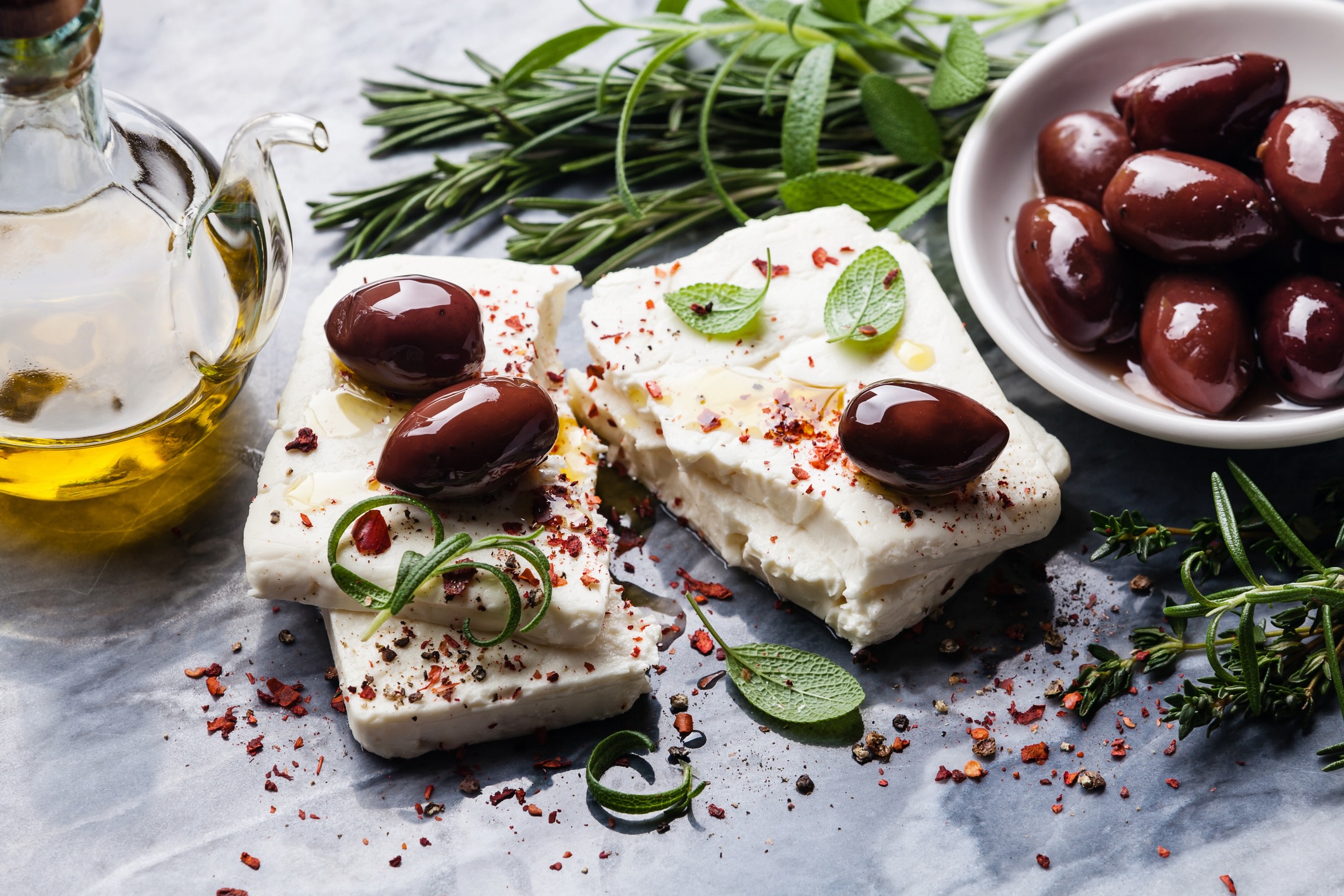
Feta is of course the best known Greek cheese: delicious, crumbly and creamy. But there are so many more for lactose tolerants to try. My favourite is graviera, a hard, yellow cheese with a similar flavour and texture to gruyère. It is found in Naxos, Crete and Lesbos – where I’ve been lucky enough to enjoy many of my other favourite Greek meals.
I’ll never forget a meal I had one April in Crete on a beautiful sunny day outside a pretty taverna. I began with red caviar salad, made with carp roe, puréed potatoes, olive oil and lemon. My main course was spring lamb with spinach, which was tender and garlicky. Other options would have been fish kebab with aubergine, or prawns cooked in a tomato and sherry sauce, served with a rice pilau. There was also, of course, a large bowl of salad, some good bread and fragrant olive oil to dip it in.
Even on a rainy day in north London, just one bite of souvlaki is enough to conjure sun-drenched landscapes, fresh olive oil and vibrant Mediterranean flavours
Dessert was filo pastry flavoured with rose water and honey, served with thick, creamy yogurt. I drank Vidiano, a dry white wine, followed by a Metaxa – a digestif I love but that doesn’t travel well.
Much Greek peasant food encompasses east-meets-west flavours including the ultimate comfort dish, moussaka. Sauteed aubergine, spiced minced meat and a creamy bechamel sauce is layered and baked in a casserole dish. It was popularised around a century ago by Nikolaos Tselementes, the Hellenic Republic’s most famous chef, and is flavoured with cinnamon and nutmeg. To me, it’s a winter dish, and needs nothing to accompany it other than perhaps some garlicky green beans.
In my own English kitchen, I have learned to make two Greek dishes – both of which have received the seal of approval from my Greek friends. The first is lemon potatoes. Take a few waxy spuds, cut them into thick chips and roast them in chicken stock with fresh lemon, dried oregano, minced garlic and seasoning. Cook in a single layer at a medium temperature for about 40 minutes, by which time they should be browned and a little crisp on the outside.
These go with everything – including my second dish, beef stifado with onions. To make this, any type of braising steak cut into chunks will do. Brown it in a pan then add your onions, which should be either pearl onions or round shallots and which, if cooked properly, will be the main ingredient. Add a can of good quality tomatoes, a glug of red wine vinegar, oregano, garlic, a small handful of whole peppercorns, a cinnamon stick and a couple of whole cloves. Then cover and cook on the stovetop for at least two hours.
With that, who needs a taverna near the Acropolis or an expensive dinner in London? As summer beckons, invite some friends round for dinner, open a bottle of ouzo and kali orexi!






Comments