Trump Always Chickens Out, TACO, has been a profitable guideline for Wall Street traders over the course of his second term. Now however, according to commodities markets reporter Javier Blas, the safer bet has become NACHO, Not a Chance Hormuz Opens. This is sound advice, given the multiple ways that Iran controls passage, including the unknown number of sea mines reportedly planted by the Iranians in the Strait. The New York Times, has been dutifully reiterating the administration line that the witless Iranians have been unable to find their own mines. Now Trump has announced that the US Navy will “guide” traffic through the Gulf along lanes cleared of mines, while dealing “forcefully” with any Iranian attempts to interfere. So now it is up to the Navy to clear those lanes of mines. Traders betting on NACHO should rest assured that, despite allotting billions to the task, it lacks the means to do so.
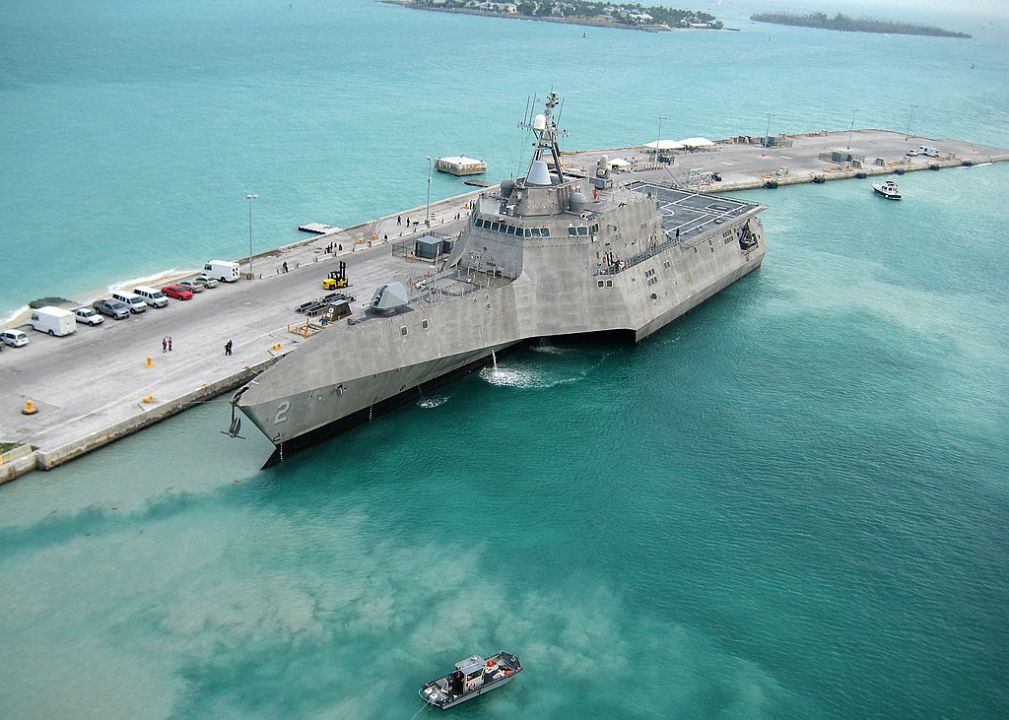
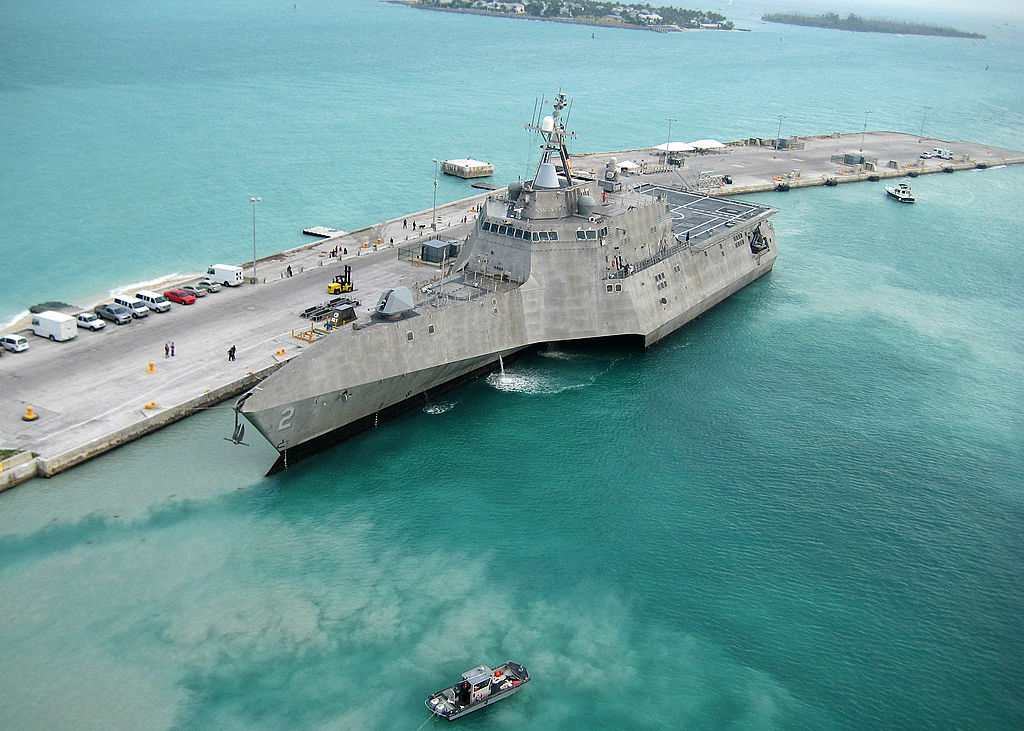
Notionally, the mines will be cleared by three Littoral Combat Ships (LCS aka Little Crappy Ships) dedicated to mine hunting, replacing four “Avenger” class ships built in the 1980s specifically for the task. Unfortunately, the Little Crappy Ships are totally unequal to the task, thanks both to their design and the shortcomings of their equipment. As the Pentagon’s Director of Operational Test and Evaluation reported in 2024, the Navy conducted no operational testing of the LCS Mine Countermeasures (MCM), “leaving the operational effectiveness of components like AMNS (Airborne Mine Neutralization System) and ALMDS (Airborne Laser Mine Detection System) undetermined due to insufficient performance data. While the MCM package achieved initial operational capability in 2023, the Unmanned Influence Sweep System (UISS) was deemed not operationally suitable.” Translated, this means the Navy, having totally failed tests of the LCS in 2022, solved the problem with important components of the system by withholding them from the testers.
The LCS bring unique deficiencies to the exacting task of mine-hunting, being magnetic, thanks to their aluminum hulls, and extremely loud, and thus serving as a beacon for magnetic or acoustic-triggered mines. Nor can they maneuver with precision at slow speed – no more than 1.5 knots – a vital attribute in mine hunting. The Avengers, had that last problem too. According to the veteran naval architect Kenneth Brower, designer of numerous ships in the fleet, including the Ticonderoga class cruiser. “The Avenger design was badly screwed up” he told me in a recent email. “NAVSEA (Naval Sea Systems Command) had to lengthen [the design] by 2.5 feet at the last minute because alternate main engines could not fit.” The Avengers were at least wooden, and thus protected from the magnetic mine threat. Furthermore their crews, which had no other task but mine hunting, were well trained and experienced.
Meanwhile, the Littoral Combat Ship fleet was specifically designed to have interchangeable crews, thereby ensuring that none of them will feel attachment to or responsibility for any particular ship or anything that goes wrong with it. Commensurate with current fashions, the tools they have to find and destroy mines consist of unmanned remotely operated vehicles – drones – designed to operate above, on or under the surface. Brower drew my attention to an inherent defect of submersible minehunting drones. “I wonder” he wrote in an email, “how any long range underwater remotely operated vehicle (ROV) knows precisely where it is relative to its mother ship and hence can identify the location of bottom laid influence fuzed mines (ie triggered magnetically or by noise or pressure). The combination of long standoff ROV launched from a mothership that cannot precisely maneuver at low speed seems to me to make mine hunting an exceedingly slow process.”
Furthermore, at a 2025 London briefing, a senior US naval counter-mine official gave a doleful account of how the system’s underwater mine-detecting drone required “over four hours of pre-mission maintenance” and “1.5 hours of GPS/sonar calibration once launched.” Often, the official disclosed, the sonar system failed to record any data, which the crews could only discover once the mission was over. The drone’s camera, essential in identifying mines, could not “see” even in clear water. Because of the ship’s multi-mission responsibilities, the crew could never have the time to match the skills of the old Avenger specialists. Getting the various drones, etc, into the water depends on a problem-plagued crane. When it fails, the entire mission has to be abandoned.
As might be expected, the Navy’s answer to its mine hunting problems is AI. Last week, the Navy announced a $99.7 contract to Domino Data Labs, a Silicon Valley enterprise led by a team entirely bereft of military experience, one of the many such jostling for a place at the Pentagon trough. It promises to expand, according to Reuters: “Domino’s role as the AI backbone of the Navy’s Project AMMO – Accelerated Machine Learning for Maritime Operations – a program to make underwater mine detection faster, more accurate, and less dependent on human sailors,” (my emphasis). “Mine-hunting used to be a job for ships,” fatuously declared Thomas Robinson, Domino’s chief operating officer. “It’s becoming a job for AI.”
Such fantasies aside, the demining mission, according to Brower, is anyway beside the point unless “we had complete control of the far shore” requiring “a relatively massive forced entry not conducted since WW11, and an occupying force requiring multiple divisions. Our USMC (Marines) no longer has tanks or artillery and is not capable of significant land combat or maneuver. We have very limited ability to conduct an amphibious assault other than a handful of tissue paper thin [landing. hovercreaft]. Our Army now has fewer [tanks] than the IDF, and no heavy [armored personnel carriers.] Worse it requires multiple months to prepare and deploy them….and our reserve fleet of specialized military shipping is in very poor shape. So obviously I am not an optimist.”
So there we have it; no “human sailors,” and no ships or tanks either. NACHO looks like a very safe trade indeed.






Comments